

EastonSN+
-
Posts
9,133 -
Joined
-
Last visited
Content Type
Profiles
Blogs
Forums
American Weather
Media Demo
Store
Gallery
Posts posted by EastonSN+
-
-
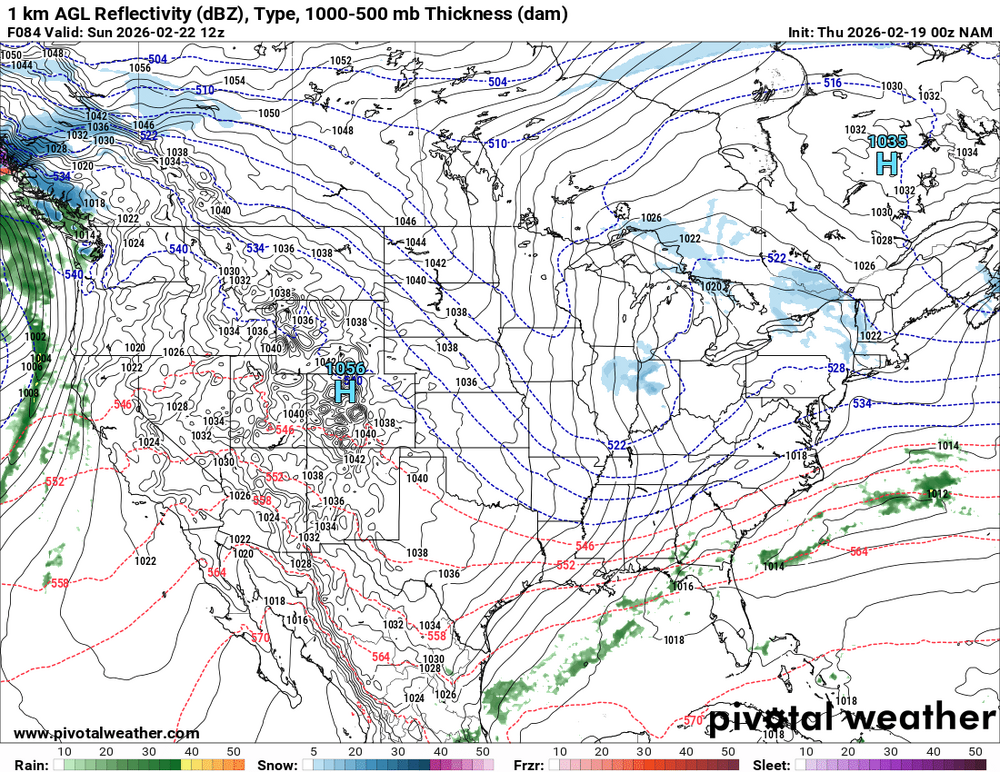
First up NAM end of run.
-
1 minute ago, Wxbear25 said:
Take a look at the 500 charts, this run verbatim doesn’t get us there, but the changes were marked and in the right direction overall
The entire evolution is different WRT that initial low. We need that look to come back.
-
 1
1
-
-
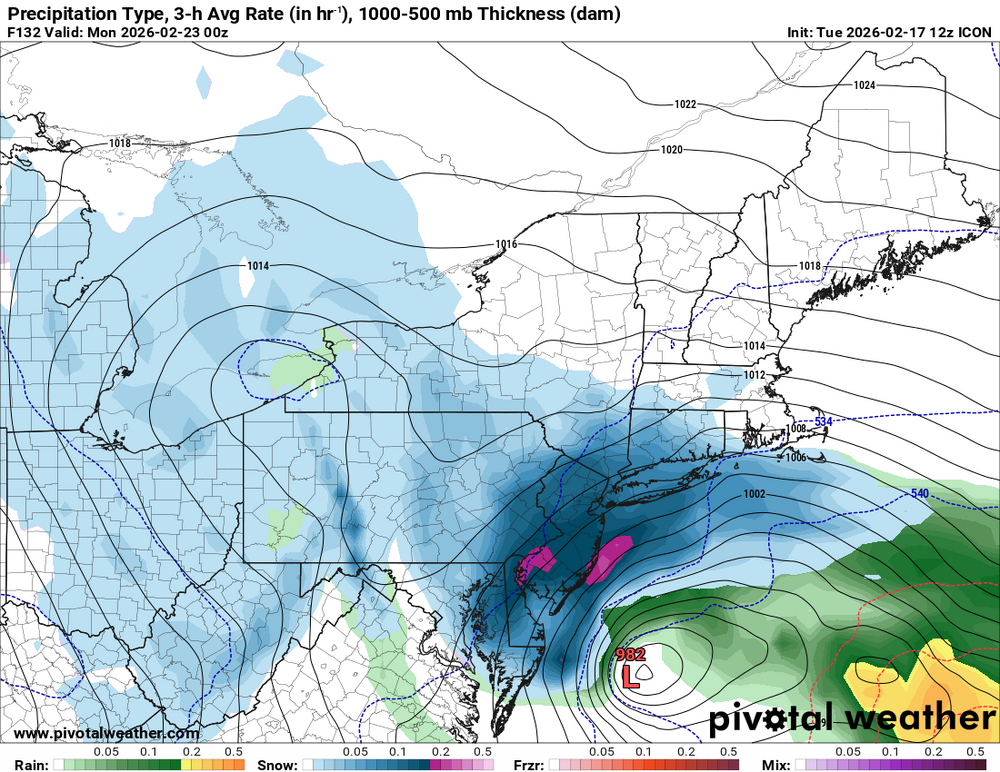
Resulting in this.
-
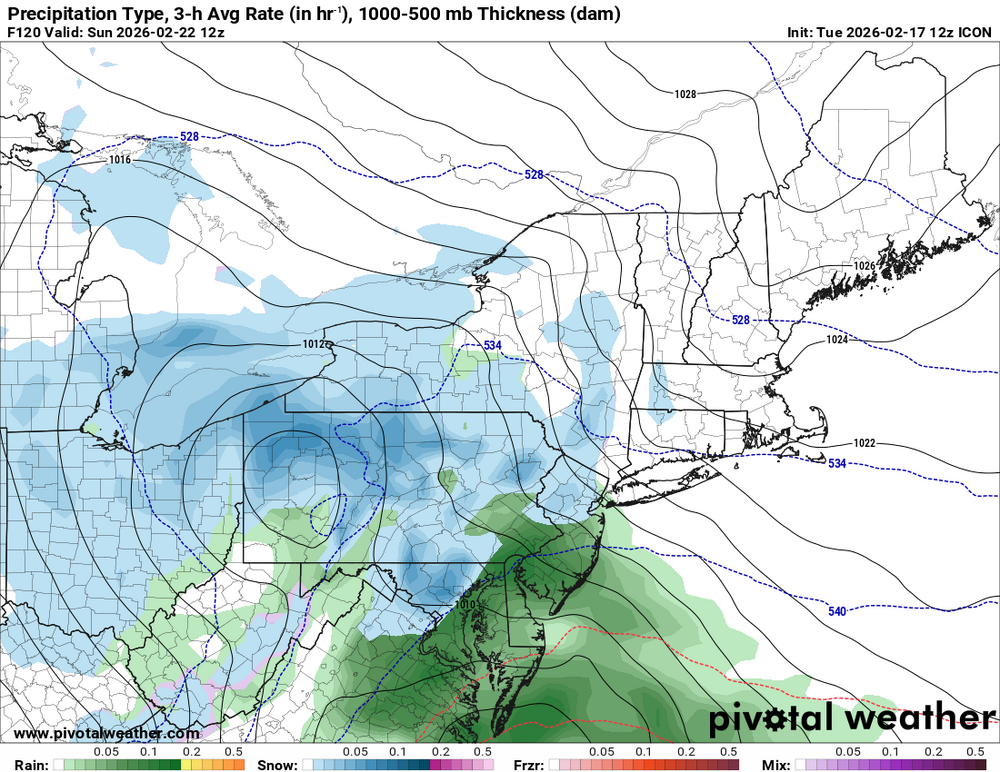
Yesterday. The initial low gets to PA.
-
2 minutes ago, Wxbear25 said:
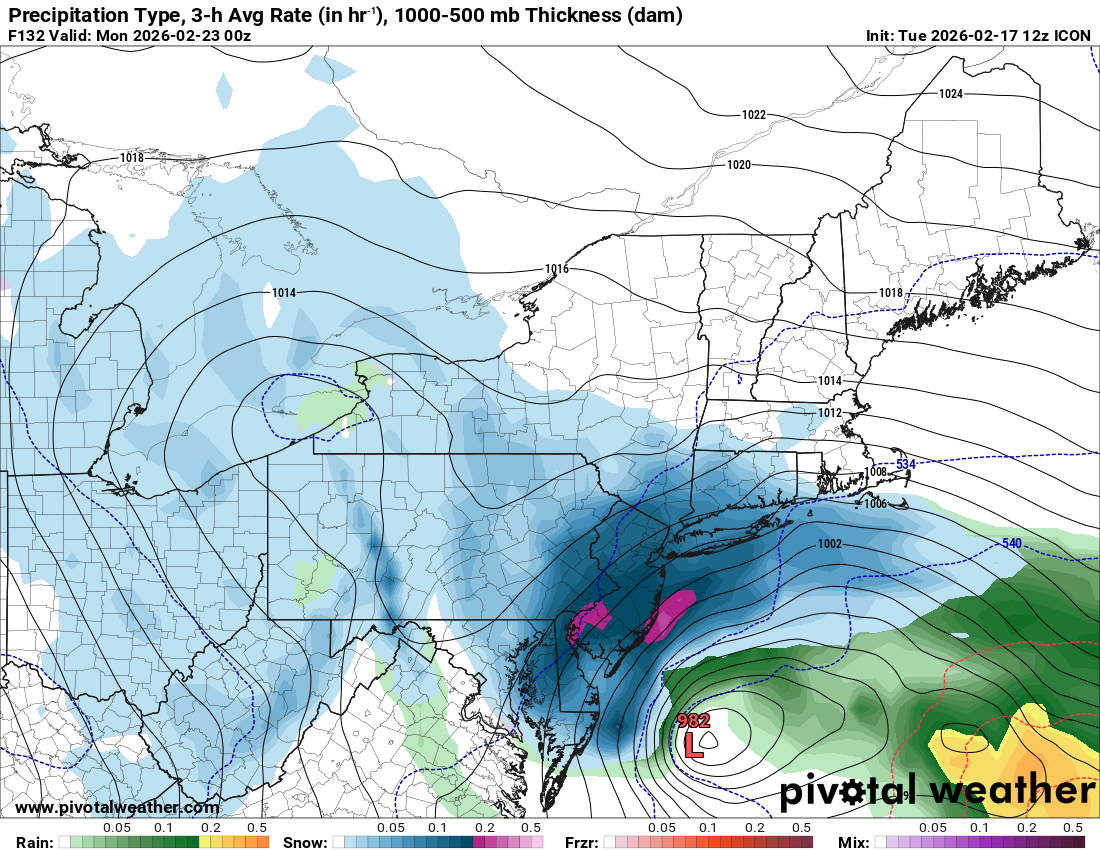
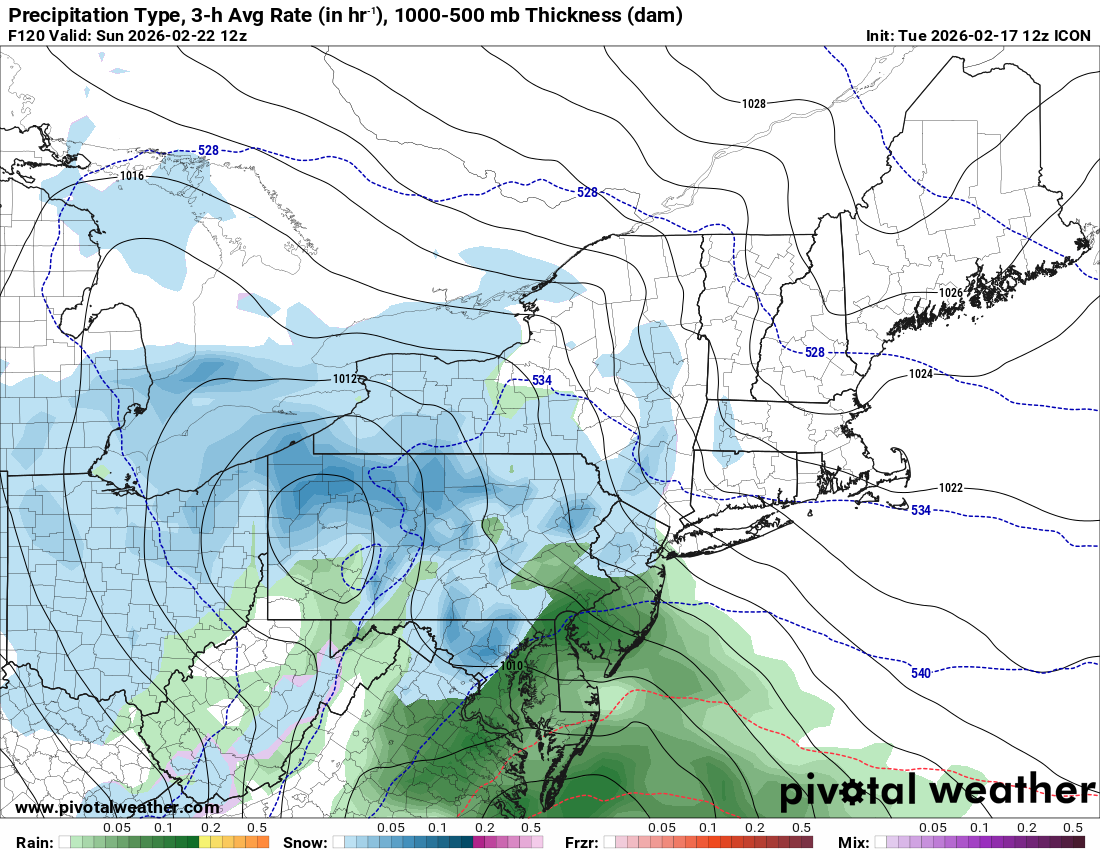
For what little it’s worth, a lot of SIGNIFICANTLY encouraging changes at the 500mb level on the 12z ICON
Did we give up when the Germans bombed Cold Spring Harbor?
It was better than 6z. However our issue is not being closer to the coast but rather the storm gaining latitude.
The biggest runs had a double low with the initial low getting to WV. Now that this low is missing the storm forms and moves ENE instead of NE. Perhaps due to the below average water temps up here.
-
Just now, EastonSN+ said:
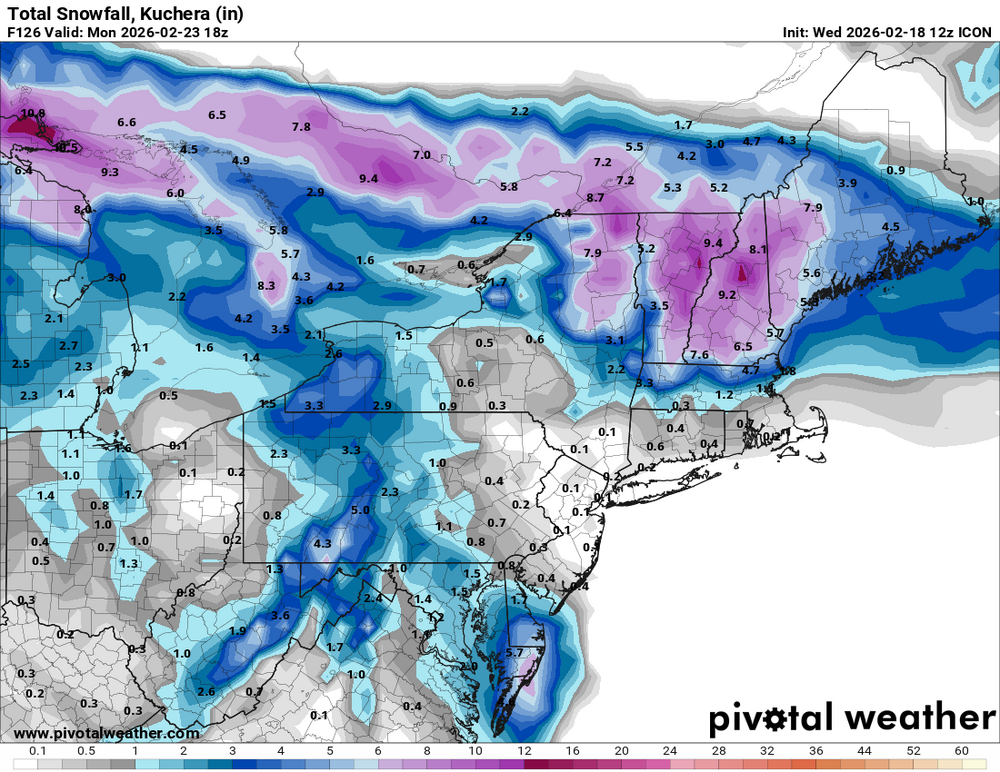
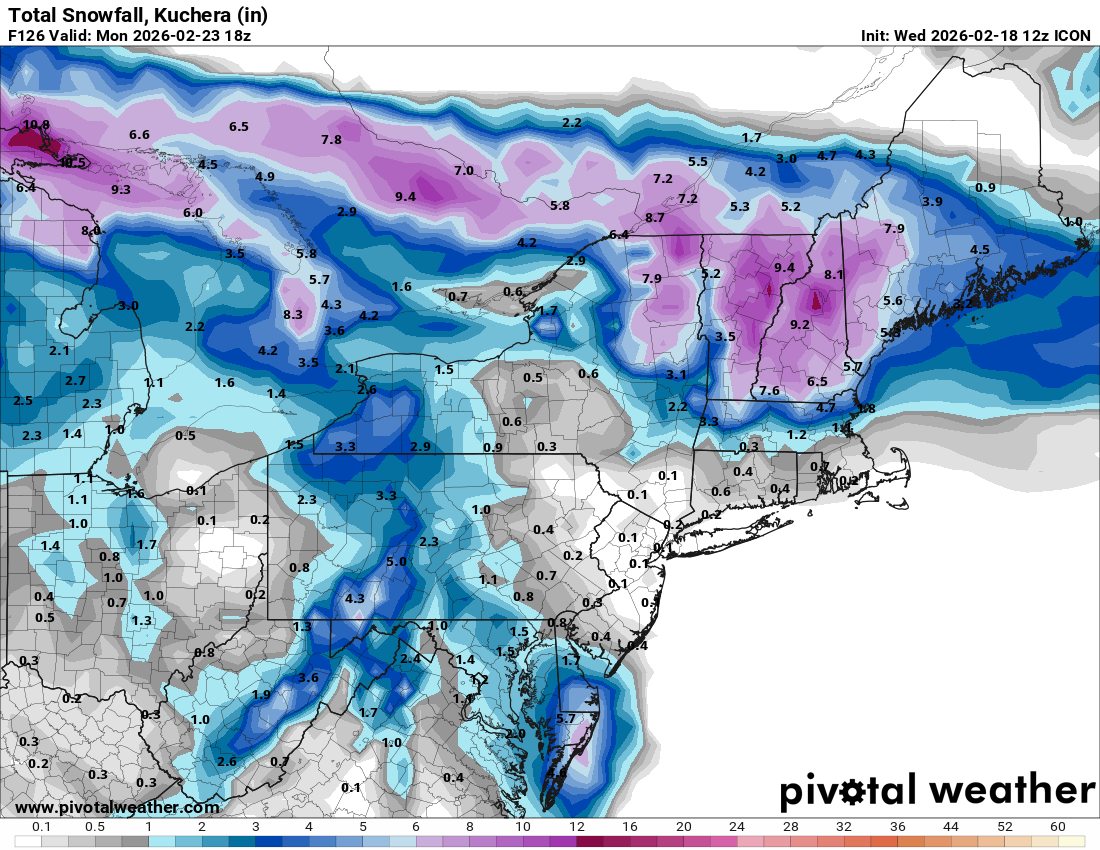
ICON is a delmarva special.
-
ICON is a delmarva special.
-
 1
1
-
-
3 minutes ago, Stormchaserchuck1 said:
Still no signs of pattern change in March on long range ensemble models
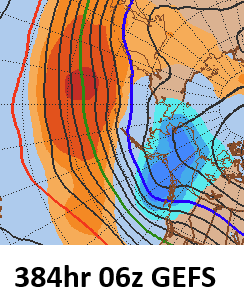
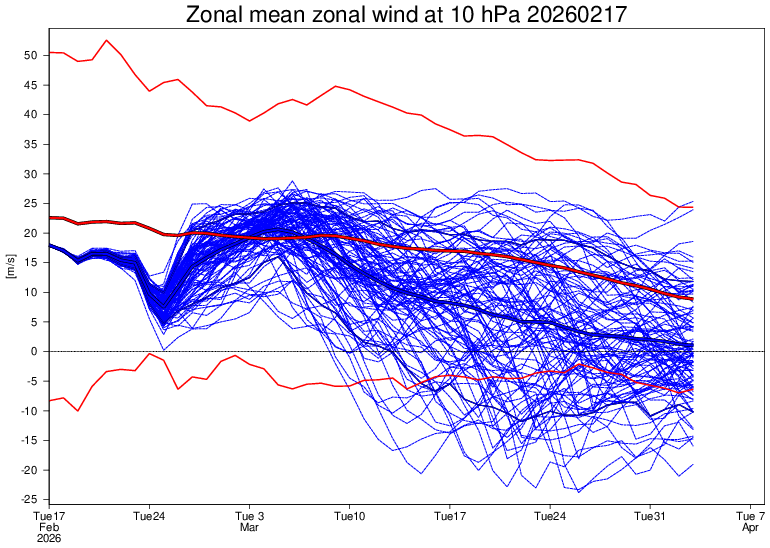
Its following the GEFS MJO. Its in phase 6 there. Should pick up on phase 7 2nd week of March.
-
 1
1
-
-
Large dip.
-
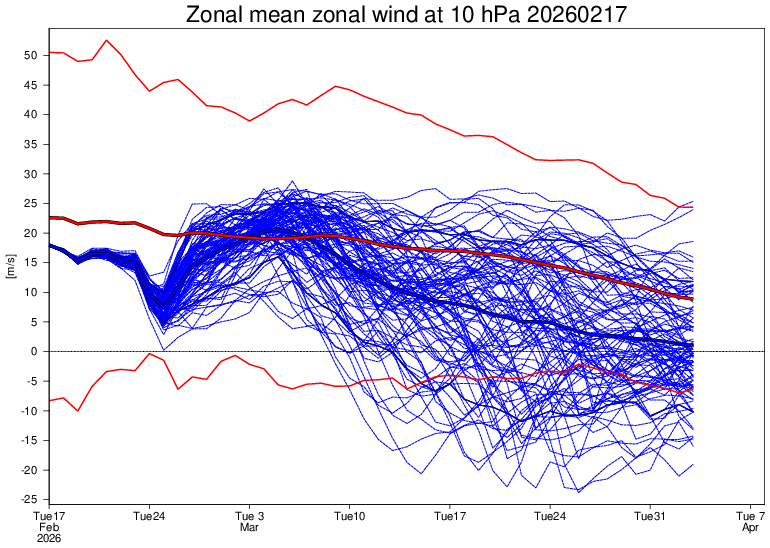
Sharp dip now.
-
51 minutes ago, 40/70 Benchmark said:
There will be one more period in March.
Just want it to get to 7 quicker especially for my area by the south coast.
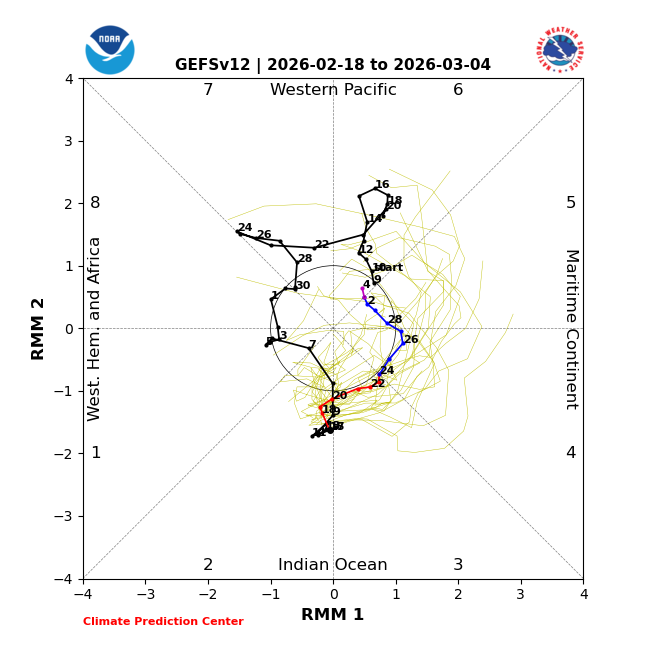
-
Still not getting there fast enough
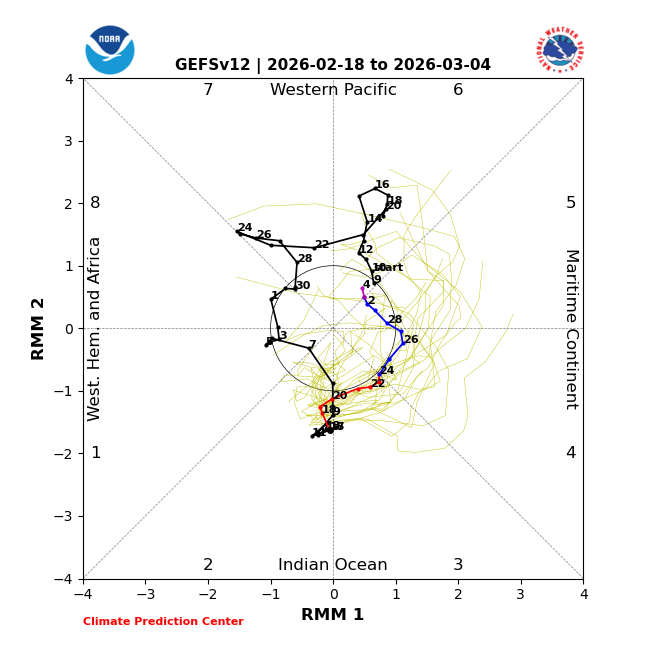
-
Really hoping to get this to 7 in enough time (considering lag) to give us one more window. CPK can easily snow through mid March (my area until late March). Need to be installed 7 by the first IMO.
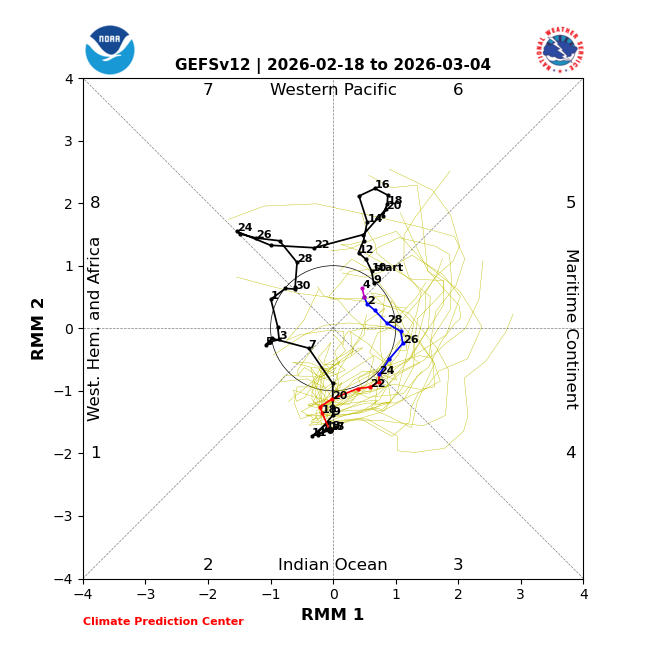
-
1
-
-
Just now, Brian5671 said:
I think anyone that has been doing this for awhile knew that a perfect setup at day 6 was unlikely to hold regardless of model performance. The Euro showing nothing at 12z yesterday was also big red flag.
I know. I have seen probably hundreds of storms dissappear. I have never seen a situation where ALL models including crap models like the JMA and ICON show something then its gone.
2015 at least the EURO had the NAM by its side being INCORRECT).
-
Someone posted a while back the ocean temps, which were running well below average. The configuration of the temps off the coast would favor a further south track moving ENE. Wonder if this is part of the issue this year.
-
1 minute ago, jm1220 said:
It’s a fragile setup in a fast moving pattern. Lots of things can shift around and ruin the storm setup. It’s still 4 days out but this wouldn’t be the first whiff or OTS this or last winter.
I am not disappointed in the fact that a storm in the LR disappeared. Its the model performance. I have never seen this before.
-
1
-
-
2 hours ago, RU848789 said:
In case anyone is interested in my summary posted elsewhere, here you go. Well, Dr. No, the King, looks like he might be back, as most of the global models tonight at 0Z caved to the Euro depiction over the last several runs of a much more progressive, flatter storm much further to our SE. So, the chances of a major snowstorm have gone down substantially, but not to zero, and the chances of even a minor to moderate storm have gone down significantly. The AI models, which have done quite well in the 4-6 day range this winter, still show a moderate to significant storm (with only one model the AIGFS still showing a major snowstorm)., while all of the physics-based models show either no snow or only a few inches. The cries you heard last night were from all the snow lovers around the world, lol. Below is a summary of the 12Z to 0Z changes...
- The ICON went from a 12-18" monster for all to nada for everyone (1-2" for AC to Cape May). That's nuts.
- The GFS went from 6-12+" for everyone at 12Z to 2-5" for most at 0Z
- CMC went from an 18-24" monster for everyone at 12Z to <1" for everyone at 0Z. Also nuts.
- The UK went from 8-14" for everyone at 12Z to ~1" along 95 and a few inches for the coast at 0Z. More nuts.
- The Euro had little to no snow for everyone at both 12Z and 0Z. Dr. No.
- The AIGFS went from 12-18" for everyone at 12Z to 6-12" for everyone (the high end at the coast) at 0Z.
- The Euro-AIFS went from 6-12" for everyone at 12Z to 2-3" for 95/3-5" coast at 0Z.
- The Weathernext 2 went from 8-14" for everyone at 12Z to 2-3" for 95/3-5" coast at 0Z.
All models beat by a model that will be replaced lol. Why couldn't thebEURO be king in January 2015.
-
8 hours ago, Neblizzard said:
Lesson learned never to get excited for a storm 5 days out with a hostile pattern
I never do. I am more disappointed in the model performance. I have never seen something like this before.
-
C+ winter potentially ending with a thud unless mid March delivers (MJO phase 7).
April is the absolute worst month of the year (55 rain breezy).
-
1
-
-
5 minutes ago, The 4 Seasons said:
I've been leaning that way, doesn't mean it still can't happen but i think its more likely a whiff/scraper than not, 40/60.
Icon also went from a major storm at 12z yesterday, to a complete whiff open wave last night, back to a major snowstorm at 12z today so a lot still needs to be worked out.
Still the euro not biting was a big flag.
I don't think I have ever seen ALL models show a major hit and just one model show nothing and that one model being correct.
-
1
-
-
5 minutes ago, Stormlover74 said:
They just love to tease us 5 or 6 days out
I don't know if I ever saw all models and ensembles show a monster hit with JUST one model showing nothing and that model being correct.
-
8 minutes ago, Stormlover74 said:
0 for 1

The writing was on the wall with the GEFS showing very little support for the op along with the EURO AI shifting se.
-
The only teleconectiion that supported a big hit was the negative PNA.
Red flag.
-
Not over yet but the funny part was the EURO op stood alone at one point lol.
Atrocious model performance outside of the EURO despite the fact that it was over 5 days.
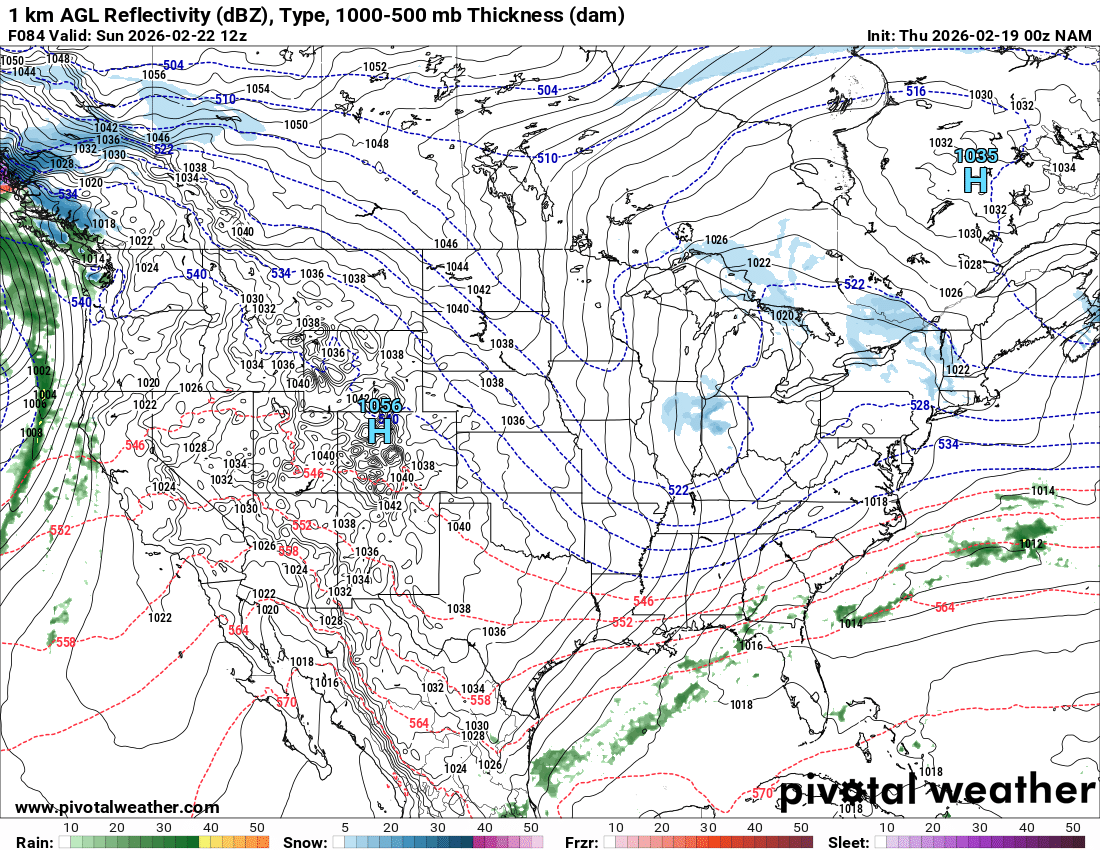

“Cory’s in NYC! Let’s HECS!” Feb. 22-24 Disco
in New England
Posted
NAM first up