40/70 Benchmark Posted January 27 Author Share Posted January 27 Verification of High Impact & Long-Duration Sunday-Monday Winter Storm Strong Forecast Leaves Room For Improvement Overall the Eastern Mass Weather Final Call for the major winter storm that impacted the forecast area from Sunday through Monday verified quite well. However, the coastal front enhancement was somewhat misdiagnosed, as the front itself was pinned slightly closer to the coast than anticipated. The forecast for the front to penetrate into roughly the I 495 corridor was predicated up global guidance. But as it turned out, mesoscale guidance, which pinned the front closer to the coast, or along rt 128 and near I 95 on the north shore, proved to be more accurate. This is why highest amounts ended up along the coast (Gloucester, MA, 27"), (Ipswich, MA, 26"), rather than near the I 495 belt. Be that as it may, amounts of two feet, and event slightly more, were reported throughout much of northeastern Massachusetts, with a secondary on the east slope of the Worcester hills (Sterling, MA, 25.2"), as forecast. Final Grade: A 1 Link to comment Share on other sites More sharing options...
40/70 Benchmark Posted January 29 Author Share Posted January 29 Remarkably Well Forecast January Poised To Deliver Wintry February Stratospheric Reflection Event To Deal Major Blow To Polar Vortex Recent Stratospheric Reflection Event Key To Potentially Bitter Latter January The recent polar vortex infiltration and onslaught of severe winter weather throughout the second half of January should sound familiar to those of you who took the time to read the Eastern Mass Weather Winter Outlook last fall, which advertised that the mild, mid-month Pacific Trough Regime responsible for our January thaw would also serve as the precursor pattern to the development of what is referred to as a stratospheric reflection event. Indeed, society's understanding of the stratosphere and the role that it plays in modulating our weather is very rudimentary to say the least. The basic conceptualization is that a weak polar polar vortex makes the mid latitudes more prone to cold outbreaks, and while that is true, the method of delivery for cold to North America is multifarious in that it is not relegated to a weak polar vortex/-NAO pattern. In fact, the coldest outbreaks in the CONUS are actually triggered by a strong polar vortex and +NAO regime in what is referred to as a "stratospheric reflection event". During these stratospheric reflection events, heat is transferred upward by a Rosby wave (kink in the jet stream) over Siberia and reflects back downward of off the PV into Canada via the reflective surface posed by negative vertical wind shear in the stratosphere. ( Lee et al 2019). The study notes that these reflection events are most common during the month of January. There is one reflection event on average each season, so they are by no means rare events. Reflective events are declared when the reflection index (RI), which denotes the difference in anomalous poleward eddy heat fluxes in the lower stratosphere between Siberia and Canada, exceeds 1 for 10 or more consecutive days (Lee et al 2019). Reflective events are unique occurrences in that the PV is undisturbed and initially remains strong, before being stretched by the development of Alaskan and Aleutian ridging and returning to normal strength. It is the stretching that delivers the cold south and eastward into the CONUS, as depicted in the "end of event" graphic above. This type of stratospheric phenomenon differs from the SSW events, in which heat propagates upward in waves that converge in the stratosphere, thus weakening the PV by decelerating and even reversing the zonal westerly winds that are ordinarily prevalent in the polar stratosphere. Reflection events also differ from SSW in that they are more favored during the westerly phase of the QBO, with 30/44 events since 1980 having occurred during a +QBO. While this ostensibly rendered such an occurrence unlikely this winter given the very strong easterly QBO that is nearing peak, the analog events of January 16, 2001 through February 18, 2001, and January 13, 2018 through February 2, 2018 were weighted heavily in the seasonal forecast given their strength as general analog seasons due to considerations discussed last fall, such as polar, ENSO and solar implications. This is also why these two seasons are considered superior SSW analogs during the month of February. Here is a list provided by Lee at al (2019) of the most prominent reflection events of the past 45 years, including the primary analogs of 2001 and 2018. Courtesy Lee et al 2019 Note that the mean length of the process is 20 days, with 10 days being the minimum, and 60 days the maximum, per Lee et al (2019). The length of the 2001 (33 days) and 2018 (20) events were considered in the forecast for a reflection event to begin between approximately January 13th and 16th 2026, and end between about February 2 and 18th, which is consistent with the climatologically favored time frame per the research that was referenced previously. It is clear that this has indeed taken place given the latest feed back from Judah Cohen. "And as I have been routinely doing, looking at the wave diagnostics in Figure iv continues to display wave reflection over the weekend and into late January. For both periods shown, wave energy goes up and east over Asia, reflects off the stratospheric PV and then heads down and east over North America where the energy is re-absorbed and could potentially amplify the standing wave over North America and deliver cold air from the Arctic south, east of the Rockies. There is westward wave tilt with height over Asia and an eastward wave tilt with height over North America that is a classic signature of wave reflection. Though the eastward tilt is more pronounced in the first period compared to the second period". In order to better understand how the PV interacts with North American weather, Lee at al identified four distinct weather regimes and listed their respective frequency of occurrence between the months of November and March, from 1979 through 2017, since they last longer than synoptic scale patterns and thus provide an opportunity for longer range prediction. Pacific Trough Pattern Precursor for Reflection Events Pattern recognition is paramount in the analysis and diagnosis of reflection events because the behavior of the polar vortex has predictive value on each of these regimes at both seasonal, and sub-seasonal leads, which is roughly 15-60 day in advance. "The PV strength significantly affects the occurrence and persistence of each regime and transition between regimes" (Lee at al 2019). Research by Kretschmer et al (2018) illustrated the importance of planetary wave reflection for anomalous cold across North America. This expounded on earlier work by Kordera et al (2016) that found that wave reflection born of Pacific blocking tele-connected to a down stream trough over North America. Thus the implication here is that the Alaskan ridge pattern, which is not at all connected to the PV and is actually accompanied by a +NAO, as alluded to earlier, is most conducive to reflection events and is this correlated to the most severe arctic outbreaks in the US. Lee et al (2019) refers to this type of pattern as the "Alaskan Ridge Regime" , which is similar to the positive phase of the Tropical/Hemisphere Pattern (+TNH). The +TNH pattern is marked by higher heights over the Gulf of Alaska, the Gulf of Mexico and over the southeastern US and into the western Atlantic. Below average heights are normally anchored over southeastern Canada in association with a vortex buoyed between the Great Lakes and Hudson Bay, which is precisely what has taken place during the latter portion of January. This particular pattern was cited last fall as the most common vehicle for cold delivery over the past decade given the increased tendency for +NAO during the winter season, which underscores the fact that climate change is certainly not prohibitive to severe cold outbreaks. That disclaimer certainly seems to have been validated based on the current arctic outbreak. This is not at all surprising based on past +TNH episodes. Here is a composite of seasons that fit this +TNH description over the past decade or so. Note the similarity to the -EPO predominate extra tropical Pacific pattern that was favored this winter season. The implication here is that there was an increased likelihood for both anomalous cold outbreaks, and deviation from the predominate MC regime of the past decade during winter 2025-2026, which was also outlined last fall. Here are the four regimes as defined by Lee, accompanied by the spacial pattern of the temperature anomalies that accompany them. The Pacific trough regime (31.6%) is the most frequent, followed by the Alaskan ridge pattern (25.1%). Note the strong resemblance between the Alaskan ridge pattern and the -EPO style extra tropical Pacific pattern expected to be predominate this winter season. Below is the composite for the Pacific trough regime, which is akin to the extra tropical Pacific +EPO regime that was previously discussed. This composite contains the Eastern Mass Weather extra tropical Pacific analogs of 1950-1951 and 2001-2002, as well as the La Nina analog of 2005-2006. Note the similarity to the mild interval during the middle portion of the month that was initially poorly modeled. This portion of the seasonal forecast evolution was predicated upon research by Lee et al (2019), which identified the transition from this Pacific trough regime to the Alaskan ridge regime as most conducive to the type of wave propagation needed to trigger a reflection event. This is what renders the Pacific trough regime the precursor to the stratospheric reflection necessary to trigger the +TNH pattern that is now delivering an absolutely brutal stretch of winter to the region. This proved to be a remarkable extended forecasting tool given the expectation for a mid January onset of a reflection event that coincided with an influx of mild Pacific air. Note that the pattern begins to reverse in earnest approximately 5 days after the event onset, which is precisely what has taken place. Simultaneously, the anonymously strong PV reverts to normal strength, and begins to stretch due to the building Alaskan and Aleutian ridging that retrogrades from North America. In addition to the return to climo strength and above, the stretching of the PV during this reflection event has also been evident. Although the pattern progression since the new year has evolved largely as expected, it is not without some unexpected twists. One notable deviation from the forecast was a return of -NAO blocking in conjunction with the development of this +TNH pattern, which occurred on the heels of the mid-month interval of +NAO that accompanied the Pacific trough-fueled thaw. -NAO Flavored +TNH Pattern Will Bias Month Cold It is evident in the annotation below that rather strong NAO blocking rematerialized after the milder period centered mid-month. This is also on full-display in the monthly 500mb pattern to date, which has far more blocking within the NAO domain than expected. This has consequently resulted in the PV being displaced slightly lower in latitude relative to the forecast, which is in large part why the month will end up somewhat colder than expected throughout the northeast (-1 to -3F Instead of +1 to +3 Forecast), despite a superb overall pattern diagnosis. This also helped to ensure the deeply -AO that was perhaps even kore prominent in the monthly mean relative to the forecast. Another unique flavor to this particular +TNH episode that was better foreseen in last fall's winter outlook was it's co-occurrence with predominately +PNA, which would ultimately bias the month in this fashion. Emergence of Western CONUS Ridging Key In More Active Pattern Guidance was originally insistent that the RNA pattern from the month of December would persist throughout the vast majority of the month of January, with the exception of a brief interval of PNA flex the second week of the month (10th-15th). The above annotation ultimately proved correct in asserting that the forecast return of RNA after mid-month, as suggested by guidance, was in fact erroneous. Eastern Mass Weather used history as a guide last fall in positing that the consistently negative PNA values from December would give way to a mean positive PNA in the mean during the month of January, as per the expected deviation from the cool ENSO oriented Maritime continent forcing. December 2024-January 2025: This notion was recently buttressed by data provided by Don Sutherland of Americanwx forums, which indicated that 10/10 -PNA streaks of 35 days or greater during the months of November-December since 1980, have averaged positive over the subsequent 30 day period. Data Courtesy of Don Sutherland It was posited that this represented an integral part of the forecast for the +TNH pattern that would become established during the latter half of January because the addition of a +PNA in this type of pattern would increase the likelihood of significant, and perhaps even major east coast storm, as opposed to the traditional overrunning type of precipitation events that typically rule these sort of regimes. This was evident last week, when the intense +PNA ridging was instrumental in the development of a major snowstorm across much of the northeast, despite the fact that southeast heights remained somewhat elevated. The influence of the southeast heights were insufficient to preclude a major northeast snow event due to the influence of the western ridging in conjunction with the southward displaced PV, and western-biased negative NAO block acting to suppress the system enough to remain offshore. It was also suggested that the approach of the MJO to phase 7 at a relatively high amplitude It was also correctly anticipated that the trend for a more protracted period of PNA would constructively interfere and subsequently maintain a +PNA value for the duration of the month. This particular convective forcing regime across the tropical Pacific indeed did indeed have this impact, despite what guidance at the time implied. This is largely why the month ultimately ended up even wetter than forecast, despite the very dry first half. Conclusions Regarding January This behavior of the stratospheric vortex is precisely why it is very mild at the onset of these reflection events, during the antecedent Pacific trough pattern, but by ten days post reflection the pattern has reversed and is characteristic of an Alaskan ridge regime (bottom right above). Winter 2025-2026 represents a splendid illustration of why seasonal forecasting is a much more feasible endeavor when a proper diagnosis of the stratosphere is made given it's tendency to lead the configuration of the pattern on a hemispheric scale. Accordingly, it was posited just beyond mid-month that the general public was poised to learn just how costly that January thaw would be, as not only were our heating costs going to rise precipitously for the balance of January, but there also existed the potential for heavy snows. This lesson is now complete, as the region is mired in the midst of a historic and downright brutal stretch of winter that was set in motion by a sequence of events over 30 miles above the earth's surface, in the stratosphere. Indeed, this lesson can be carried forward; as not only can an exhaustive assessment of the QBO (stratosphere) overlaid on the solar cycle yield insight as to how a mild, seemingly innocuous mid-month pattern can trigger a relentlessly punishing onslaught of winter. It was also elucidated how the current +TNH pattern punishing the eastern US is simultaneously planting the seeds to destruction for the polar vortex in February. February 2026 Preview Nuances Of Polar Domain Dictate Cold, Active Month On Tap Here is the February segment of the forecast issued in last fall's winter outlook: February 2026 Outlook February Analogs: 2025, 2022, 2018, 2014,2008, 2002, 2001, 1971 The Alaskan ridge will rule this month at least to start, along with -PNA and +NAO. Some -NAO blocking could develop late if stratospheric warming gets underway early enough, but it likely holds off. Alaskan Ridge Regime Courtesy Lee et al (2019) The polar vortex should begin the month fairly strong, but will be weakening rapidly, as a SSW is likely by mid-month. The January-February 2001 transition from reflection event to SSW may be a reasonable expectation, in terms of progression, as RNA pattern resumes and refocuses the cold west prior to any SSW. The interior will continue to be favored for snowfall as the storm track remains either inland or hugs the coast. While not prohibitively warm, this will largely canonical La Niña month with average to below average snowfall on the coastal plane, and average to above average snowfall across the interior. Should the SSW develop in the earlier portion of the 1/17 to 2/17 window, the the second half of the month may change that due to the development of high latitude blocking, however, it is more likely not to occur until mid-month, as previously alluded to. The month will finish between +1F and +3F over New England and +2F to +4F over the mid Atlantic. Potentially Colder Than Forecast Month The largest threat to this overall assessment is a colder threat, due to a continued uncoupling of the troposphere from a strong stratospheric PV. This is why the -NAO was so much more prevalent during the month of January than forecast, which caused the month to verify colder in the mean, despite an otherwise accurate forecast. However, this variation did not materialize until the latter portion of January, specifically during the +TNH interval, so this has the potential to bias the month of February even colder relative to forecast than January should this persist as appears as though it may. Note how large of a role this could potentially play in the month verifying colder than the forecast composite per the latest guidance, initialized very recently on January 25th. Although the mean of all seasonal guidance is much more congruent with the forecast composite, the January 1 initialization of this seasonal data is unlikely to have incorporated the ongoing -NAO blocking, so it is also likely be in error for the precisely same reason. This colder pattern may very well yield an active month in terms of snowfall across much of the northeast considering that the busy northern stream portrayed in the analog composite from the winter outlook does seem to maintain support from latest guidance. In fact, a busy start to the month is already explicitly implied. This is crucial because there is little doubt on the part of Eastern Mass Weather that the aforementioned colder risk to the forecast is very real given the expectation that the NAO is likely to remain negative for the vast majority of the first half of the month, although there is likely to a +NAO interval during the middle third of February. This is due in large part to the continued expectation of a major polar vortex disruption by way of a split, and this is a conclusion that is only growing in confidence. Imminent Polar Vortex Split To Protract NAO Blocking The inference from the winter outlook last fall was that the easterly QBO would constructively interfere with the tendency for the modest, eastern biased La Niña to predispose the PV to major disruption(s) given that solar geomagnetic peak, which provides the most resistance to PV disruptions, will not be reached until roughly this summer. The Holton-Tan relationship, which dictates that an easterly QBO is correlated with both a greater incidence of, and an earlier development of SSW, reaffirms this conclusion when considering the solar cycle. In some cases, when the QBO and solar cycle are in conflict, they can either over ride one another or even cancel each other out (Gray et al 2004). Here is a list of combinations and the theorized relationships for clarity. Solar min/W QBO: This is entirely consistent with the Holton-Tan relationship in that the westerly QBO essentially "wins". The PV is likely to be stronger than average until the final warming in spring. Solar max/W QBO: In this case, the Holton-Tan relationship is applicable early on in the season, as major warmings are unlikely. However, the Holton-Tan relationship reverses mid winter and the latter portion of the season from February onward is susceptible to warmings and major PV disruption. Winter 2024-2025 was a textbook example of this. Solar Min/E QBO: There are no inconsistencies here, as the entire season is more prone to polar vortex disruptions and SSW as per the Holton-Tan relationship. Solar Max/E QBO (2025-2026): The Holton-Tan relationship applies early on given that PV disruptions are likely in December, before the relationship reverses and they are less likely later in the season. The final warming is of course the exception to this rule, while it is usually more relevant for spring, it can and does sometimes occur early enough to have an impact for the major population centers in terms of late season cold and/or snowfall. Below are a couple of annotations to aide in the simplification and visualization of these relationships. Interestingly enough, although statistically speaking early and late season disruptions are favored, there is a an outlier set of major PV disruptions noted in the solar max/E QBO quadrant of the chart above. This also becomes a theme when comparing the solar and QBO analog composites. Here is a list of cool ENSO/ solar analogs for the winter 2025-2026 season. Here is a DM composite of these seasons. There are obvious similarities between the Solar composite (right) and the QBO composite (left) given that they both feature high latitude blocking and poleward Aleutian ridging. The primary difference is that the QBO analog composite is biased more towards early and late season NAO blocking, whereas the solar composite focuses the NAO blocking more in the early portion of the season. The discrepancy is primarily with respect to late season owed to the aforementioned outlier set of mid winter PV disruptions, which is evident in the list of SSW analogs compiled from the solar and QBO composites, respectively. January 17, 1971: PV Split December 4, 1981: PV Displacement February 11, 2001: PV Split January 2, 2002: PV Displacement February 22, 2008: PV Displacement January 7, 2013: PV Split February 12, 2018: PV Split March 20, 2025: PV Displacement The majority of the SSW events are split between the mid winter months of January and February, with three events per month. There is also an outlier event in December,1981, which proved a valid analog for the first SSW, and March 2025. The primary analog events of January 17, 1971 and February 11, 2001 were both accompanied by PV splits and are the only two members to appear in both of the QBO and solar analog composites. The primary analog event of February 12, 2018 also ultimately culminated in a split of the PV, and is a member of the QBO and ENSO composite. This lends more credence to the mid winter outlier scenario that contains 6/8 the analogs. Thus the favored timeframe for a SSW and subsequent split of the polar vortex is during the January 17 to February 17 timeframe, with an increased emphasis on the latter portion of this window, which normally favors late season NAO blocking to commence roughly in early March. However, it is feasible that there may not be any lag time at all given that the antecedent conditions are consistent with both strong -AO/NAO, thus it may not need to propagate. The implication being that it may simply act to prolong the current blocking regime through the balance of February. Here is a look at latest guidance. Note that the favored window is between February 10th and 17th, which is confident with the latter portion of the January 17th to February 17th window emphasized last fall. Although an official SSW via zonal wind reversal is not yet indicated, guidance is still likely adjusting, as both the behavior of the stratosphere , as well as the struggle that modeling would have with it were anticipated. The fact that a strong PV was modeled through February as recently as January 8th is illustrative of this. In addition to the decided trends amongst current guidance, both the development of the forecast +TNH interval, as well as the recent behavior of the MJO also act to bolster confidence. Precursor Patterns Bolster Confidence in Major February PV Disruption The recent high amplitude of the phase MJO wave in phase 7 was cited earlier as a harbinger of the +PNA interval that ensured earlier this month, despite guidance to the contrary. This behavior of the MJO is also predictive with respect to the stratosphere. According to recent research, amplified activity in the MJO in phase 7 has been linked to the occurrence of a SSW during the 12 days later (Garfinakel et al 2012). Garfinkel et al elucidate that "the MJO can affect the stratospheric polar vortex by modulating the vertical coupling of the mid-latitude planetary waves". Note that the modeled behavior of the MJO has it exiting phase 7 today, which corresponds to a SSW approximately February 9th, also with the the latter portion of the 1/17 to 2/17 timeframe and just one day prior to the window reflected on the previously referenced European ensemble plot. Furthermore, Baldwin er al 2020 found that there two precursor patterns that precede the wave absorption needed to trigger a SSW approximately 12 days later. it just so happens that the current +TNH pattern bares a an absolutely uncanny resemblance the wave 2 pattern identified by Baldwin, et al. This would also imply a SSW on or around February 9th given that pattern remains in place. The operational European and GFS guidance support a split slightly earlier than this, by the 5th and 7th, respectively, thus it is prudent to assume that a SSW and accompanying split of the PV will ensue between February 5th and 17th. This is likely will protract the high latitude blocking into at least the early portion of March. This implies an active fish to winter, however, this is conditional on the persistence of the blocking pattern within the polar domain because contrary to what some within the weather circles are intimating, the influence of La Niña is alive and well, albeit waning. Extratropical Pacific To End Up Redolent Of Canonical La Nina La Niña is undoubtedly weakening, as ENSO is climatologically predisposition to do at this juncture of the season. The lates weekly reading within region 3.4 is up to -0.3 as of January 24th. The ONI was a marginal -0.5 as of the OND tri-monthly reading and may very well fall below the La Niña threshold when the DJF value is released. This is evident by the infiltration of warmth within the ENSO subsurface. However, there is a reason that the ONI value is calculated on a tri-monthly basis, as there is a lag due to the fact that there is no metaphorical "switch" in the atmosphere. It is a deliberate process for these changes to couple with the atmosphere and manifest throughout the hemisphere, especially given the perpetual state of cool ENSO that has been so prevalent of the better part of a decade. This point is underscored by the fact that the Angular Atmospheric Momentum, which is a measure of the earth's circulation patterns, is modeled to remain indicative of La Niña into the month March. Additionally, the -.92 RONI value as of the OND try-monthl period was still dropping and while that may be unlikely to continue, it does reaffirm that the fact that La Niña is still very evident when normalizing for climate change. The is supported by the fact that the MEI remained -0.8 as of the ND bi-monthly period, and while it is weakening, it is likely to remain in at least marginally indicative of La Niña through February. The point is that there is absolutely no indication that a decade's worth of angular momentum throughout the hemisphere is going to abate simply because the weekly value of region 3.4 is dropped below the -0.5 threshold. Why this concept is lost on so many skilled hobbyists and professionals alike is a question only those individuals can answer. That being said, here is a composite of the month of February for the weak La Niña dataset. What is apparent is that the Pacific grows more hostile to winter enthusiasts, while the opportunity for high latitude blocking remains given the right circumstances, which seem to be in place this year as elucidated. Current guidance also is consistent with the development of a -PNA pattern, as the poleward Aleutian ridging wanes, as indicated last fall. Needless to say, blocking within the polar domain will need to persist as is expected, or else an early spring may very well ensue. Link to comment Share on other sites More sharing options...
40/70 Benchmark Posted January 30 Author Share Posted January 30 Ocean Storm Poised To Brush Region On Sunday-Sunday Night Accumulations Largely Limited To Cape & Islands It appeared on Monday as though the second major winter storm within a week may impact the area with heavy snows, however, it now appears as though the region will be largely spared. Synoptic Overview The ingredients for major storm are still indeed brewing tonight. The two systems are still expected to phase over the Tennessee Valley this weekend, which makes for an ominous set up if one were to take a cursory glance at the chart below. However, as the weekend unfolds, two elements conspire to facilitate a track largely out to sea despite what is prototypically an ideal western CONUS ridge placement for a major northeast US strike. First of all, there is a follow up "kicker" system dropping into the northern plains, which acts to force the lead storm to continue moving along before it can phase proficiently. This prevents the low from gaining as much latitude as it otherwise would have with a western ridge thought Idaho and Montana. Secondly, there is an area of lead convection well south of New England that works in conjunction with the aforementioned trailing kicker over the northern plains to bias the movement of the system on a more eastward trajectory than it otherwise would have given that western CONUS ridge position. Thus the system cannot gain enough latitude to have a major impact on the region. That being said, some significant snowfall cannot be ruled out over the cape and islands on Sunday afternoon into Sunday evening. Expected Storm Evolution Light snows will overspread the cape and islands around midday on Sunday, and quickly grow moderately moderate in intensity on Nantucket Island. Snow may grow briefly heavy for a time on Nantucket Island, as snowfall grows more moderate over the rest of the cape. Light snow may develop back to the south shore of Boston with light accumulations. Windy conditions and some beach erosion are likely on cape cod and the islands, regardless of snowfall. Precipitation then pulls back out to sea later in the evening and ends by midnight. There could potentially be up to an inch or two of snowfall on the cape, islands and south shore, from a combination of the fringe of the storm and ocean effect snow. Link to comment Share on other sites More sharing options...
40/70 Benchmark Posted February 6 Author Share Posted February 6 First & Final Call for Wintry Saturday Manageable Snowfall Amid Cold & Blustery Conditions It may seem counterintuitive, but despite the fact that southern New England is going to be experiencing perhaps a plowable snowfall along with some pretty harsh winter conditions this weekend, the area is not going to be directly impacted by a major storm. It is true that one will in fact be forming, but as is often the case, the devil is in the details. Synoptic Overview A lobe of the polar vortex located in the vicinity of James Bay Canada has began interacting with a developing system off of the eastern seaboard this morning. While the developing storm would normally be too far offshore to produce much in the way of measurable snowfall across the region, the nexus between the ocean low and the PV lobe will result in a bridge of energy in the atmosphere referred to as an "inverted trough", which will trigger a swath of light snow to break out across the area. The easterly flow around the invigorated ocean low offshore will represent another mechanism for snowfall, which will also ultimately act to enhance and even slow the incoming band in association with the inverted trough before it exists the coast. Precisely where this takes place will result in enhanced snowfall that could total up to several inches for a rather localized area. Clear skies and dangerously cold wind chills will be left in the departing storm's wake on Super Bowl Sunday. Expected Storm Evolution The band of light snowfall associated with the inverted trough, representing a conduit of energy feeding in from the PV lobe to the offshore low will move into western New England by midnight tonight. Simultaneously, ocean-effect bands will develop and feed into eastern areas. The approach of the trough from the west will invigorate the ocean-effect bands during the pre-dawn hours of Saturday AM, which will cause the area to intensify and expand over the north shore. The area of snowfall will likely bifurcate after dawn and into the mid morning hours, as one area in association with the parent trough persists to the west, as does the ocean enhanced snowfall to the east. Here are the soundings from the hardest hit areas of Lawrence, Boston and Beverly, MA, which are indicative of nearly ideal, "cross-hair" signatures denoting moisture and max OMEGA (lift) colocated within the -12 to -18c. This implies that although snowfall will not be extremely heavy, it will accumulate very efficiently since dendrites are likely to be nearly immaculate in structure. The area of snow then congeals again during the afternoon before tapering off by evening. There will be considerable blowing and drifting of whatever snow falls, as bitter cold, arctic air is drawn in on strong northwesterly winds around the departing ocean low. First & Final Call: Thereafter, the next chance for some modest storminess may come around mid week, next week. More on that later this weekend if the situation warrants. 1 Link to comment Share on other sites More sharing options...
40/70 Benchmark Posted February 8 Author Share Posted February 8 Saturday Snowfall Forecast Verification Enhanced Areas Identified But Snowfall Under Forecast Reality Versus Eastern Mass Weather Forecast Map In order for a snowfall forecast to be truly elite, it is necessary to not only be highly accurate on a qualitative level (identify areas of heavier and lighter snowfall), but obviously it also needs to provide an accurate quantitative assessment of precisely how much snow will fall. When comparing the forecast to reality yesterday, it is apparent that the forecast was very accurate in the diagnosing which areas would be heavily impacted, while leaving much to be desired in that it greatly underestimated the snowfall in said areas. Dual Areas of Focus For Enhanced Snowfall The forecast on Friday identified one area of heavier snowfall associated with an inverted trough over central areas of the forecast area, and another zone of ocean-enhanced snowfall along the north and south shores of the Boston area. The placement of these areas nearly perfect, however, amounts were more on the order of 8-12"+ as opposed to the 3-6"+ that was denoted. Granted this was a very difficult forecast, that is a rather large discrepancy that had major implications for those impacted. Final Grade: B- Link to comment Share on other sites More sharing options...
40/70 Benchmark Posted February 10 Author Share Posted February 10 Messy Tuesday Evening On Tap Light Snowfall likely Tuesday Evening It will likely be a race against time as snowfall encroaches on the area during the Tuesday PM commute, however, the majority of the region should barely escape. The latter portion of the commute could be somewhat problematic across especially the western half of regions over the northern Berkshires and northern half of Worcester county. This is due to a rather modest weather system that will be "diving" east-southeast out Canada and across northern New England. Synoptic Overview This weak Northern stream disturbance known as an "Alberta Clipper" will be entering the Quebec province of Canada from Ontario tomorrow evening. It will begin to intensify somewhat as is it does so overnight on Tuesday. However, although it will be amplifying somewhat on approach, it will be passing to the north of the forecast area. This will not only limit moisture influx, but will also introduce enough warm air to prompt precipitation type issues across the southern quadrant of the region, thus a light snowfall is expected. Expected Storm Progression Snowfall should begin to envelop the route 2 corridor around 6pm tomorrow, especially west of I 495, which will have some slightly impact not the latter portion of the evening commute so plan accordingly. Snowfall will have mixed with and turned to rain near the south coast, cape and islands by the time the storm peaks around midnight tomorrow night. The last of the rain should be clearing out by the AM commute on Wednesday. It would be prudent to still allow for extra time to the north of the Mass pike given the need for some snow removal. First & Final Call: Link to comment Share on other sites More sharing options...
40/70 Benchmark Posted February 11 Author Share Posted February 11 Close Call President's Day With Warm Up Thereafter Major Storm Expected To Remain Largely At Sea Expected Pacific Onslaught Likely Prohibitive Eastern Mass Weather forecast the development of a fairly strong -PNA pattern for the month of February in the Eastern Mass Weather winter outlook issued last fall. This is precisely what has materialized and is forecast to persist throughout most of to the month by both the GFS and European ensemble suites. This type of pattern often destructively interferes with major east coast cyclogenesis due the absence of a strong ridge over the western CONUS. It is evident in the graphic below that the energy crashing ashore in the Pacific Northwest has both flattened and displaced the ridge to the east. This prevents a direct strike from large ocean storm expected to make a relatively close pass to southern New England during the President's Day holiday, which does indeed have a history of major winter storms on the east coast. Thus it is due to this anticipated shift in the pattern over the western CONUS that this system unlikely to earn a chapter in the annals of yore. However, some appreciable snowfall is likely if the northern stream disturbance is potent enough, so this bares watching. Additionally, anomalies due happen, so a larger impact from a more phased solution can not entirely be ruled out in the event that the ridge over the plains flattens enough to allow the southern wave to come up the coast. Thereafter, a thaw from the rather harsh winter pattern to date is likely in a similar progression that of January. MJO Led Winter Reprieve Likely Next Week The MJO wave is rather diffuse at this time, however, there are growing indications that it will move into the MC and intensify beyond mid-month. Here is the favored pattern based upon a reasonably robust MJO phase 8 response circa February 20th. Note the resemblance to both mild mid-January Pacific trough regime. And longer range ensemble guidance. Although there exists fairly good agreement, the one discrepancy between the EPS (left) and GEFS (right) is that the former maintains more of a -NAO pattern, whereas the GFS guidance largely breaks it down. This lead to a milder pattern upwards of several degrees above average on the GEFS, as opposed to a pattern that simply moderates to near normal on the European suite. The reason for this discrepancy appears to the greater commitment of the GFS suite to amplification of the MJO as it approaches the MC later this month. The colder European guidance is believed to be in error, and thus a warmer solution is favored for the balance of the month for four reasons. 1) +NAO is favored in the MJO phase 4 forecast composite posted earlier. 2) The feeble MJO wave depicted on the earlier referenced plot is actually inconsistent with the model's own Hovmoller diagram, which is in agreement with the GFS suite on amplification in phase 4. 3) The European guidance has been biased low in amplitude within the MC, which is why the bias corrected version of its' own output is also more in agreement with the GEFS. 4) Finally, the West Pacific warm pool remains alive and well, which predisposes the MJO towards the MC, as has been the case for the past several years. Conclusions The GFS scenario of MJO amplification in phase 4 leading to a mild pattern beyond mid-February is favored due to the demonstrated inability of the European guidance to properly resolve the predisposition of the MJO towards the MC as a byproduct of the formidable West Pacific Warm pool. This also renders its' modeled persistence of the -NAO later this month a less viable solution, which supports the milder scenario depicted by the GEFS. This means that a considerable thaw is likely beyond mid month, but what it does not mean is that winter is over. Although the anticipated SSW is not occurring as forecast, there are signs of additional weakening of the polar vortex later in the month that still may have an impact during the month of MARCH, in addition to any potential reconfigurations in the North Pacific pattern. Link to comment Share on other sites More sharing options...
40/70 Benchmark Posted February 12 Author Share Posted February 12 Verification of Messy Tuesday Evening Forecast Strong Effort Here is the Eastern Mass Weather forecast issued on Monday valid for last night's minor event. The forecast overall was very accurate, although there were a few amounts that narrowly exceeded the 1-3" range over the northern portion of the forecast, it was by a very small margin and they were few and far between. The outlier 6" report from Gloucester, MA is dismissed as being highly suspect. Final Grade: A Link to comment Share on other sites More sharing options...
40/70 Benchmark Posted February 16 Author Share Posted February 16 More Active Week Ahead Return of Pacific Trough Regime Implies Mixed Events Mid January Redux Pattern Reprieve The Eastern Mass Weather winter outlook from early last November posited that the milder Pacific trough regime would become prevalent during times of pattern relaxation. The first interval of this pattern presented as forecast, during the middle third of the month of January Another pattern relaxation of this ilk is also slated to return this week, during the middle portion of February. However, the trade-off for the milder temperatures will be a more active weather pattern in terms of bouts of precipitation. Milder & More Active Pattern Ensues For Latter Half Of February The implication for southern New England is likely to be a serious of attenuating waves that will be accompanied by light-to-moderate mixed precipitation throughout the region. The first such system is likely overnight Wednesday into early Thursday. The primary threat for a light snowfall is north of the Massachusetts turnpike. Then a follow up system Friday night into Saturday, which may be more focused on Connecticut. The largest storm potential exists in association with a potential coastal development on Monday, February 23, however, the early indication is that this system is likely to pass predominately out to sea and pose a larger threat to the Canadien Maritimes. More updates throughout the week as needed, including the potential Tuesday issuance of a forecast for the Wednesday system. Link to comment Share on other sites More sharing options...
40/70 Benchmark Posted February 18 Author Share Posted February 18 A Tale Of Three Disturbances Wednesday & Friday Evenings As Appetizer To Potential Main Course on Sunday Night-Monday While the precise evolution of the procession of storms poised to traverse the country this week still remains somewhat nebulous, the overall progression of the energy being ejected from the Pacific Trough discussed on Sunday is coming into somewhat better focus. As it now stands, there are three distinct pulses of energy that will be ejected into the plains to the south of the block located in the general vicinity of James Bay, Canada. The first two disturbances will be large eviscerated by the compressed height field between the block (north), and the southeast ridge (ridge) in their journey eastward. However, the last in this series of three disturbances has the greatest potential to amplify, since building heights over the western CONUS will allow the medium over the eastern US to relax. Synoptic Overlay The first piece of energy will eject out of the Pacific trough and into the upper plains on Wednesday, where is will amplify. However, it rapidly begins to accentuate by the time it begins to impact the forecast area on Wednesday evening, as it encounters the compressed height field between the PV-James Bay block dyad to the north, and the elevated heights to the southwest owed to the deep, parent Pacific trough. System # 2 then ejects into the plains at a slightly lower latitude on Friday, which allows it to maintain slightly more vigor as it translates eastward relative to the it's predecessor, that tracked immediately underneath the block. This of course allows for the disturbance to maintain a bit more integrity as it approaches the area later on Friday and into the overnight period. This should result in a light to perhaps moderate snowfall over the northern half of southern New England. What is also evident on Friday night is disturbance #3 entering the fray may by moving into the north plains. The crucial difference here is that shortly after the system descends south of the Canadien border, ridging begins to build over the western COUNS intramountain region. This allows ample room for amplification under the aforementioned PV-block dyad due to the fact that southeast heights decrease as a result of the building western CONUS ridge. Note the decreased amplitude and further east position of the ridge in guidance from Sunday. While this does in fact represent a more favorable ridge placement and intensity for major east coast storms, the fact that it remains marginal in conjunction with increased confluence to the north still implies that a major storm is dubious. There remains plenty of time to maintain vigilance with respect to this major storm potential to end the week, but in the mains time, there are also disturbances posted to impact the region on Wednesday and Friday evenings. Expected Evolution of Disturbance #1 Light precipitation should break out over the southwestern third of the region around midday tomorrow. Most rainfall or mixed precipitation should rapidly transition to snowfall as the precipitation grows somewhat steadier throughout the afternoon, and potentially moderate for a brief window of time over a narrow corridor. Precipitation should then begin to taper off rapidly after midnight early Thursday AM. First & Final Call for Wednesday Evening Next up is the system slated to impact the region on Friday night. Expected Evolution For Disturbance #2 Given that the parent mid level low pressure area will pass to the north of the area, this system will bring a mixed back of precipitation to the area due to southwest flow aloft. Light snowfall will break out across the western third of the region to the north of approximately I-84 during the midday hours on Friday, with rain likely points south of there. This area of transition should progress to the vicinity of the Mass pike by the early evening hours, as precipitation grows more moderate in intensity. Precipitation will then begin to taper off from west to east during the mid evening hours, and throughout eastern sections by shortly after midnight. Any residual precipitation should be ending by dawn on Saturday. Stay tuned for more a final look at the Friday potential on Thursday, and an update on the weekend potential if necessary on Friday. First Call For Friday Night 1 Link to comment Share on other sites More sharing options...
40/70 Benchmark Posted February 19 Author Share Posted February 19 Final Call for Friday-Saturday Mess Mixed Bag Likely Across The Region A storm system streaking east-northeast from the plains will impact the area beginning on Friday and into at least the early portion of Saturday. Whereas vast majority of storms this season have featured primarily snowfall given the persistently cold temperatures, the track of this system is likely to complicate the forecast concerning precipitation type across the region. Synoptic Overview The next system slated to affect the region ejects from the Pacific trough out into the plains by early on Friday. It begins to weaken as it approaches the northeast due to the sharing influence of the compressed height field between the polar vortex/Hudson Bay block dyad to the north, and the increasing southeastern heights in response to the parent trough out west. As the system continues to weaken, it is eventually forced to redevelop off shore to the southeast as it encounters the confluence flow around the vortex in the vicinity of the Canadian Maritimes, which may act to prolong snowshoers and advect in colder air during the day on Saturday. Expected Storm Evolution: Light rain will break out over southwest portions of Connecticut by the midday hour. Mixed precipitation will overspeed the balance of the region throughout the afternoon, with snow/sleet being the predominate precipitation type roughly north of the Mass pike, and a sleet rain mixture points south. While evaporative cooling may result in a brief period of snowfall over northern Connecticut, Rhode Island and southeastern Mass, accumulations should be very light as precipitation will rapidly transition to sleet and rain as the decaying mid level low triggers a southwesterly flow and warm advection aloft as it passes though central New England. A brief period of icing over the higher train is possible, however, this should not pose a serious hazard. Accumulating snow should continue well into the evening north of the pike and especially route 2 into the mid portion of the evening, with primarily sleet between the pike and the I 84 and rainfall points south. Precipitation will taper off across western New England by midnight with a mixed bag continuing east, as redevelopment begins to occur off of the coast. While this redevelopment will occur too late to prevent the transition to sleet and rain that will prohibit a heavier snowfall accumulation across the area, it will perhaps prolong nuisance snow showers during the day on Saturday, as colder air is drawn in on a northeast flow, from the vortex over the Canadian Maritimes. While these snow showers should not result in much in the way of accumulation during the day on Saturday, some icy spots are possible where refreezing takes place due to colder air being advected in on northeast flow around the developing low offshore. Final Call First Call Issued Tuesday, February 17th 1 Link to comment Share on other sites More sharing options...
40/70 Benchmark Posted February 21 Author Share Posted February 21 Severe Winter Storm Imminent Sunday Evening Through Monday Widespread Closures Likely Monday-Tuesday Eastern Mass Weather Mea Culpa Concerning Impending Blizzard of 2026 Eastern Mass Weather confidently opined as recently as Tuesday that there would be no major winter storm impacting southern New England on Sunday into Monday. It is now patently obvious that this is the exact opposite of what is actually going to happen due to some crucial morphologies that have taken place. Synoptic Overview The amplified Pacific trough responsible for the significant thaw this week is in the process of breaking down as this passage is written, but not before it delivers a couple of parting gifts that will ultimately replenish all of the snow that has melted, and then some. There are two final parcels of energy that have ejected into the plains from this dying trough during the day on Friday. The amplification of the nascent ridge in place of the trough over the inter mountain west on Saturday will ensure that these pockets of energy encounter a relaxed gradient on the east coast over the weekend, as heights over the southeast fall in response to the development of the aforementioned ridge out west. This ensures that the energy is not sheared apart in much by the compressed flow between the polar vortex/block dyad to the north, and the southeast ridge to the south, in much same manner the previous two systems. It is because of this relaxed flow that the energy with these two disturbances can coalesce and phase beneath the block upon reaching the east coast by Sunday night. This is where it becomes apparent that the North American landscape has changed since this major storm was expected to remain south of the forecast area. Not only has the PNA ridge over the western CONUS trended significantly westward into a position ideal to foster the development of major east coast winter storms, but the system currently affecting the region also departs into the Canadien Maritimes at a slightly faster pace, which allows confluence to lift north. This is crucial because it the position of the PNA ridge and the confluence north of Maine that were cited as the reasons why this storm would not be unable to travel up the coast. Below is a juxtaposition of guidance from Tuesday morning (right) and Friday morning (left) to better illustrate these changes. The differences are apparent, and the discrepancy concerning the placement of the Western ridge is even more apparent when comparing guidance this morning (left) to last Sunday (right). It is these changes that leaves the forecast area, along with much of the east coast, poised to experience the full wreath of the impending blizzard of 2026. Expected Blizzard Evolution Snowfall should overspread the region from south-southwest to north-northeast on Sunday afternoon. Snowfall will rapidly become heavy Sunday night, with banding increasing at the apex of the storm from around midnight through Monday morning. Note two distinct bands, one over southeastern Mass and one from southeastern New Hampshire into the east slopes of the Monadnocks and Worcester hills. However, it is important to note that these are estimates and the precise location of these bands is exceptionally difficult to diagnose. The very heaviest amounts of snowfall are likely to be within these bands, as well as on the east slopes of the Worcester hills, where a deep layer easterly fetch will induce upslope enhancement. While 850mb flow off of the Atlantic will ensure that the variation in snowfall between bands will not be as extreme as is often the case in systems of this magnitude, amounts are likely to be somewhat lower between these bands due to some extended residence time. Some mixing is likely on Cape Cod during the height of the storm on Monday morning, as the track of the low comes close enough to entrain some milder ocean air on hurricane force wind gusts that will induce moderate coastal flooding and beach erosion. Finally, precipitation begins to taper off later in the afternoon and into the evening, ending well before midnight Monday night. First Call: 1 Link to comment Share on other sites More sharing options...
40/70 Benchmark Posted February 22 Author Share Posted February 22 Well Forecast Friday-Saturday Mess Storm Goes According To Plan The forecast for the mixed bag of precipitation that traversed the area last night and today was highly accurate. There were very few surprises here, as mid level warmth allowed for mixing to the south of the Mass pike, which limited accumulations in these locales. However, further to the north, beyond route 2 and near the borders of New Hampshire and Vermont, respectively, precipitation remains all snow and several inches accumulated. Final Grade: A 1 Link to comment Share on other sites More sharing options...
40/70 Benchmark Posted February 22 Author Share Posted February 22 Final Call: Severe Winter Storm Imminent This Evening Through Monday Widespread Closures Likely Monday-Tuesday Synoptic Overview A ridge has rapidly built over the inter mountain west during the day on Saturday and will ensure that two pockets of Pacific energy encounter a relaxed gradient on the east coast over the weekend, as heights over the southeast fall in response to the development of the aforementioned ridge out west. This represents a very favorable pattern for major storm development because the reduced gradient ensures that the energy is not sheared apart by the compressed flow between the polar vortex/block dyad to the north, and the southeast ridge to the south, in much same manner the previous two systems. It is because of this relaxed flow that the energy with these two disturbances can coalesce and phase beneath the block upon reaching the east coast by Sunday night. This is where it becomes apparent that the North American landscape has changed since this major storm was expected to remain south of the forecast area. Not only has the PNA ridge over the western CONUS trended significantly westward into a position ideal to foster the development of major east coast winter storms, but the system currently affecting the region also departs into the Canadien Maritimes at a slightly faster pace, which allows confluence to lift north. This is crucial because it the position of the PNA ridge and the confluence north of Maine that were cited as the reasons why this storm would not be unable to travel up the coast. Below is a juxtaposition of guidance from Tuesday morning (right) and Friday morning (left) to better illustrate these changes. The differences are apparent, and the discrepancy concerning the placement of the Western ridge is even more apparent when comparing guidance this morning (left) to last Sunday (right). It is these changes that leaves the forecast area, along with much of the east coast, poised to experience the full wrath of the impending blizzard of 2026. Expected Evolution Of Blizzard of '26 Snowfall should begin to work into the southwestern portion of Connecticut by around midday today. Snowfall should then work up to about the Mass pike by 10pm, and will rapidly become heavy Sunday evening south of about I 84 in Connecticut, as well as throughout Rhode Island and southeastern Massachusetts. Snow will spread into the remainder of the region by midnight, while areas of enhancement begin to take shape as the storm quickly ramps up. Note two distinct bands, one over southeastern Mass and one from southeastern New Hampshire into the east slopes of the Monadnocks and Worcester hills. These bands will also be augmented by an ample influx of moisture at the 850mb level, which will act to limit subsidence between the banding with the exception of the Connecticut river valley, and to a lesser extent, the western slopes of the Worcester hills and Berkshires, as these locales will experience a down sloping phenomenon that will limit snowfall somewhat. This is the portion of the storm on Monday morning that will feature blizzard conditions, as hurricane force wind gusts on cape cod induce moderate coastal flooding and beach erosion, as well as severe blowing an drifting of snow that will greatly impede cleanup efforts. It is as at this point, during the height of the storm from roughly dawn through mid-morning, that banding is likely to stagnate for an interval of time, creating considerable variation in snowfall across the region. Thus it is the precise placement of these bands, which is exceptionally difficult to diagnose, absolutely crucial to the snowfall forecast. Here is an assortment of the approximation of the band based upon the 700mb temperatures profile of several models. Note that the guidance on the top (NAM, EURO, EURO AI) are all reasonably similar with the placement of the H700mb warm front through the central portion of the forecast area. The likely axis of the deformation snows denoted with a line is directly on the poleward side of said front and it is here where the most intense snowfall rates are likely to occur during the peak of the blizzard on Monday morning into the mid day hours. The bottom two models, which are the GFS on the left and GEM on the right, are outliers with their placement over southeastern sections of Massachusetts and are disregarded. Here is the Eastern Mass Weather's best approximation of this band during the day on Monday. The very heaviest amounts of snowfall are likely to be within these bands, as well as on the east slopes of the Worcester hills, where a deep layer easterly fetch will induce upslope enhancement. While 850mb flow off of the Atlantic will ensure that the variation in snowfall between bands will not be as extreme as is often the case in systems of this magnitude, amounts are likely to be somewhat lower between these bands due to some extended residence time. Snowfall will finally begin to taper off during the afternoon on Monday. Some mixing with rain occurs over the outer cape and islands at the height of the storm due to the fact that the track of the low is anticipated to come close enough to entrain some milder ocean air on hurricane force wind gusts. Snow will be last to taper under the aforementioned bands, where the steadiest snowfall will tend to "rot", as the bands decay in place throughout Monday evening. Final Call: First Call Issued Friday Feb 20 @ 8pm: Link to comment Share on other sites More sharing options...
40/70 Benchmark Posted February 25 Author Share Posted February 25 Forecast Verification For Blizzard Of 2026 Lessons Learned From The Great Storm & Forecaster Accountability Cars Submerged By Record 41 Inch Snowfall In Fall River, Mass A Record Final Snowfall Total of 37.9" Was Recorded In Providence, Rhode Island With Upwards of 43" In Tiverton The Eastern Mass Weather identified the March 1-15 period as a favorable period for a major, KU-caliber snowstorm along the east coast in the Winter Outlook issued early last November, as it turns out, history made an appearance six days early. The hardest hit areas were to the south of the Blizzard of 1978 since this system tracked approximately 75 miles further to the south. The Eastern Mass Weather Final Call for the recent Blizzard of 2026 was good quantitatively speaking, as 30" or greater snowfall totals were actually anticipated dating back to First Call on Friday. However, as is evident in the final forecast verification posted below, these extremely heavy, all-time record-breaking bands of heavy snowfall ended up materializing south of forecast. The forecast clearly left something to be desired as far as the mesoscale diagnostics of the best deformation banding and there are two primary reasons why. Forecast Neglected Consideration Of Northerly Dry Air Drain Confluence in association with the block over southeastern Canada was part of the reason why Eastern Mass Weather was originally pessimistic one week ago about the prospects of the historic storm making it far enough north to have a major impact on the majority of the forecast area. Although it became evident by Friday that said confluence would indeed retreat enough to allow the blizzard to move up the coast, there was ultimately not enough consideration given to the fact dry air remained perilously close to being entrained into the northern half to the region as the storm materialized. This of course proved to be a major player in eventuality of a large portion of southern New England avoiding the truly crippling snowfall that was observed over much of southeastern Mass and Rhode Island. This negated the forecast rationale of a deep, 850mb layer easterly fetch off of the Atlantic mitigating subsidence zones between bands, resulting in the extension of historic snowfall totals to the eastern slopes of the Worcester hill, Monadnocks and Berkshires. Instead, the dry air was entrained from north, as the system congealed south of New England, and aided in relegating historic snowfall to one prominent deformation band to the southeast. Another forecast rationale was that there would be a secondary band of very heavy snowfall to the north west. Obviously one factor that prevented this secondary area of very heavy snowfall to the northwest was the aforementioned dry air intrusion, but there was also peculiarity in the frontogenic forcing pattern as the blizzard it's explosive deepening phase on approach to the region. Aligned Forcing Restricted Coverage Of Heaviest Snows The term "Fontoegensis" simply refers to the development of an area of changing winds and/or temperatures in the atmosphere. This is the primary mechanism that drives intense precipitation rates in strong coastal systems such as Monday's blizzard. Ordinarily, at last during the developing stages, low pressure systems are tilted southeast to northwest, and thus so are the areas of frontogenesis, with the lower levels (850mb) begin further southeast and the mid level (700mb) further northwest. The forecast rationale for the historic snowfall over the interior was due to a combination of intense 700mb forcing to the northwest, and deep layer feta of moisture in the lower levels off of the Atlantic. Obviously the latter factor was nullified due to the dry air entrainment from the northern stream energy, which also acted to limit the ability to any residual 700mb forcing inland to produce heavy snows. However, indiosyncracies of the blizzard's evolution also dictated that the mid level forcing quickly congealed with the lower level forcing to the southeast, potentially due to not only the system's Uber-fast bombogenesis rate of development, but also the aforementioned drier air to the northwest. Note the strong 700mb frontogeneic forcing along the middle Atlantic coast and into the trip-state area responsible for very heavy snows from Delaware coast up through the tri-state area on Sunday evening. This is the area that was expected to eventually produce very heavy snows over the interior on Monday morning. It did indeed lead to over a foot of snowfall throughout much of Connecticut late Sunday evening into the predawn hours of Monday. However, this area rapidly began to weaken and redevelop southeast during the predawn hours on Monday, eventually congealing with lower level forcing over Cape Cod by dawn. This resulted in one incredibly intense band of snowfall with rates up to 4" per hour that moved onshore and pivoted over southeastern Mass, central-southern Rhode Island and extreme eastern and southeastern Connecticut throughout Monday morning and into the midday hours. Either side of that band there was a pronounced area of what is referred to as "subsidence", or sinking air due to the tremendous upward vertical motion going on in that one uber-intense band. The development of this single band displaced the historic snowfall to the south east, and the dry air to the north ate away at the northern extent of the amounts, which is reflected by the forecasting error. This has some similarities to the January 2022 blizzard The collapse of the northwestern 700mb band was virtually complete by midday on Monday. Barely discernible from the primary area of subsidence just to the east, as a blizzard for the ages paralyzed locales over southeastern Mass and central-southern Rhode Island. The extremely rapid rate of intensification working in conjunction with the encroachment of drier air from northern stream is responsible for the restriction of historic snows to one primary band displaced south and east relative to forecast. This dry air impingement and displacement of the band south and southeast are likely attributable to shift in the expected track of the story after the Final Call map was realized very early on Sunday. Blizzard Tracking South Of Forecast Is No Excuse There is tendency in the meteorological community to passive aggressively shirk responsibility for errant forecasts by arributing said error to "changing data" as opposed to forecaster error. Models change because they are imperfect. This is a 100% "loser's lament" aimed at a deflection of accountability because it is absolutely incumbent on the forecaster to not only anticipate future changes in data, but also use experience to inform discretion when guidance is in error to apply needed corrections. The fact of the matter is that amateur forecasters like myself are especially vulnerable to "changing data" because time is limited with a separate full-time job, four young children and a wife, thus it often impractical to wait until the day of the storm to issue a Final Call given the constraints of life. However, be that as it may, I knew that dry air lurked to the north. I also understood that the pattern was marginally favorable for a close enough approach to allow for a historic impact given my original stance that storm would primarily pass out-to-sea. The fact of the matter is that the storm was projected to pass narrowly inside of the 40/70 Benchmark when the final forecast was issued. However, the track shifted to the southeast by approximately 75 miles to a position outside of the benchmark in the 24 hours leading up the event, which is likely connected to the dry air encroachment to the north. Some forecasters would offer the sentiment that "the forecast is only as good as the data", or "The forecast was bad because the data changed". This is utter nonsense because there is a reason that we have forecasters, and that reason is to detect and anticipate bad, or changing data. If the forecaster has enough data to issue a forecast, then they have enough data to be held accountable for said forecast, just as a pro athlete is considered healthy enough to perform if they are healthy enough to play. The public wants to hear about an injury the Monday morning after a bad game about as much as much as they want to hear about "changing data" after 3 feet of "Partly Sunny". The reality is that sometimes storms go-out-sea, but forecaster accountability should never suffer the same fate. Not for an amateur, and sure as hell not for any "professional". Final Grade: D+ 1 Link to comment Share on other sites More sharing options...
40/70 Benchmark Posted February 28 Author Share Posted February 28 Value Of Stratospheric & Solar Implications In Seasonal Forecasting On Full Display During Latter January-Early February Sudden Stratospheric Warming Post +TNH Delayed But Not Denied January Reflection Event Ends On Schedule Near the end of January, Eastern Mass Weather reiterated the forecast from last fall, which called for the stratospheric reflection event responsible for the period of +TNH that played such a prominent role in the brutal stretch of winter throughout latter January, to conclude during the first half of February. This particular timetable was based on the following data: "Note that the mean length of the process (reflection event) is 20 days, with 10 days being the minimum, and 60 days the maximum, per Lee et al (2019). The length of the 2001 (33 days) and 2018 (20) events were considered in the forecast for a reflection event to begin between approximately January 13th and 16th 2026, and end between about February 2 and 18th". Judah Cohen, world renowned scientist for his research on the stratospheric polar vortex, confirmed that the reflection event did indeed commence in mid January, as forecast last fall. "And as I have been routinely doing, looking at the wave diagnostics in Figure iv continues to display wave reflection over the weekend and into late January. For both periods shown, wave energy goes up and east over Asia, reflects off the stratospheric PV and then heads down and east over North America where the energy is re-absorbed and could potentially amplify the standing wave over North America and deliver cold air from the Arctic south, east of the Rockies. There is westward wave tilt with height over Asia and an eastward wave tilt with height over North America that is a classic signature of wave reflection. Though the eastward tilt is more pronounced in the first period compared to the second period". The event concluded on roughly February 10th, consistent with the predicted date range of between February 2nd and 18th, which was derived from the 2001 and 2018 analogs. However, by February 10th, it has completely dissipated and shifted to the Eurasian side of the hemisphere. This corresponded quite well with the transition from +PNA to a -PNA regime, as expected, when the cold abated and shifted west. Note how the cold was focused east during the +TNH/+PNA regime through February 10th. The cold was also anchored in place by the unexpected -AO/-NAO from latter January as a result of the stronger stratospheric PV decoupling from the troposphere. Before shifting west following the end of the reflection event and onset of the RNA/+AO/+NAO regime on February 11th. Although the cold shifted west, it was not as severe given the fact that the PV had retreated to Eurasia. Thus although the +TNH has been entirely erased from the monthly mean, the negative height anomalies over the east have not as of the 21st. The forecast for +1 to +3F monthly departures across the region will undoubtedly be too warm, due primarily to the unexpected early month -AO/NAO, as well as the inclusion of the very mild February 2018 and 2002 stratospheric analogs, which was a mistake. This was anticipated last month. The unanticipated high latitude blocking during the first half of the month in conjunction with the February 23rd Blizzard is at undoubtedly responsible for snowfall being concentrated closer to the coast than forecast this month. While the forecast will undoubtedly be too warm, the current -3 to -5F monthly departures across the region are likely to warm a bit more before month's end. Although the composites for the month of February certainly left something to be desired, the diagnosis of the stratosphere as it pertains to the +TNH fueled severe winter pattern from latter January through early February was forecast with absolute surgical precision. This is due in large part to an exhaustive assessment of both the stratosphere and solar cycle in order to glean invaluable insight into the behavior of the polar domain during the winter season. Stratosphere and Solar Implications Were Key A list of QBO and solar analogs was constructed last August when devising a forecast for the polar domain for winter 2025-2026. Here was the list of 50MB QBO analogs as of last July: July 2025 50MB QBO: -2.06 & descending 2021: 2.82 & descending 2017: 5.08 & descending 2012: -8.10 & descending 2007: -8.75 & descending 2005: -8.13 & descending 2000: 3.25 & descending 1974: -3.42 & descending 1970: -8.05 & descending 1962: -3.08 & descending *Note that July 2014 was the third strongest match at .50 & descending. July 2025 30MB QBO: -19.19 & descending 2021: -13.17 & descending 2017: -10.48 & descending 2012: -27.82 & descending 2007: -24.92 & descending 2005: -24.20 & descending 2000: -13.13 & descending 1974: -19.58 & descending 1970: -18.62 & descending 1962: -15.49 & peaking *July 2014 was the strongest match at -19.29 & descending. Here is an updated list as of October from the winter outlook: October 2025 50MB QBO: -6.83 & descending 2021: 0.59 & descending 2017: 1.72 & descending 2012: -10.51 & descending 2007: -11.52 & descending 2005: -12.28 & descending 2000: 1.51 & descending 1974: -9.69 & descending 1970: -13.48 & peaking 1962: -5.32 & descending *October 2014 was the third strongest match at -2.33 & descending. January 2015 remains a very close match to January 2026 at the 50MB level: January 2015 -9.95 & descending versus January 2026 -9.89 & descending October 2025 30MB QBO: -24.65 & descending 2021: -19.14 & descending 2017: -16.79 & descending 2012: -24.51 & ascending 2007: -29.05 & peaking 2005: -28.76 & descending 2000: -14.04 & peaking 1974: -23.12 & ascending 1970: -22.12 & descending 1962: -15.33 & peaking October 2014 was the second strongest match at -23.86 & descending. January 2015 remains a very close match to January 2026 at the 30MB level: January 2015 -26.70 & descending versus January 2026 -25.52 & ascending The 2014-2015 season was not included as an analog due to the fact it was a warm ENSO season, however, not only was it an elite QBO analog, but it was also a very strong solar analog. This makes it a fine polar analog, and thus it is no secret why it was included in the +TNH composite used in the winter outlook last fall. Here is the ground truth, which evinces how similarly the respective +TNH intervals from latter January through early February behaved. It is not at all surprising that many southern New England sites have also endured their snowiest seasons since the 2014-2015 winter, as the similarities in the respective 500mb patterns during the January 20th through February 10th +TNH interval is evident. This was to be expected given the Eastern Mass Weather polar analog composite from last fall. Note how well it matched with a myriad of other different Eastern Mass Weather analog composites, all implying the same seasonal pattern in the mean for winter 2025-2026. In conclusion, although the the winter of 2014-2015 was not deployed as a seasonal analog due to the fact that it was a rather poor ENSO match, it's value was evident upon a thorough analysis of the stratosphere and solar cycle last fall. Furthermore, it is this analysis that lends confidence to the fact that a Sudden Stratospheric Warming does indeed hang in the balance for winter 2025-2026, despite guidance remaining inconsistent. Better Late Than Never: March 2026 preview The January-February 2001 transition from reflection event to SSW was employed as an analog for the period in terms of the overall pattern progression, as RNA was anticipated to resume, thus refocusing the cold west prior to any SSW. This worked out remarkably well, as depicted above, with the exception of the fact that the SSW event anticipated to materialize on February 13-14 never in fact took place. Eastern Mass Weather identified the January 14th through February 14th timeframe as being a favorable window for a Sudden Stratospheric Warming, complete with zonal wind reversal late last summer, which was amended to the January 17th to February 17th timeframe, with an emphasis on the latter portion, in the winter outlook last fall. Near the end of January this timeframe was honed even further to the February 13-14th period, which was supported by an emerging signal on guidance throughout the month. Ultimately this signal failed to materialize, but it was deemed to be more of a delay, rather than a failure. Recent guidance has reinforced this notion of a delay, rather than a denial. Note the near unanimous consensus on a SSW-reversal as of February 24th, although the signal has waned somewhat since. This a trend that was also observed in the February failed attempt, so although a reversal and subsequent split of the PVcontinues to be favored, it is not a lock. This is unlikely to be a final warming since the earliest on record is March 12, 1974, this March 6-7 would represent an unprecedented early final warming. Whether or not this reversal actually takes places may be crucial to how the month of March ultimately evolves. Warmer Risks For March While it clear now that there will not in fact be a KU event during the higher risk window of March 1-15th identified last fall, the Great Blizzard of 2026 did occur on February 23rd, a mere six days before the onset of the early March window. Indeed, it appears that timing issues have plagued the forecast seasonal progression to some degree. Here is the forecast 500mb composite for the month of March that was devised last fall (left) versus the latest guidance (right). Clearly these are polar (no pun intended) opposite patterns. This likely at last partially attributable to the stratospheric zonal wind reversal not taking place February 13-14 as forecast, which is why the month will verify warmer than the near normal to -2F forecast. This was a risk that was explicitly identified in the winter outlook early last November. This would have triggered the next round off high latitude blocking to take place by the end of the first week of the month, but since that did not take place, it will definitely take longer, which will in fact bias the month milder than anticipated. However, assuming that the SSW/reversal does indeed take place on March 6-7, as currently anticipated, this will should result in the return of high latitude blocking by third week of the month, or right around the spring equinox. While the month would still be biased warmer than forecast, it would likely end up colder than the exotically mild current guidance suggests. The resemblance between the latest forecast mean-March 500mb anomaly and the 500mb plot from the day that the SSW took place in the February 12th, 2018 analog is rather uncanny. This may potentially offer insight into they the timing of the February (forecast too warm) and March forecast too cold) forecast composites ultimately proved erroneous. This mild start to the month is confirmed by progression of tropical forcing. Maritime Continent Forcing Heighten Warm-Risk GFS guidance bolsters confidence in this warmer risk by depicting a slow progression and subsequent decay of the MJO wave through the MC phases of 4-6 throughout the first half of March. MJO phases 4-5 teleconnect to the same mild, Pacific trough pattern observed during previous period of thawing this winter season. This precisely what is currently modeled for the period. A very similar pattern is denoted for phases 4-6 during the second week of the month. Guidance evolving in like fashion with the mild Pacific trough regime maintained through the second week of the month. The European suite essentially agrees, with an added twist. Colder Risks Mid-Month The European ostensibly supports the GFS, in fact even killing the MJO wave even sooner, in phase 4. However, the MJO plot is often insufficient in that is cannot denote areas of duel forcing, which can be misleading. This is where the Homvoller diagram is invaluable, as it is able to convey a split wave. Not the emergence of a signal in the western Pacific towards mid-month, as the MC wave dissipates. Both suites agree on the MC wave slowly decaying through the first half of the month of March, however, if the EURO is correct in modeling an emergence of the wave in the western Pacific at the same time that the potential March 6-7 SSW is manifesting in the polar domain, a very intriguing ending to winter 2025-2026 may be in store throughout the second half of March. Indeed, just as the stratospheric shenanigans and wintry potential of March has been delayed, so may be spring, ultimately. Guidance currently displays more of a stretched PV with an absence of high latitude blocking, however, expect said pattern to emerge rather abruptly during the lead up to the period in question should the early month SSW materialize. Finally, note the similarity to the 2018 analog with respect to early month MJO wave decaying in the MC. March 2018 featured a major winter storm mid-month, which is something to remain mindful of in the haste to begin spring. Link to comment Share on other sites More sharing options...
40/70 Benchmark Posted March 5 Author Share Posted March 5 Rough Commute On Tap Friday AM Delays & Cancellations Likely What was expected to be an inch or so of snowfall on Tuesday afternoon ended up being several inches in some cases, which made for an absolutely dreadful afternoon commute. Hopefully better insight with respect to a potentially similar evolution overnight Thursday into Friday morning will afford commuters the luxury of planning ahead so that a similar fate will not be endured on Friday morning. Cancellations are advised, and at the very least delays on Friday AM for districts north and west of Boston. Synoptic Evolution The region enjoyed a pleasant day in the 50s today as a byproduct of the polar jet finally having retreated to the north. However, in its' wake is a fairy zonal flow from the west-southwest that is sending the next wave of low pressure rapidly careening across the country and towards the region. A most interesting trait of winter 2025-2026 has been for it to manufacture cold at least excuse imaginable, as if part of a concerted effort on the part of mother nature to atone for sins in the eyes of local winter enthusiasts over the past several years, when the opposite was the case. Early Friday is poised to be no different. While the general pattern is one of moderation given the aforementioned retreat of the polar jet, an appendage of polar high pressure if forecast to knife into the region at the most inopportune time late Thursday night and early Friday morning, as precipitation traverses the area during the build up to the Friday morning commute. The most laymen of weather followers can write the rest of the script at this point of the season. Expected Forecast Evolution Light rain is forecast to overspread the southwestern third of Connecticut on Thursday morning. The showers may begin to mix with sleet over the Berkshires and Worcester hills as they extend north of the Mass pike during Thursday afternoon. Thursday evening precipitation moving northeast begins to interact with the cold backing southwest from Maine in earnest, producing an area snowfall to the north of the Mass pike. Precipitation may briefly mix with, or even change to sleet and snow down to the I 84 corridor of Connecticut towards midnight late Thursday evening, but precipitation should remain primarily rain and freezing rain in these areas with some significant icing possible, especially across higher terrain. Snowfall will continue moderate to even briefly heavy at times points north and east. Precipitation will begin gradually tapering off to the east during the morning commute and end later in the morning, but not before significant delays and cancellations are necessitated on Friday morning, especially to the north of Boston. Final Call: Beyond the spring preview next week, the forecast split of the vortex is finally taking place and may have important ramifications for the second half of the month. Better late than never- 1 Link to comment Share on other sites More sharing options...
40/70 Benchmark Posted March 6 Author Share Posted March 6 Rough Friday AM Commute But Even Rougher Forecast Conservative Course Of Least Regret In Marginal Soundings While the commute this morning undoubtedly left something to be desired, it was the Friday morning forecast that was a metaphorical 30-car-pileup, which ironically enough was a fortuitous break for area commuters. Obviously the forecast for 3-6" of snowfall over northeastern Mass and much of southern New Hampshire verified as a mere 1-2" of sleet and assorted snow grains. The reason for this is quite simple. Here is the sounding, which is a profile of the temperatures in degrees celsius throughout the atmosphere, from Lawrence, MA at 1AM Friday morning. Note the tiny area of the atmosphere near freezing at around the 850mb level (5, 000 feet), right as precipitation was forecast to transition to a period of accumulating snowfall for several hours through to the morning commute. This is also evident in the excerpt of the text data from the 850MB level below, as the temperature is pinned right at freezing at this level from 10PM through 4AM, while the rest of the profile is below freezing. The forecast for 3-6" of snow was based off of guidance that implied that snowfall rates would be heavy enough to evaporatively cool this layer, while also allowing the snow to fall through it with enough haste to avoid melting. This was always a precarious position best reserved for instances in which the antecedent airmass is very cold, such as Tuesday's over performing snowfall. Ultimately, the flakes ended up being compromised enough by this layer that they were largely relegated to sleet and poorly developed snow flakes referred to as "grains", both of which accumulate extremely inefficiently. Whereas normal snowfall accumulates about 10" for every inch of liquid that falls, this type of frozen precipitation only accumulates approximately 3" for every inch of liquid, which is why an inch or two of sleet fell as opposed to between 3 and 6" of snow. Final Grade: F Link to comment Share on other sites More sharing options...
40/70 Benchmark Posted March 9 Author Share Posted March 9 Spring Preview This Week Followed By Mid-Month Regression Cooler & Stormier Start To Astronomical Spring As the conclusion of the harshest winter in about a decade comes into focus, those beleaguered by the season begin to look forward to spring with great anticipation, and it just so happens that Mother Nature is obliging this week. Indeed, the progression of the MJO through the Maritime Continent is treating New Englanders to a bona fide spring preview this week, as temperatures soar through the 60s today, and even potentially past 70 degrees tomorrow across the forecast area. Note the similarity between the current pattern that is poised to bring near record warmth across the east. And the regime associated with passage of the MJO through phase 6 during early to mid March. One consequence of a mild pattern such as this is that the cold is afforded ample time to pool near the pole, which leaves the mid latitudes vulnerable to future incursions should the pattern permit, and in a season such as this not often will. Astronomical Spring More Akin To Late Winter This Year Mother Nature often refuses to abide by the calendar definition of seasons, which is but a mere artifact of Astrology, and at no other point of the year is this more evident in New England than the Spring. If one is in search for a deviation from that trend, then this is not the year to conduct a fruitful search. Last summer, Eastern Mass weather began making a case for why the coming cold season was likely to display a propensity for episodes of cross polar flow due to the expected configuration of both the polar domain, as well as the extra tropical Pacific. This analysis has proven very prescient in nature. It would stand to reason that "spring" 2026 may have one last bitter pill for the region to swallow and it just so happens that there are indeed signs that that will be the case. Note the progression of the MJO wave out of the MC and into phases 7 and 8. Although the wave is forecast to weaken markedly upon passage into phase 8, currently it is forecast to impress on the tropical forcing pattern, nonetheless. Here is the pattern that this type of forcing regime in mid-latter March, approaching the equinox would entail. This should look familiar. There is also a strong storm signal centered on the 16th, as a PNA judge flexes into existence for perhaps one final time. Obviously the cold will undoubtedly be less severe and more ephemeral in nature than it was during the heart of the boreal winter season, but one last winter storm can not be ruled out, especially across the distant interior between now and the "astronomical" start of spring. A cold rain likely on the coastal plain at this extended juncture; spring in New England, indeed. Link to comment Share on other sites More sharing options...
40/70 Benchmark Posted April 3 Author Share Posted April 3 March Warmer Than Forecast Mild, Zonal Pacific Flow Mitigated By Stratospheric Disruptions Forecast Flaws There were two primary issues with the Eastern Mass forecasts composite for the month of March. First of all, the month was much warmer than anticipated nationally, with upwards of +10F departures over the southwest, as opposed to the +2 to +3F depicted on the forecast composite. Locally, disparity much less pronounced, as southern New England finished within the +2 to +4F departure range in contrast to the -2F to near normal that was forecast. The forecast was acceptable qualitatively speaking, since the southwest was warmest, but it was simply too cold. The forecast composite was also too wet, with the notable exception of the great lakes and Pacific Northwest. The former being due in large part to a duo of major winter storms mid month, which produced blizzard conditions over a large portion of Michigan and Wisconsin. An active Pacific jet was the driving force behind the precipitation surplus across the Pacific Northwest. It also served as the impetus for the much warmer than anticipated monthly temperature departures nationally given that the polar stratosphere did not evolve quite as anticipated near the end of the season. Pacific Jet Stronger & Polar Stratosphere Less Impactful Than Expected Two of the most prominent winter analogs identified last fall were the 2000-2001 and 2017-2018 seasons, which each featured a Sudden Stratospheric Warming (SSW) and accompanying reversal of the polar zonal winds on February 11th and 12th, respectively. This set the stage for the historic barrage of major winter storms to impact the region that followed throughout the month of March in both instances. While the latter portion of winter 2025-2026 did in fact include a blizzard (February 22-23) and zonal wind reversal on March 4th, the forecast timeline obviously differed somewhat from reality. Clearly this entailed that there was not a major winter storm between March 1-15 as outlooked last fall, and more importantly, potential impact from any polar disruption would be delayed relative to forecast, since the forecast zonal wind reversal from mid February ultimately verified as a mere Canadian Warming, as discussed previously. This allowed any residual high latitude blocking from latter February to rapidly relinquish it's grip near the onset of the month, which acted to truncate any colder intervals resulting from spasmodic episodes of PV stretching throughout the month. Here is the first such instance early in the month. Note how quickly the PV is allowed to retreat in the absence of blocking, leaving rapid warming amid zonal, Pacific flow inundating the nation. At the same time, the anticipated reversal of the zonal winds and accompanying split of the PV was finally observed in the polar domain on approximately March 4th. This split of the PV was then followed by a strong Pacific trough regime that resulted in record warmth about 7-10 days later, which was in fact very comparable to the sequence observed in the wake of the February 2018 analog-warming. This is same phenomenon also occurred to a somewhat lesser extent in 2001, as very warm temperatures with highs in the 50s also occurred on February 20th, 2001, which is 10 days subsequent to the February 11th, 2001 PV split. However, the progression of March 2026 differed from 2001 and 2018 in that high latitude blocking failed to materialize following the warm burst, approximately 15-20 days post PV split, as research suggests. This is where the forecast for the month went astray. Thus, as was the case with respect to the March 2-3 PV stretch and accompanying cold intrusion, the arctic outbreak triggered by the next episode of PV elongation on March 18-19th was also brief. One PV Love Elongates SE Towards NE & One Positioned Over Eurasia Following March 4th Split (Image Courtesy Judah Cohen AER Blog) This second major cold outbreak was well forecast given the passage of the MJO through phase 8. Note how quickly the PV lobe again retreated back northward in the absence of blocking to pin it southward. Image Courtesy of Judah Cohen AER Blog The nation was once again left in a mild, fast and zonal flow in its wake, which was the theme of the month. Incidentally, yet another reversal and split of the PV occurred on March 24th, as this brief arctic outbreak was occurring . The reality is that major polar disruptions of this ilk are very fickle and vary with regard to how they ultimately evolve, which is why the failure of this event to trigger major high latitude blocking was explicitly identified as a warmer risk for the month of March, both last fall and last month. "March should have a -NAO oriented MC deviation similar to that of March 2023, albeit with a less pronounced RNA, which may prove more favorable for a major east coast winter storm. Perhaps something more akin to March 2018: However, the relentless modern Pacific jet will need to be tempered somewhat in order to rival this month in terms of snowfall". Eastern Mass Weather 11-10-2025- The emboldened excerpt at the conclusion of the passage is largely why this warmer risk was identified in the absence of ample high latitude blocking, especially given the fact that the consistent RNA pattern persisted as forecast, albeit less pronounced than the extreme March 2023 west coast troughing. Note the trend for a faster Pacific jet over the past few decades as a byproduct of climate change, as illustrated in the winter outlook issued on November 10th. Here is the 200mb jet for the meteorological winter period of December 1 through February 28th (left) versus the jet for the month of March (right). The jet clearly grew much stronger during the month of March as heights lowered in the divinity of Alaska and much of the polar domain. The impact on the resultant pattern was very evident, as the enhanced jet may have even potentially acted as a deterrent to the establishment of high latitude blocking beyond the ides of the month, in the wake of the PV split. Note how amplified the pattern was during meteorological winter as a byproduct of a weaker jet and more high latitude blocking, which allowed cold to bleed southeast and into northeastern US . The difference is apparent versus the fast, zonal flow throughout a month of March, which largely trapped the cold in Canada save for a few instances in which the PV stretched to allow for brief arctic intrusions. Here is a juxtaposition of this past March with March 2018, which is very illuminating in that it portrays how much stronger the Pacific jet was this past March (right) relative to 2018 (left). The polar jet during March 2001 was weaker than both 2026 and 2018, which is not surprising given the aforementioned multidecadal trend. Accordingly there was a great deal of high latitude blocking with below normal temperatures throughout the northeast. Although our grasp as a meteorological community on the nuances of major stratospheric disruptions is tenuous at best, it is a reasonable postulation that the prominence of the Pacific jet may play somewhat of a role in the degree of high latitude blocking that ultimately occurs subsequent to each event. March 2026 did nothing to dissuade one from this ideology. Conclusions Drawn From March 2026 The blizzard having occurred in latter February instead of early March coupled with the timing discrepancy with respect to the evolution of the polar domain entailed that the months of February and March were effectively reversed from the 2001 and 2018 analogs. Timing not withstanding, the use of each season as primary analogs for the forecast PV split during the latter portion of the winter season was certainly not without merit. However, due to a combination of timing differences, inconsistencies regarding the precise manner in which the disruption of the PV manifested within the hemisphere, and the stronger Pacific jet relative to the two analogs the monthly clearly evolved differently than forecast. Although the strong Pacific jet and fast, zonal flow remained prevalent in the absence of high latitude blocking throughout a very mild month of March nation wide, spasmodic stretching of the PV managed to deliver fleeting arctic outbreaks throughout the northeastern US. These represented more abbreviated versions of the arctic intrusions that took place throughout the entirety of the cold season, which Eastern Mass weather identified last summer as a likely occurrence during the coming winter given the expected configuration of both the polar domain, as well as the extra tropical Pacific. This analysis proved very prescient in nature, and the battle waged between these stretching intervals of the polar vortex and the zonal flow that predominated the month of March was evidenced by the shorter duration of arctic outbreaks across the northeastern US in the absence of high latitude blocking. This effectively relegated exotic warmth in the monthly mean departures to the southwestern third of the nation, despite the fact that said colder infiltrations were short-lived owed to said dearth of blocking. The month was ostensibly poised to deliver an active grand finale to the winter season considering it featured two splits of the PV and an MJO progression through phase 8 in a similar fashion to that of March 2001. However, the inability of the cold to persist in the fast, zonal flow as it did throughout the majority of the winter season is undoubtedly attributable to why the month ended up so mild, which is risk that was identified in the winter outlook last fall. 1 Link to comment Share on other sites More sharing options...
40/70 Benchmark Posted May 14 Author Share Posted May 14 Winter 2025-2026 Offered Return to Normal As Advertised And Then Some Strong Forecast Overall Leaves Room for Improvement Primary Sensible Weather Winter Analogs (*Denotes Strongest Analog): 2024-2025, 2021-2022, 2017-2018, *2000-2001, 1970-1971 The narrative surrounding the 12th annual Eastern Mass Weather winter outlook issued this past November, which was aptly titled "Winter 2025-2026 Offers Return to Normalcy" , was that the region would experience a return to a more traditional southern New England winter, as opposed to the very mild recent run of seasons that we have been experiencing over the past several years. This pattern is very evident when viewing a composite of the last 7 winter seasons prior to winter 2025-2026, which features a very predominate eastern ridge. Not only has this period been very mild, but it has also unsurprisingly featured a notable snowfall deficit, as the mean snowfall in Boston during the period is just 26.6", which is roughly half of the long term average. In fact, some locales just to the north of the greater Boston area had gone seven consecutive seasons with below average snowfall. Even Boston itself recently recorded the third longest snow drought in recorded history at Logan International Airport, narrowly falling short of the second longest drought of 2006 by a mere two days. Graphic Courtesy of NBC10 Meteorologist Pamela Gardner Indeed, this shorter-term streak was halted at 301 days by a festive snowfall of 1.3" on December 14th, however, it was the 61.5" that followed over the course of winter 2025-2026 that ultimately delivered the advertised "return to normalcy", and in so doing ended a longer-term streak of overall winter futility. Perhaps the question of whether or not this departure from recent history represents at least somewhat of a longer term shift towards more traditional southern New England winters is a topic worthy of consideration. However, before even entertaining of what this shift may or may not portend over the longer term, it's crucial to understand the pattern that winter 2025-2026 deviated from. This of course entails a firm understanding of why the previous several winters were so mild and featured such a dearth of snowfall. The obvious short-answer as to why these recent winters were so lackluster when viewing the graphic above is the behavior of the convective pattern known as the Madden Jullian Oscillation (MJO), which has spent an inordinately large amount of time in the Maritime continent phases of 4-7 that tele connect to a mild pattern across much of the east. Given that the MJO is fueled by the warm waters throughout the equatorial region of the globe, the largest body of water on the planet is a prudent place to begin when considering why it has behaved in this manner so persistently . Oceans are the Earth's "Heat Sink" The warming that we have experienced on land while going about our daily lives over the course of the past few decades is certainly the most obvious manifestation of climate change. Note that temperatures have been running upwards of several degrees above the longer-term baseline in areas of the US. Although the US is the point of focus within this particular context, this of course, is not a phenomenon that is relegated to just the US, or North America for that matter. In fact, the average temperature has risen 2 degrees F on a global level since the late 1800s due to greenhouse gas from anthropogenic emissions impeding the ability of heat to escape out into space as liberally as it used to (NOAA). This creates quite the conundrum since only about 30% of incoming solar irradiance is reflected back into space. The remaining 70% is stored on earth, with 20% being absorbed by the atmosphere, and 50% harbored in the land and sea. The implication here is that less heat is able to escape with time, which means that the surplus of heat in the atmosphere, land and sea is growing, thus accelerating the rate of said warming. This is evidenced by the fact that the rate of warming spanning the 50 years since 1975 is three times that of the warming over the span of the 75 years from 1850 to 1975. Furthermore, 2024 marked the 10th consecutive year that was declared the warmest on record across the globe (NASA), despite the fact that it was widely perceived as having been a relatively cold winter throughout much of the US. The obvious deduction here is that the world is warming at an accelerating rate due to the fact that anthropogenic emissions are causing the roughly 30% of solar heat that is escaping back into space to decline even further, thus increasing the heat surplus. Needless to say, the rate at which said warming is accelerating seems extraordinary enough in-and-of-itself. However, in order to fully appreciate the magnitude and scope of the issue at hand, one must understand that according to NOAA, approximately 91 percent of the warming that has happened on Earth over the past 50 years has occurred in the oceans. This is both because oceans account for about 70% of the surface of the earth, and can absorb more heat without a rise in temperature than land. Thus it is evident why the aforementioned growing surplus of heat has rendered the oceans the largest solar energy collector on earth (NOAA via Climate.gov 2025), which means that they are sure to be instrumental in the modification of weather patterns due to the atmosphere-sea interface. The implication here is that although the warming of the air temperature is the most apparent to the earth's population and is dramatic enough in-and-of-itself, the warmth that we are experiencing actually greatly underestimates the true magnitude of the changes that are taking place, and the degree to which the atmosphere is impacted. Possible Ramifications of Immense Ocean Warmth El Nino Southern Oscillation (ENSO) is frequently referenced at Eastern Mass Weather due to it's crucial role in the distribution of heat around the globe via convective processes, which represent the very essence of the complex system of land, sea and air interaction that dictates weather patterns. The budgeting of heat is the vehicle that drives said weather patterns and is thus the reason weather exists, which underscores the crucial role that oceans play in this process given that they comprise the vast majority of areal coverage on the planet. This means that they have the greatest capacity to store heat by many magnitudes of order more than the land and atmosphere. This is clear when considering how the most pronounced accelerations in global warming have coincided with the most powerful El Nino events. The inference here is that it is crucial to consider the area of ocean that is warming the most, as this will represent the focal point for the convective processes like the MJO that will strive to redistribute said heat in the interest of obtaining a global atmospheric equilibrium. Additionally, once said heat nodes become anomalous enough and of sufficient depth, the feedback between the sea and air can be established and become self-sustaining. The implication here is that SSTS and conditions near the ground can reenforce a given atmospheric regime in the absence of a major catalyst for change. When considering the graphic below, it is apparent that the largest increase in oceanic heat content has occurred in the western Pacific, with a secondary area off of the northeast US coast to the south of Newfoundland. These areas are not coincidental and are likely a byproduct of both the prevailing trades as regulated by the Walker Cycle (West Pacific), and perhaps the melting of sea ice slowing the warming in the higher latitudes (near New Foundland). These maxima of heat content are in areas that correlate with both +WPO and +NAO. Accordingly, there has indeed been an increased tendency towards the DJFM winter period being biased towards +WPO/+NAO in the mean that has been remarkably evident since the major El Niño event of 2015-2016 accelerated the warming. In fact, since 2016, only two seasons have averaged a -WPO (2016-2017, 2021-2022) and just one season has averaged a -NAO (2020-2021). This would seem to imply that this is at least partially attributable to some sort of feedback accentuated by the stored ocean heat content that is most assuredly a byproduct of climate change to some degree. Note the similarity to the West Pacific Oscillation (WPO) correlation map in terms of both temps, as well as the 500mb pattern over the US during the DM period over the course of the past decade, which validates the premise that the west Pacific has been the prevailing catalyst in this pattern of mild winters for the eastern CONUS. While the vast majority of the country has been running above the 1951-2010 climatology base owed to the general background warming, it is clear how the magnitude of said warmth is weighted disproportionately in that it is much more intense across the eastern portion of the country. The eastern half of the CONUS has been running several degrees warmer than average, while areas of the Pacific north west coast hardly at all. This is due at least in part to the aforementioned heat maximum over the west Pacific, which has come to be known as the West Pacific Warm Pool. This immense warmer body of water, which is likely attributable to some combination of climate change and natural variation, has caused the MJO to spend an inordinately excessive amount of time in the maritime continent (MC) phases of 4-7 as a result of the aforementioned tropical convective processes that act to budget and redistribute the immense amount of stored heat around the globe. These, as mentioned, are the phases that correlate with greater heights and warmer weather over the eastern half of the country during the winter season, which is precisely what has occurred in the mean over this span of time, as previously referenced. It is not difficult to discern that the warmth of this era has played a rather large role in the snowfall deficit across the forecast area, however, even colder intervals have often failed to produce significant snowfalls both as a result of unfavorable storm tracks, and failed attempts at phasing. The former is a byproduct of the same southeast ridge that has been driving the warmth, however, failed phasing attempts are often due to a more subtle trend that has acted to mitigate major east coast snowfall threats even during periods of relaxed southeastern heights and sufficient cold. More Active Modern Pacific Jet Inhibiting Major East Coast Snowfalls Eastern Mass Weather has asserted that another byproduct of the rapidly warming western Pacific is an increasingly prominent jet that is being driven by the ever growing gradient between the warmth in the vicinity of Japan, and the consistent cold over Siberia. Note the increase in the strength of the jet over the past several decades, which has accelerated over the past 20-30 years with the increasing rate of warming in the western Pacific. This has a tendency to interfere with opportunities for major snowfall along the northeast coast by disrupting and delaying the phasing of the southern and northern branches of the jet stream, which can result in substantial snowfall deficits throughout the east even in the absence of prohibitive warmth. Here is a composite of two seasons over the course of the past seven years that has near normal or even slightly below average temps, yet each season featured decidedly below normal snowfall across the region. Obviously the lack of snowfall is at least somewhat attributable to unfavorable storm tracks as a result of the aforementioned consistent southeast ridge presence. However, what is also evident in each of these respective seasons is the tendency for one branch of the jet to be very powerful and overbearing, which negatively interferes with phasing attempts. Here is one such example from January 2025. In contrast, the composite of snowiest seasons throughout Boston's recorded history features dual jets that are much more diffusely defined, and thus more conducive to interaction with one another and subsequent phasing. In summary, the faster rate of warming throughout the western Pacific relative to the rest of the basin has resulted in a persistent pool of anomalously warm waters just to the east of Japan, which has not only biased the hemisphere towards a +WPO/cool ENSO paradigm, but has also excited the Pacific jet as a result of the gradient between the cold over Siberia and the warmth to the east of Japan. Both of these factors have worked in conjunction with a secondary area of accelerated warming just southeast of New Foundland to promote a persistent +NAO pattern, which also favors more inland storm tracks and flawed attempts at phasing. While there is a school of thought that these changes are more permanent, the inference from Eastern Mass Weather last fall was that the influence of this west Pacific warm pool would begin to wane, allowing for more substantial deviation from the MC regime that has been so prevalent for the past decade, hence the assertion that Winter 2025-2026 Offers Return to Normalcy. Now that a proper context has been provided, the process of evaluating how this premise fared can begin. Eastern Mass Weather Past Results The mean forecasting error for each of the twelve seasonal snowfall outlooks issued are as follows: Twelve Season Mean: 167.3% 2025-2026: 24.1% 2024-2025: 12.3% 2023-2024: 120.3% 2022-2023: 900.6% 2021-2022: 36.2% 2020-2021: 14.1% 2019-2020: 678.3% 2018-2019: 90.3% 2017-2018: 13.2% 2016-2017: 35.3% 2015-2016: 71.4% 2014-2015: 10.9% The twelve season running mean error dropped from 180.3% to 167.3% after this last effort. The worst snowfall forecast was issued for the 2022-2023 season, which had a ghastly 900.6" average forecast error. The historic 2014-2015 season represents the most accurate snowfall forecast, with a mean error of just 10.9%. While the mean forecasting error is 167.3%, 5/12 seasons have had an average error of under 25%. 38/176 (21.6%) of snowfall outlooks have been under forecast. 104/176 (59.1%) of snowfall outlooks have been over forecast. 34/176 (19.3%) of snowfall outlooks have verified within the forecast range. Below are forecast seasonal snowfall totals versus verified amounts for the fifteen select Eastern Mass Weather cities throughout the northeast and mid Atlantic regions. City Predicted Snowfall for 2025-2026 Actual Forecast Error Boston, MA 44-54" 62.8" 16.3% NewYork, NY(Central Park) 19-29" 43.4" 49.7% Philadelphia, PA 14-24" 30.1" 25.4% Baltimore, MD 8-18" 15.6" Verified Washington, DC 6-16" 10.6" Verified Albany, NY 64-74" 58.4" 9.6% Hartford, CT 44-54" 52.7" Verified Providence, RI 33-43" 69.3" 61.2% Worcester, MA 70-80" 79.4" Verified Tolland, CT 55-65" 70" 7.7% Methuen, MA 60-70" 71.75" 2.5% Hyannis, MA 10-20" 46" 130% Burlington, VT 96-106" 82.4" 16.5% Portland, ME 81-91" 63.7" 27.2% Concord, NH 67-77" 58.3" 14.9% The mean snowfall forecasting error for the 2025-2026 winter season throughout the 15 locales was 24.1%. Total seasonal snowfall verified within the forecast range in 4/15 cities, and was within 10% of the forecast range in 7/15 cities. This was the fifth most accurate forecast amongst the twelve seasonal efforts in terms of mean forecasting error, and caps off the most accurate two-year run to date. While the effort can undoubtedly be deemed as a success overall, it was by no means perfect. Winter 2025-2026 Slightly Snowier & Colder Than Forecast The overall pattern for winter 2025-2026 can best be categorized as "cold and dry". Note that while the forecast composite below (left) was reasonably accurate qualitatively speaking, as compared to reality (right), it was not quantitatively dry enough across the southeastern half of the US and up through the northeastern corridor. Temperatures throughout the mid Atlantic and southern New England regions for the December through March forecast period verified generally near normal to about two degrees below average, as compared to the forecast range of near normal to two degrees above average. This slightly colder and drier pattern relative to the forecast was the result of a mean polar vortex that was oriented in a more northwest to southeast trajectory across Canada, as opposed to southwest to the northeast orientation that was forecast. Note that the blocking ridge in the west-central Pacific was more pronounced and shifted slightly eastward relative to the forecast composite (left), which acted to amplify ridging over the southwestern CONUS that pinched the PV off and oriented it more northwest to southeast in reality (right), as opposed to northeast to southwest in the forecast composite. This configuration is ostensibly a strong -WPO pattern that acted to channel cold more into the northeast CONUS and southeastern Canada, rather than the intramountain west, as suggested in the forecast composite. However, the fact that it did not calculate as such is a splendid illustration of the limitation of using precise index calculations to characterize something as chaotic as the atmosphere. Imposter Western Pacific The consistent flow of colder and drier continental, even arctic air on occasion, resulted in snowfall being slightly over forecast for the four locales throughout northern New England and the distant interior. This error ranged from 9.6% in Albany, NY to upwards of 27.2% less snowfall than forecast in Portland, ME. Conversely, the consistent cold acted to bolster snowfall relative to the forecast for the seven cities closer to the coast, where snowfall is more heavily correlated to temperatures. Across this corridor, snowfall ranged from 2.5% greater than forecast in Methuen, MA to as much as 130% in Hyannis, MA on cape cod, where ocean effect snows also contributed during arctic outbreaks. Essentially, the more robust WPO dyad being displaced eastward ultimately elongated the PV from Alaska towards the northeastern US in the precise same manner that a -WPO pattern would, which shifted the maximum positive snowfall anomalies to the coastal plane, as opposed to the slightly milder forecast that focused the heaviest snows over the interior. The PV being extended in a northwest to southeast direction allowed for lower heights to prevail in Alaska, as evidenced by the mean DJFM EPO value finishing positive, at .42 rather than the -20 to -50 range that was forecast under the presumption of a southwest to northeast oriented PV (intramountain west into the North Atlantic). Thus the error within the EPO domain was to be expected given the pattern of lower heights extending into Alaska. However, it as the DJFM mean WPO value of .44 verifying slightly more positive than the forecast range of .02 to .32 that was counterintuitive. Index Value Predicted '25-'26 DM Value Range Actual '25-'26 DM Value Forecast Error Pacific Decadal Oscillation (PDO) -1.46 to -1.76 -.81 Biased .65 Negative Perennial North American Pattern (PNA) -.08 to -.38 -.73 Biased .35 Positive ENSO OND -0.7 to -0.9 ONI EMI: -.4 to -.6 (Mixed-Type) OND -0.6 -0.6 Biased 0.1 Cold Verified (J-M) East Pacific Oscillation (EPO)/DM West Pacific Oscillation (WPO) -.20 to -.50 JM EPO .02 to .32 DM WPO .42 JM EPO .44 DM WPO Biased .62 Negative Biased .12 Negative Arctic Oscillation (AO) -.14 to -.44 -.25 Verified North Atlantic Oscillation (NAO) .04 to .34 .59 Biased .25 Negative This discontinuity is a consequence of the northern Pacific ridge node failing to fit neatly within the domain of the WPO index calculation, which is an unfortunate shortcoming of this methodology that is all too common. Below is a juxtaposition of the Pacific basin SST composite for the DJFM 2016-2025 period, which featured a very +WPO, and last season. What is evident when comparing the SST composites above with the SST composite for the WPO SST correlation below is that the 2016-2025 period (left) had the heart of the warm pool precisely where it is most highly correlated to the +WPO regime. However, although it was generally representative of a -WPO configuration last season (right), it was shifted slightly west relative to the area of negative correlation in the Gulf of Alaska on the chart below. This particular placement of the North Pacific warm pool seems to be consistent with east-ward leaning, basin-wide cool ENSO events, such as the one during the 2025-2026 winter season, which peaked during the OND tri-monthly period, as forecast, albeit with an ONI (-0.6) slightly weaker than the forecast range of -0.7 to -0.9. Accordingly, northwest to southeast orientation of the elongated PV in the seasonal mean is consistent with both the weak and east-based La Niña data sets. Incidentally, the last -WPO winter occurred during an east-based La Niña season during the winter of 2021-2022, which also had the last latter January major winter storm. This distorted WPO signature in the SST anomaly profile last winter was also evident in the 500mb pattern. Here are 500MB composites for +WPO (left) versus -WPO (right). It is clear that the 500mb pattern last season much more closely resembles the -WPO composite, however, the ridge node was displaced slightly to the southeast. The discrepancy is also evident in the DJFM 500MB correlation to the WPO. Note the similarity to both the east-based and weak La Niña composite with respect to the placement of the North Pacific -WPO dyad, which triggers the SW CONUS ridge that encroaches on the PV and pinches it into an elongated northwest to southeast orientation from Alaska over into the northeast CONUS and southeastern Canada. Elongation of PV NW to SE is Common in Weak & East-Based La Niña This is a perfect illustration of the limitations of index calculations, as a DJFM pattern that is clearly more redolent of a strong -WPO configuration was recorded as a modestly positive value. The implication of this is that although the Eastern Mass Weather premise of a translation of the warm pool eastward, and a relaxation of the strong +WPO/+NAO regime of the last decade proved accurate, the correction was even more pronounced than anticipated. Furthermore, weighting the ENSO Modoki dataset more heavily would have improved the forecast, as it would have more accurately conveyed the precise orientation of the PV that was so crucial to the consistent supply of cold to the northeastern US despite a modestly positive mean DJFM WPO value. The fact that the strongly negative DJFM mean PNA value of -73 verified significantly more negatively than the forecast range of -.08 to -0.38 is a testament to just how prominent of a player this WPO pattern was in the hemisphere this past winter. This theme became established very early on in the winter season. Stealthy -WPO Emerges & December Colder Than Forecast As East-Based Nina Dominates December Review December Analogs: 2021, 2017,2008, 2007, 2000, 1981, 1970 The month of December featured near normal to slightly above normal snowfall throughout the majority of the region, although some areas near the coast finished slightly below average given that the month was not as active as anticipated. Although the rate of storm's was not as frequent as theorized, the region's first widespread snowfall did in fact occur near the end of week two, as implied by the analogs in the winter outlook. The month behaved largely as expected in terms of the evolution of the pattern, primarily owed to the similarity of the anticipated deviation from the predominate Maritime Continent forcing of the past decade, to the analog periods of December-January 2017-2018 and 2024-2025. December 2025: December 2017-January 2018: December 2024-January 2025: However, the magnitude of the negative temperature departures throughout the month were much more extreme than forecast, by approximately 5 degrees F, as the range across the region is between about -4 to -6F, as opposed to -1 to +1F forecast. This is largely due to the extreme Bering Sea blocking (-WPO) that was observed (-3.48 WPO peak on 12/13), which also amplified the positive anomalies that were expected across the western CONUS. This pattern set the trend for the rest of the season in that the strong -WPO configuration was biased east and was thus not reflected by the .08 monthly value. Another nuance that carried over throughout the vast majority of the season was that the magnitude of the mean WPO was so extreme that it entirely negated the consistently negative RNA, which averaged -1.41 for the month of December, that was anticipated to modify the colder pattern throughout the northeast to an extent. Note the similarity of this strong -WPO configuration that calculated as slightly positive to the seasonal pattern, which also calculated as slightly positive. This extreme -WPO block that set the tone for the season is also likely at least in part why the pattern remained drier than expected, as northern stream clippers were the predominate storm type as opposed to the anticipated SWFEs given a dominate northern stream. There were also additional idiosyncrasies with regard to the polar domain during the month of December that conspired to bias the forecast consistently colder than expected, despite a fairly well forecast upper level pattern, which appeared to have ramifications that reverberated through the entirety to the winter season. Behavior of the Polar Domain During December The polar vortex disruption that occurred near the end of November was similar to the December 4, 1981 alternative scenario that was laid out last fall in that it barely managed to trigger a full 850MB zonal mean wind reversal in the arctic, where as the 2000 event missed by a narrow margin. Thus it was slightly more significant than the December 2000 analog event, and consequently ended up playing a more instrumental role in the mid winter pattern. However, the vortex still recovered to something approaching climo levels by the holiday week, as forecast last fall per research conducted Lee et al (2019), which indicates that the arctic high regime is favored for less than 20 days following a weak PV (roughly November 28th). This despite the insistence of initial modeling and social mediaologoists alike that it would remain weak through the new year. This consistent recovery of the PV following the major disruption near the end of November did in fact result in a reprieve from the high latitude blocking by mid-December, as forecast, however, the blocking unexpectedly rematerialized over the course of the last week given that the troposphere remained uncoupled from the recovering stratospheric polar vortex. The hostile polar domain during the mid-month interval in conjunction with lowering heights on the west coast, as reflected by a descending PNA value, did in fact allow the storm track to shift west just in time for the forecast "Grinch Storm" to materialize, which eradicated all of the snowpack throughout southern New England. This event was indeed similar to periods prior to the Christmas holiday in the referenced analog months of December 2007 and 2008, especially the former. However, there were nuances with respect to the Polar vortex that acted to mitigate these warmer interludes. First of all, it was consistently stationed not only on this side of the hemisphere, but as nearby as southeastern Canada throughout the month of December, which in conjunction with the potent Bering Sea ridge ensured that the mild intervals were always shorter in both duration and magnitude than the colder intervals given that the cold air source was always so readily accessible. This represents a major reversal from the last decade or so, generally speaking. Additionally, by the time the stratospheric vortex had recovered to climo levels and beyond as the holiday period approached, the lagged impacts from the latter November reversal ensured that it remained uncoupled from tropospheric vortex, which allowed the blocking to redevelop, further attenuating what was expected to be a prolonged stretch of milder weather across the northeast. This was especially evident during the late portion of the month, which acted to mitigate the moderation of the pattern despite the development of the expected Pacific trough regime. Mid-Month Pacific Trough Transition Well Forecast There was a battle waged throughout the holiday period, as the MJO remained shallow and variable as high latitude blocking reestablished, while the Pacific Trough regime asserted itself right on schedule. Note the disparity between the first and second half of the month. Intervals of high latitude blocking thwarting efforts of very mild, Pacific air masses centered in the nation's mid section from reaching the northeastern CONUS would go on to become another very prevalent seasonal theme throughout meteorological winter. The first half of the month was remarkably similar to the aforementioned MC mismatch analog periods. And the latter half baring a striking resemblance to the Pacific trough data set, despite not being mild across the east in the mean due to factors previously discussed. Be that as it may, the development of this Pacific trough regime during the middle portion of December further evinced one of the premises of the Eastern Mass Weather winter outlook from last fall in that the MJO would continue to struggle to accrue residence time in phase 8 because of the west Pacific warmth. This was indeed been the case during the early portion of the season. The consistent struggle for the MJO to remain a coherent wave in the western Pacific has been a pattern over the course of the past decade that any seasoned forecaster should not have neglected to consider. The disjointed signal resulted from the continuation of the battle for proxy between the MC and western Pacific, which allowed for an occasional element of western Pacific expression to assert itself into the pattern as a byproduct of the areas of dual forcing. This was especially prevalent during the final week of the month and would be a recurrent sequence throughout the winter, as arctic intrusions managed to periodically infiltrate the northeastern quarter of the country and limit what would have otherwise been a mild period in the mean during these Pacific trough regimes. The final sequence of 2025 was a prime example of this, as the final system to impact the area just prior to the new year drove west of the region and induced a warming southwest flow. However, the warm up was met with resistance from antecedent cold, which produced a period dangerous icing before the surge of warm air transitioned precipitation over to plain rain. The departing storm was then rapidly followed up by yet another invasion of arctic air during the first few days of January. The Pacific trough pattern that heralded in the new month and new year was crucial to the seasonal forecast because it was anticipated to trigger a chain of events in the stratosphere that would ensure that the latter portion of the season would be anything but characteristic of a typical cold ENSO season. However, these impacts ultimately coupled with the residual aftermath of the latter November zonal wind reversal of the PV to bias the month of January colder than expected. December Review: Mid January Stratospheric Reflection Event Key to Stormy & Bitter Latter January January Analogs: 2025, 2018, 2014, 2002, 2001, 1971 Society's understanding of the stratosphere and the role that it plays in modulating our weather is very rudimentary to say the least. The basic conceptualization is that a weak polar polar vortex makes the mid latitudes more prone to cold outbreaks, and while that is true, the method of delivery for cold to North America is multifarious in that it is not relegated to a weak polar vortex/-NAO pattern. In fact, the coldest outbreaks in the CONUS are actually triggered by a polar vortex and +NAO regime in what is referred to as a "stratospheric reflection event". During these stratospheric reflection events, heat is transferred upward by a Rosby wave (kink in the jet stream) over Siberia and reflects back downward of off the PV into Canada via the reflective surface represented by negative vertical wind shear in the stratosphere. ( Lee et al 2019). The study notes that these reflection events are most common during the month of January and played an instrumental role in the forecast for the mid-winter +TNH pattern. There is one reflection event on average each season, so they are by no means rare events. Reflective events are declared when the reflection index (RI), which denotes the difference in anomalous poleward eddy heat fluxes in the lower stratosphere between Siberia and Canada, exceeds 1 for 10 or more consecutive days (Lee et al 2019). Reflective events are unique occurrences in that the PV is undisturbed and initially remains strong, before being stretched by the development of Alaskan and Aleutian ridging and returning to normal strength. This is why the potential time-lagged, disruptive impact of the November 28th zonal wind reversal on the troposphere was so vital to pairing the redevelopment of high latitude blocking with the latter January +TNH interval to exacerbate the resultant severe mid-winter intelrude. It is the stretching that delivers the cold south and eastward into the CONUS, as depicted in the "end of event" graphic above. This type of stratospheric phenomenon differs from the SSW events, in which heat propagates upward in waves that converge in the stratosphere, thus weakening the PV by decelerating and even reversing the zonal westerly winds that are ordinarily prevalent in the polar stratosphere. Reflection events also differ from SSW in that they are more favored during the westerly phase of the QBO, with 30/44 events since 1980 having occurred during a +QBO. While this ostensibly rendered such an occurrence unlikely last winter given the very strong easterly QBO that was nearing peak, the analog events of January 16, 2001 through February 18, 2001, and January 13, 2018 through February 2, 2018 were weighted heavily in the seasonal forecast given their strength as general analog seasons due to considerations discussed last fall, such as polar, ENSO and solar implications. This is also why these two seasons were considered superior SSW analogs during the month of February. Here is a list provided by Lee at al (2019) of the most prominent reflection events of the past 45 years, including the primary analogs of 2001 and 2018. Courtesy Lee et al 2019 Note that the mean length of the process is 20 days, with 10 days being the minimum, and 60 days the maximum, per Lee et al (2019). The length of the 2001 (33 days) and 2018 (20) events were considered in the forecast for a reflection event to begin between approximately January 13th and 16th 2026, and end between about February 2 and 18th, which is consistent with the climatologically favored time frame per the research that was referenced previously. It is clear that this indeed took place as forecast given the feed back from Judah Cohen. "And as I have been routinely doing, looking at the wave diagnostics in Figure iv continues to display wave reflection over the weekend and into late January. For both periods shown, wave energy goes up and east over Asia, reflects off the stratospheric PV and then heads down and east over North America where the energy is re-absorbed and could potentially amplify the standing wave over North America and deliver cold air from the Arctic south, east of the Rockies. There is westward wave tilt with height over Asia and an eastward wave tilt with height over North America that is a classic signature of wave reflection. Though the eastward tilt is more pronounced in the first period compared to the second period". In order to better understand how the PV interacts with North American weather, Lee at al identified four distinct weather regimes and listed their respective frequency of occurrence between the months of November and March, from 1979 through 2017, since they last longer than synoptic scale patterns and thus provide an opportunity for longer range prediction. January Review New Year Pacific Trough Pattern Precursor for Mid January Reflection Event Pattern recognition is paramount in the analysis and diagnosis of reflection events because the behavior of the polar vortex has predictive value on each of these regimes at both seasonal, and sub-seasonal leads, which is roughly 15-60 day in advance. "The PV strength significantly affects the occurrence and persistence of each regime and transition between regimes" (Lee at al 2019). Research by Kretschmer et al (2018) illustrated the importance of planetary wave reflection for anomalous cold across North America. This expounded on earlier work by Kordera et al (2016) that found that wave reflection born of Pacific blocking tele-connected to a down stream trough over North America. Thus the implication here is that the Alaskan ridge pattern, which is not at all connected to the PV and is actually accompanied by a +NAO, as alluded to earlier, is most conducive to reflection events and is thus correlated to the most severe arctic outbreaks in the US. Lee et al (2019) refers to this type of pattern as the "Alaskan Ridge Regime" , which is similar to the positive phase of the Tropical/Hemisphere Pattern (+TNH). The +TNH pattern, which has been referenced previously in this writing, is marked by higher heights over the Gulf of Alaska, the Gulf of Mexico and over the southeastern US and into the western Atlantic. Below average heights are normally anchored over southeastern Canada in association with a vortex buoyed between the Great Lakes and Hudson Bay, which is precisely what took place during the latter portion of January. Note the similarity to the January 2014 analog. This particular pattern was cited last fall as the most common vehicle for cold delivery over the past decade given the increased tendency for +NAO during the winter season, which underscores the fact that climate change is certainly not prohibitive to severe cold outbreaks. That disclaimer certainly seems to have been validated based on the magnitude of this mid-winter arctic outbreak. This is not at all surprising based on past +TNH episodes. Here is a composite of seasons that fit this +TNH description over the past decade or so. The implication here is that there was an increased likelihood for both anomalous cold outbreaks, and deviation from the predominate MC regime of the past decade during winter 2025-2026, which was also outlined last fall. Here are the four regimes as defined by Lee, accompanied by the spacial pattern of the temperature anomalies that accompany them. The Pacific trough regime (31.6%) is the most frequent, followed by the Alaskan ridge pattern (25.1%). Below is the composite for the Pacific trough regime, which is akin to the extra tropical Pacific +EPO regime. This composite contains the Eastern Mass Weather extra tropical Pacific analogs of 1950-1951 and 2001-2002, as well as the La Nina analog of 2005-2006. Note the similarity to the mild interval during the middle portion of the January that was initially poorly modeled. This portion of the seasonal forecast evolution was predicated upon research by Lee et al (2019), which identified the transition from this Pacific trough regime to the Alaskan ridge regime as most conducive to the type of wave propagation needed to trigger a reflection event. This is what renders the Pacific trough regime the precursor to the stratospheric reflection necessary to trigger the +TNH pattern that teamed with the reemergence of high latitude blocking to ultimately deliver an absolutely brutal stretch of winter to the region during the latter third of January. This proved to be a remarkable extended forecasting tool given the expectation for a mid January onset of a reflection event that coincided with an influx of mild Pacific air. Note that the pattern begins to reverse in earnest approximately 5 days after the event onset, which is precisely what took place. Simultaneously, the anonymously strong PV, which uncoupled from the troposphere, reverted to normal strength, and began to stretch due to the building Alaskan and Aleutian ridging that retrograded from North America. In addition to the return to climo strength and above, the stretching of the PV during this reflection event was also very evident. Although the pattern progression for the first half of January evolved largely as expected, the return of -NAO blocking in conjunction with the development of the expected +TNH pattern during the latter third of the month was a notable deviation from the forecast. As it turned out, the seeds for the return of high latitude blocking on the heels of the mid-month interval of +NAO that accompanied the Pacific trough-fueled thaw may have been planted at the very onset of meteorological winter, as hinted at earlier. Latter November Reversal May Have Triggered -NAO Flavored +TNH Pattern It is evident in the annotation below that rather strong NAO blocking rematerialized after the milder period centered on mid-January. This is also on full-display in the monthly 500mb pattern, which has far more blocking within the NAO domain than expected. This resulted in the PV being displaced slightly lower in latitude relative to the forecast, which is in large part why the month ended up somewhat colder than expected throughout the northeast (-1 to -3F Instead of +1 to +3 Forecast), despite a superb overall pattern diagnosis. This also helped to ensure that the deeply -AO was perhaps even more prominent in the monthly mean relative to the forecast. It was mentioned previously that the polar vortex disruption that occurred near the end of November was similar to the December 4, 1981 alternative scenario that was laid out last fall in that it barely managed to trigger a full 850MB zonal mean wind reversal in the arctic, where as the 2000 event missed by a narrow margin. Thus it was slightly more significant than the December 2000 analog event and had a better chance at downward propagation into the troposphere, which it appears ultimately took place. The November 28, 2025 reversal joined the previously referenced December 4, 1981 event, as well as the November 27, 1968 and November 30,1958 episodes as the only four latter November/early December polar zonal wind reversals on record. The latter two were not referenced in the winter outlook last fall because they were accompanied by El Niño events. Here is the January composite following those three respective events. Considering that research supports a longer lag time of up to 40-45+ days for stratospheric warmings this early to propagate into the troposphere, the 49 day lag between the November 28th reversal and the approximate onset of the rapid descent of the NAO around January 16 renders this a viable explanation for the return of latter January blocking. Another unique flavor to this particular +TNH episode that was foreseen in last fall's winter outlook was its' co-occurrence with a predominately +PNA interval, which would validate the premise from last fall that the month of January would be the lone month of deviation from an otherwise RNA season. Emergence of Western CONUS Ridging Key In More Active Pattern Guidance was originally insistent that the RNA pattern from the month of December would persist throughout the vast majority of the month of January, with the exception of a brief interval of PNA flex the second week of the month (10th-15th). The above annotation ultimately proved correct in asserting that the forecast return of RNA after mid-month, as suggested by guidance, was in fact erroneous. Eastern Mass Weather used history as a guide last fall in positing that the consistently negative PNA values from December would give way to a positive PNA in the mean during the month of January, as per the expected deviation from the cool ENSO oriented Maritime continent forcing. December 2024-January 2025: This notion was buttressed by data provided by Don Sutherland of Americanwx forums, which indicated that 10/10 -PNA streaks of 35 days or greater during the months of November-December since 1980 have averaged positive over the subsequent 30 day period. Data Courtesy of Don Sutherland It was posited that this represented an integral part of the forecast for the +TNH pattern that would become established during the latter half of January because the addition of a +PNA in this type of pattern would increase the likelihood of a significant, and perhaps even major east coast storm, as opposed to the traditional overrunning type of precipitation events that typically rule these sort of regimes. This was evident during the final week of the month, when the intense +PNA ridging was instrumental in the development of a major snowstorm across much of the northeast much like the east-based La Nina analog of January 2022, despite the fact that southeast heights remained somewhat elevated. The influence of the southeast heights were insufficient to preclude a major northeast snow event due to the impact of the western ridging in conjunction with the southward displaced PV, and western-biased negative NAO block acting to suppress the system enough to remain offshore. It was also suggested that the approach of the MJO to phase 7 at a relatively high amplitude portended a trend towards a more protracted period of PNA that would constructively interfere with and subsequently maintain a +PNA value for the duration of the month. This particular convective forcing regime across the tropical Pacific did indeed prolong the +PNA interval, despite what guidance at the time implied. The progression of the MJO from phase 6-7 at a relatively high amplitude beyond mid month is largely why January ultimately ended up merely subtly drier than forecast, despite well below average precipitation during the -PNA first half of the month, while the MJO was in the MC phase 6. Phase 6 of the MJO in January promotes southeast ridging, which negatively interferes with attempts at east coast phasing through a compression of the height field in conjunction with a vortex over south eastern Canada, and promotes inland storm tracks via southwest flow aloft in the absence of said vortex. The pattern may remain cold if there is a vortex in relatively close proximity, however, major east coast storm attempts are likely to fail, as discussed with respect to the earlier composite of recent seasons that were not prohibitively warm, yet still produced a dearth of snowfall on the east coast during this recent run of MC forcing. This is not the case when a strong MJO wave progresses into phase 7 during the month of January, as it was the case for the final week of January 2026, just prior to the major storm. Conclusions Regarding January The behavior of the stratospheric vortex in the annotation above is precisely why it is very mild at the onset of reflection events, during the antecedent Pacific trough pattern, but by ten days post reflection the pattern has reversed and is characteristic of an Alaskan ridge regime (bottom right above). Winter 2025-2026 represents a splendid illustration of why seasonal forecasting is a much more feasible endeavor when a proper diagnosis of the stratosphere is blended with other methodologies given it's tendency to lead the configuration of the pattern on a hemispheric scale. Accordingly, it was posited just beyond mid-month that the general public was poised to learn just how costly the mid-moth January thaw would be, as not only were heating costs going to rise precipitously for the balance of January, but there also existed the potential for heavy snows. This potential was indeed realized, as the region was mired in the midst of a historic and downright brutal stretch of winter that was set in motion by a dual sequence of events over 30 miles above the earth's surface, in the stratosphere, during both latter November and mid January, which conspired to produce a historic week of winter to close the month of January. Indeed, this lesson was on full display; as an exhaustive assessment of the QBO (stratosphere) overlaid onto the solar cycle yielded insight as to how a zonal wind reversal in latter November can team with a mild, seemingly innocuous mid-month January pattern to trigger a relentlessly punishing onslaught of winter. It was also elucidated how the latter January +TNH pattern that punished the eastern US was simultaneously planting the seeds for destruction for the polar vortex during the latter stages of the season. Value Of Stratospheric & Solar Implications In Seasonal Forecasting On Full Display During Latter January-Early February February Analogs: 2025, 2022, 2018, 2014,2008, 2002, 2001, 1971 Sudden Stratospheric Warming Post +TNH Delayed But Not Denied January Reflection Event Ends On Schedule Near the end of January, Eastern Mass Weather reiterated the forecast from last fall, which called for the stratospheric reflection event responsible for the period of +TNH that played such a prominent role in the brutal stretch of winter throughout latter January, to conclude during the first half of February. This particular timetable was based on the following data: "Note that the mean length of the process (reflection event) is 20 days, with 10 days being the minimum, and 60 days the maximum, per Lee et al (2019). The length of the 2001 (33 days) and 2018 (20) events were considered in the forecast for a reflection event to begin between approximately January 13th and 16th 2026, and end between about February 2 and 18th". Judah Cohen, world renowned scientist for his research on the stratospheric polar vortex, confirmed that the reflection event did indeed commence in mid January, as forecast last fall. "And as I have been routinely doing, looking at the wave diagnostics in Figure iv continues to display wave reflection over the weekend and into late January. For both periods shown, wave energy goes up and east over Asia, reflects off the stratospheric PV and then heads down and east over North America where the energy is re-absorbed and could potentially amplify the standing wave over North America and deliver cold air from the Arctic south, east of the Rockies. There is westward wave tilt with height over Asia and an eastward wave tilt with height over North America that is a classic signature of wave reflection. Though the eastward tilt is more pronounced in the first period compared to the second period". The event concluded on roughly February 10th, consistent with the predicted date range of between February 2nd and 18th, which was derived from the 2001 and 2018 analogs. However, by February 10th, it had completely dissipated and shifted to the Eurasian side of the hemisphere. This corresponded quite well with the transition from +PNA back to the -PNA regime that dominated the early portion of winter, as expected, and the cold abated and shifted west. Note how the cold was focused east during the +TNH/+PNA regime through February 10th. The cold was also anchored in place by the unexpected -AO/-NAO from latter January as a result of the stronger stratospheric PV decoupling from the troposphere in response to the latter November zonal wind reversal. Before shifting west following the end of the reflection event and onset of the RNA/+AO/+NAO regime on February 11th. Although the cold shifted west, it was not as severe given the fact that the PV had retreated to Eurasia. While this transition happened early enough to erase the +TNH signature from the monthly mean, the negative height anomalies over the east remained. The forecast for +1 to +3F monthly departures across the region were too warm and instead verified as -3 to -5F. This was due primarily to the residual early month -AO/NAO, as well as the inclusion of the very mild February 2018 and 2002 stratospheric analogs, which was a mistake. This was anticipated before the month of January drew to a close. The unanticipated high latitude blocking during the first half of the month in conjunction with the February 23rd Blizzard is undoubtedly responsible for snowfall being concentrated closer to the coast than forecast this month. Although the composites for the month of February certainly left something to be desired, the diagnosis of the stratosphere as it pertains to the +TNH fueled severe winter pattern from latter January through early February was forecast with absolute surgical precision. This is due in large part to an exhaustive assessment of both the stratosphere and solar cycle in order to glean invaluable insight into the behavior of the polar domain during the winter season. Stratosphere and Solar Implications Were Key A list of QBO and solar analogs was constructed last August when devising a forecast for the polar domain for winter 2025-2026. Here was the list of 50MB QBO analogs as of last July: July 2025 50MB QBO: -2.06 & descending 2021: 2.82 & descending 2017: 5.08 & descending 2012: -8.10 & descending 2007: -8.75 & descending 2005: -8.13 & descending 2000: 3.25 & descending 1974: -3.42 & descending 1970: -8.05 & descending 1962: -3.08 & descending *Note that July 2014 was the third strongest match at .50 & descending. July 2025 30MB QBO: -19.19 & descending 2021: -13.17 & descending 2017: -10.48 & descending 2012: -27.82 & descending 2007: -24.92 & descending 2005: -24.20 & descending 2000: -13.13 & descending 1974: -19.58 & descending 1970: -18.62 & descending 1962: -15.49 & peaking *July 2014 was the strongest match at -19.29 & descending. Here is an updated list as of October from the winter outlook: October 2025 50MB QBO: -6.83 & descending 2021: 0.59 & descending 2017: 1.72 & descending 2012: -10.51 & descending 2007: -11.52 & descending 2005: -12.28 & descending 2000: 1.51 & descending 1974: -9.69 & descending 1970: -13.48 & peaking 1962: -5.32 & descending *October 2014 was the third strongest match at -2.33 & descending. January 2015 remains a very close match to January 2026 at the 50MB level: January 2015 -9.95 & descending versus January 2026 -9.89 & descending October 2025 30MB QBO: -24.65 & descending 2021: -19.14 & descending 2017: -16.79 & descending 2012: -24.51 & ascending 2007: -29.05 & peaking 2005: -28.76 & descending 2000: -14.04 & peaking 1974: -23.12 & ascending 1970: -22.12 & descending 1962: -15.33 & peaking October 2014 was the second strongest match at -23.86 & descending. January 2015 remains a very close match to January 2026 at the 30MB level: January 2015 -26.70 & descending versus January 2026 -25.52 & ascending The 2014-2015 season was not included as an analog due to the fact it was a warm ENSO season, however, not only was it an elite QBO analog, but it was also a very strong solar analog. This makes it a fine polar analog, and thus it is no secret why it was included in the +TNH composite used in the winter outlook last fall. Here is the ground truth, which evinces how similarly the respective +TNH intervals from latter January through early February behaved. It is not at all surprising that many southern New England sites have also endured their snowiest seasons since the 2014-2015 winter, as the similarities in the respective 500mb patterns during the January 20th through February 10th +TNH interval is evident. Note the key difference being the NAO blocking during this past winter season, presumably as a result of the late November zonal wind reversal within the stratosphere of the polar domain, which did not occur in 2014. This was to be expected given the Eastern Mass Weather polar analog composite from last fall, which also accurately portrayed the northwest to southeast orientation of that PV that consistently channeled cold into the northeastern CONUS throughout the DJF meteorological winter period. The primary difference between the 2014-2015 and 2025-2026 +TNH intervals is not only that the latter included NAO blocking while the former did not, but also that 2014-2015 was occurred a bit later in that it was January through March. The fact that the anticipated early to mid February stratospheric warming did not result in a reversal, and was relegated to a mere Canadian warming had major consequences for the month of March that all but ensured this season would not have the bitter finish that 2015 did. March Warmer Than Forecast Due to Failed February Reversal Mild, Zonal Pacific Flow Interrupted by Periodic PV Stretching as La Nina Decayed Westward March Analogs: 2023, 2022, 2018, 2014 2013, 2008, 2006, 2001, 1996, 1971 Forecast Flaws There were two primary issues with the Eastern Mass Weather forecast composite for the month of March. First of all, the obvious issue is that the month was much warmer than anticipated nationally, with upwards of +10F departures over the southwest, as opposed to the +2 to +3F depicted on the forecast composite. Locally, the disparity was much less pronounced, as southern New England finished within the +2 to +4F departure range in contrast to the -2F to near normal that was forecast. The forecast was acceptable qualitatively speaking, since the southwest was warmest, but it was simply far too cold. The forecast composite was also too wet, with the notable exception being the great lakes and Pacific Northwest. The former being due in large part to a duo of major winter storms mid month, which produced blizzard conditions over a large portion of Michigan and Wisconsin. An active Pacific jet was the driving force behind the precipitation surplus across the Pacific Northwest. It also served as the impetus for the much warmer than anticipated monthly temperature departures nationally given that the polar stratosphere did not evolve quite as anticipated near the end of the season. Polar Stratosphere Less Impactful Than Expected Amid Zonal Flow and Decaying La Nina Two of the most prominent seasonal, and monthly (March) analogs identified last fall were the 2000-2001 and 2017-2018 seasons, which each featured a Sudden Stratospheric Warming (SSW) and accompanying reversal of the polar zonal winds on February 11th and 12th, respectively. This set the stage for the historic barrage of major winter storms to impact the region that followed throughout the month of March in both instances. While the latter portion of winter 2025-2026 did in fact include a blizzard (February 22-23) and zonal wind reversal on March 4th, the forecast timeline obviously differed somewhat from reality. Clearly this entailed that there was not a major winter storm between March 1-15 as outlooked last fall, and more importantly, potential impact from any polar disruption would be delayed relative to forecast, since the anticipated zonal wind reversal in mid February ultimately verified as a mere Canadian Warming, as discussed previously. This allowed any residual high latitude blocking from latter February to rapidly relinquish it's grip near the onset of the March, which acted to truncate any colder intervals resulting from spasmodic episodes of PV stretching throughout the month. Here is the first such instance early in the month. Note how quickly the PV is allowed to retreat in the absence of blocking, leaving rapid warming amid zonal, Pacific flow inundating the nation. This was not the case throughout the vast majority of meteorological winter given the residual impact of the latter November reversal, which rejuvenated blocking from mid January into mid February, which acted to pin the PV in place for a much longer interval of time. The stratosphere constructively interfered with the weak-east-based La Nina throughout the meteorological winter period of DJF to ensure that the warmth to the west was largely held at bay in in the composite mean. The resemblance between meteorological winter and the east-based La Nina data set is apparent. Concurrent with the early March stretching of the PV, the anticipated reversal of the zonal winds and accompanying split of the PV was finally observed on March 4th, approximately three weeks behind schedule (forecast). The implication of this delay, of course, is that it would have no impact on the polar stratosphere during the month of March, and thus it was able to recover quickly after each of it's periodic stretches. The lack of any hemispheric driver within the polar domain given the failed February reversal left a La Nina that was rapidly decaying into more of a Modoki configuration to constructively interfere with the development of a strong Pacific trough regime, which resulted in record warmth about 7-10 days following the March 4th split of the PV. This trend is more than likely the incipient stage of a transition to El Nino. The manner in which the subsurface changes manifested at the sea surface, as well as aloft, is clear. This regime was in stark contrast to the DJF pattern and is highly redolent of the La Nina Modoki hemispheric appeal with sinking air centered near the dateline. The shift in the orientation of La Nina as it decayed was captured by JMA EMI guidance. There is an unsurprising resemblance between the March 500mb pattern and the Modoki La Nina 500mb composite, which aligns with the strong Pacific trough regime that led to the record warmth March 9-10. The magnitude of the warmth is quite impressive. This strong Pacific trough period was in fact very comparable to the sequence observed in the wake of the February 2018 analog-warming. This same phenomenon also occurred to a somewhat lesser extent in 2001, as very warm temperatures with highs in the 50s also occurred on February 20th, 2001, which is 10 days subsequent to the February 11th, 2001 PV split. However, the progression of March 2026 differed from 2001 and 2018 in that high latitude blocking failed to materialize within 15-20 days following the warmth, as suggested by research. Thus, as was the case with respect to the March 2-3 PV stretch and accompanying cold intrusion, the arctic outbreak triggered by the next episode of PV elongation on March 18-19th was also brief. One PV Love Elongates SE Towards NE & One Positioned Over Eurasia Following March 4th Split (Image Courtesy Judah Cohen AER Blog) This second major cold outbreak was well forecast given the passage of the MJO through phase 8. Note how quickly the PV lobe again retreated back northward in the absence of blocking to pin it southward. Image Courtesy of Judah Cohen AER Blog The nation was once again left in a mild, fast and zonal flow in its wake, which was the theme of the month. There was simply no mechanism to deliver cold to the northeastern CONUS outside of these episodic stretches of the PV, as the consistent RNA pattern persisted as forecast, albeit less pronounced than the extreme March 2023 west coast troughing. It is important to remain mindful of the fact that having the mean forcing in the MC, as it was throughout most of March, does not prohibit the passage of the MJO through through phase 8 and into the vicinity of the dateline. It merely provides destructive interference with such an occurrence, which limits residence time, amplitude and/or expression throughout the hemisphere. Hence, while there were arctic outbreaks throughout the northeast that coincided with the passage of the MJO through phase 8 during the latter half of the month, they were not accompanied by high latitude and were thus fleeting. This is why the monthly composite is biased warm. Convective forcing simply acts as a means of either constructive of destructive interference, but is not absolutely prohibitive. Incidentally, yet another reversal and split of the PV occurred on March 24th, as this brief arctic outbreak was occurring . This did ultimately result in a round of high latitude blocking during mid April, which was too late for major wintry consequences. Image Courtesy of Meteorologist Todd Crawford Conclusions Drawn From March 2026 The blizzard having occurred in latter February instead of early March coupled with the timing discrepancy with respect to the evolution of the polar domain entailed that the months of February and March were effectively reversed from the 2001 and 2018 analogs. Timing not withstanding, the use of each season as primary analogs for the forecast PV split during the latter portion of the winter season was certainly not without merit. However, due to a combination of timing differences, inconsistencies regarding the precise manner in which the disruption of the PV manifested within the hemisphere, and the stronger Pacific jet relative to the two analogs, the monthly clearly evolved differently than forecast. Although the strong Pacific jet and fast, zonal flow remained prevalent in the absence of high latitude blocking throughout a very mild month of March nation wide, spasmodic stretching of the PV managed to deliver fleeting arctic outbreaks throughout the northeastern US. These represented more abbreviated versions of the arctic intrusions that took place throughout the entirety of the cold season, which Eastern Mass weather identified last summer as a likely occurrence during the coming winter given the expected configuration of both the polar domain, as well as the extra tropical Pacific. This analysis proved very prescient in nature for the season in general, however, during the month of March these intervals of stretching for the polar vortex were mitigated by the zonal flow that predominated the month in the absence of high latitude blocking. This led to a much shorter duration of wintry interludes throughout the northeastern US relative to the the DJF meteorological wintery period, which biased the mean much warmer. These fleeting arctic invasions did act to effectively relegate the exotically warm departures to the southwestern third of the nation in the monthly mean, despite the fact that said colder infiltrations were short-lived owed to said dearth of blocking. The month was ostensibly poised to deliver an active grand finale to the winter season considering it featured two splits of the PV and an MJO progression through phase 8 in a similar fashion to that of March 2001. However, the inability of the cold to persist as it did throughout the meteorological winter season in the absence of high latitude blocking amid the fast, zonal flow was owed to the failed February zonal wind reversal working in concert with the erosion of La Nina from the east. This is undoubtedly why the month ended up so mild, which is risk that was identified in the winter outlook last fall. Winter 2025-2026 Conclusions & The Duality of Forecasting Error Proper Mindset There should be two goals for any seasonal forecasting endeavor, which is applicable to any effort in life, to be frank. Both a high degree of proficiency, as well as a mindfulness of an avenue for improvement with the inherent knowledge that while perfection is an illusive concept, the pursuit for perfection is very real. The reality is that the 12th annual Eastern Mass Weather seasonal forecasting effort entitled Winter 2025-2026 Offers Return to Normalcy was a resounding success. It utilized a multifarious approach grounded in copious research that emulated ensemble forecasting in the plotting of precisely how and why winter 2025-2026 would deviate from the trend of the past decade. Polar, solar, QBO, extratropical Pacific, El Nino Modoki, weak La Nina and east-based La Nina composites all in agreement. Seven seasonal analog composites operating as individual ensemble members, all yielding the same, precise outcome, yet the actual operational 500mb DJFM forecast composite was slightly different and more flawed. Although the Eastern Mass Weather forecast supported a return to more climatologically average temperatures and snowfall across the region, the focus of old man winter's ire was directed more towards the intramountain west, as opposed to the northeast. The was due to the orientation of the PV channeling cold in a more SW to NE fashion versus NW to SE. While this was a rather subtle inconsistency, it did in fact represent a flaw that biased the forecast too warm in the northeast, while ironically enough, the largest error of the entire seasonal effort biased the month of March significantly too cold. Here in lies the duality of the Eastern Mass Weather forecasting error for winter 2025-2026, which was rooted in the struggle as to how to incorporate the concept of climate change into modern seasonal forecasting efforts. How Climate Change Should be Applied to Seasonal Forecasts The reality is that major polar disruptions are very fickle and vary with regard to how they ultimately evolve, which is why the failure of the February zonal reversal to materialize, and thus trigger major high latitude blocking was explicitly identified as a warmer risk for the month of March, and even potentially the season, both last fall and last month. "March should have a -NAO oriented MC deviation similar to that of March 2023, albeit with a less pronounced RNA, which may prove more favorable for a major east coast winter storm. Perhaps something more akin to March 2018: However, the relentless modern Pacific jet will need to be tempered somewhat in order to rival this month in terms of snowfall". Eastern Mass Weather 11-10-2025- The emboldened excerpt at the conclusion of the excerpt from last fall's winter outlook is largely why this warmer and reduced snowfall risk was identified for the month of March, especially in the absence of ample high latitude blocking, and to a lesser extent even if it had materialized. Recall the trend for a faster Pacific jet over the past few decades as a byproduct of climate change that was referenced both near the outset of this writing, as well as in the winter outlook issued on November 10th. Winter 2025-2026 continued this trend, with a very strong northern jet and minimal STJ contribution, which was undoubtedly the reason for the great national precipitation deficit. A stronger jet underscores the importance of meridional flow to maintain any cold, which was largely present from December through February, however, it became more zonal following the failure of the February reversal of the polar zonal winds to materialize as expected, which is when the warmth flooded west. Here is the 200mb jet for the meteorological winter period of December 1 through February 28th (left) versus the jet for the month of March (right). The jet clearly grew much stronger during the month of March as heights lowered in the vicinity of Alaska and much of the polar domain (left). Additionally, it also had less of a meridional component, feeding directly off of the Pacific versus more of a polar feed from Siberia and Alaska due to greater poleward Aleutian ridging during meteorological winter (right). The impact on the resultant pattern was very evident. It rapidly eroded any extension of the PV southward near and beyond the ides of March, and continued to destructively interfere with any such meridional perturbations within the flow, even as the MJO entered phase 8 at a reasonably strong ample amplitude before weakening. Note how amplified the pattern was during meteorological winter as a byproduct of a weaker jet and more high latitude blocking, which allowed cold to bleed southeast and into northeastern US, while the warmth to the west and southwest was consistently held at bay. The difference is apparent versus the fast, zonal flow throughout a month of March, which largely trapped the cold in Canada save for a few instances in which the PV stretched to allow for brief arctic intrusions. Here is a juxtaposition of this past March with March 2018, which is very illuminating in that it portrays how much stronger the Pacific jet was this past March (right) relative to 2018 (left). The polar jet during March 2001 was weaker than both 2026 and 2018, which is not surprising given the aforementioned multidecadal trend. Accordingly there was a great deal of high latitude blocking with below normal temperatures throughout the northeast. The essence of the duality of the seasonal forecasting error for winter 2025-2026 is that the forecast was made under the presumption that climate change should be categorically factored into the forecast at any given locale, which biased the DJFM period too warm over the northeastern US, while the misdiagnosis of the stratosphere biased the forecast for the month of March too warm. The reality is that the impact of climate change should be viewed from the perspective of constructive interference versus destructive interference in much the same manner as the MJO, or any other convective process or hemispheric telconnection is considered. Instead, Eastern Mass Weather weighted the Pacific trough analog pattern of 2001-2002, which intended to denote the +TNH precursor pattern in January, too heavily out of deference to the trend of the past decade of which climate change is undoubtedly a factor. Note the similarity of the DJFM forecast (left) composite to the 2015-2023 composite (right). The forecast was essentially compromise between this, which proved highly accurate: And the trend of the decade, which provided pause despite an overwhelming consensus, on the heels of recent failed efforts that largely neglected to consider climate change. There are no absolutes in forecasting and every rule is capable of being overwhelmed by a more prominent driver under the right circumstances. The reality is that climate change has loaded the dice towards warmth at any given locale, and said warmth will be accentuated and expanded relative to seasons of the past. However, areas of lower atmospheric heights (cold), albeit shrinking, do still exist and can still manifest at any given locale under the right set of circumstances. As it Turns out, Eastern Mass Weather correctly identified those set of circumstances for the northeastern CONUS prior to winter 2025-2026. The postulation that changes were afoot, and that the eastern US would no longer be the focal point for warmth as it had for the past decade was in fact validated, albeit the jet remained strong and MC MJO phases were still favored. However, the mistake was in curtailing and modifying the degree of warmth in the east, poorly diagnosed late season stratosphere not withstanding. The key moving forward is not to practice an aversion to forecasting cold and snow at any given locale in the absolute sense, but rather to maintain an understanding that it's somewhat less likely than in today's than it was in yesterday's climate given the era of expanding ridges and shrinking troughs. This a byproduct of tendency for climate change to constructively interfere with mechanisms that drive warmth and elevate atmospheric heights, rather than prohibit the existence of cold or lower heights in the absolute sense at any given locale. Key questions moving forward will be how much resistance does the MJO encounter when traversing outside of the MC, and does the Pacific jet remain prohibitively strong when other hemispheric drivers destructively interfere. The answer to these questions will dictate winter's ceiling in the future as climate change continues to evolve, and what exactly constitutes the new "normal". FINAL GRADE: A- 2 Link to comment Share on other sites More sharing options...
bristolri_wx Posted May 16 Share Posted May 16 On 5/14/2026 at 3:14 PM, 40/70 Benchmark said: ... However, the mistake was in curtailing and modifying the degree of warmth in the east, poorly diagnosed late season stratosphere not withstanding. The key moving forward is not to practice an aversion to forecasting cold and snow at any given locale in the absolute sense, but rather to maintain an understanding that it's somewhat less likely than in today's than it was in yesterday's climate given the era of expanding ridges and shrinking troughs. This a byproduct of tendency for climate change to constructively interfere with mechanisms that drive warmth and elevate atmospheric heights, rather than prohibit the existence of cold or lower heights in the absolute sense at any given locale. Key questions moving forward will be how much resistance does the MJO encounter when traversing outside of the MC, and does the Pacific jet remain prohibitively strong when other hemispheric drivers destructively interfere. The answer to these questions will dictate winter's ceiling in the future as climate change continues to evolve, and what exactly constitutes the new "normal". Great review of the forecast, Ray. Thanks for the write up. It was interesting and educational to read. 1 1 Link to comment Share on other sites More sharing options...


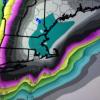
Recommended Posts
Create an account or sign in to comment
You need to be a member in order to leave a comment
Create an account
Sign up for a new account in our community. It's easy!
Register a new accountSign in
Already have an account? Sign in here.
Sign In Now