BlizzardWx
-
Posts
422 -
Joined
-
Last visited
Content Type
Profiles
Blogs
Forums
American Weather
Media Demo
Store
Gallery
Everything posted by BlizzardWx
-
At least in terms of observed weather this fall. It's interesting how dry it's been down here. 8th driest September on record at TUL and looks quite dry into at least mid October. Some areas down here have had more rain than the airport, but it was a dry month for sure. Looking at past years with similar levels of dryness, most of them were ENSO neutral years for whatever that is worth. I am unsure how this comparison would hold up over a broader area.
-
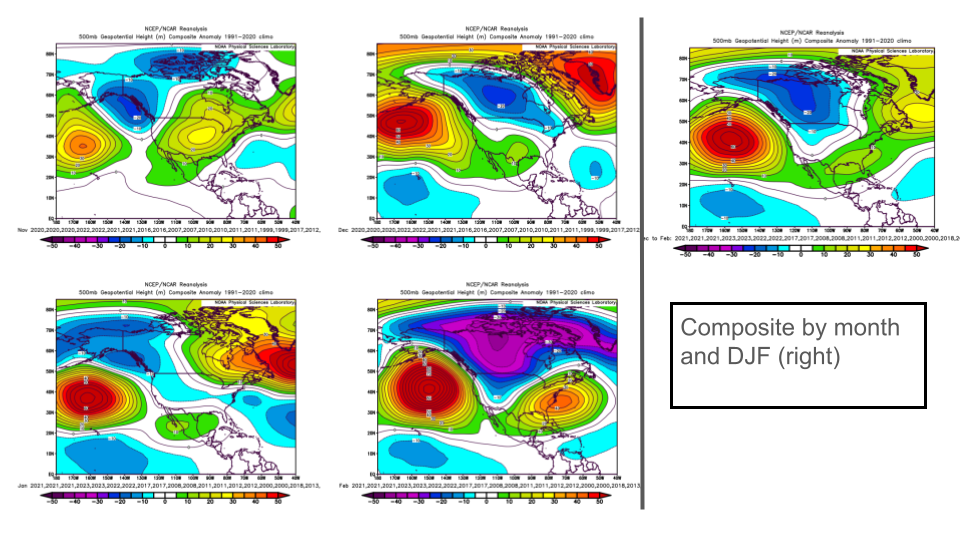
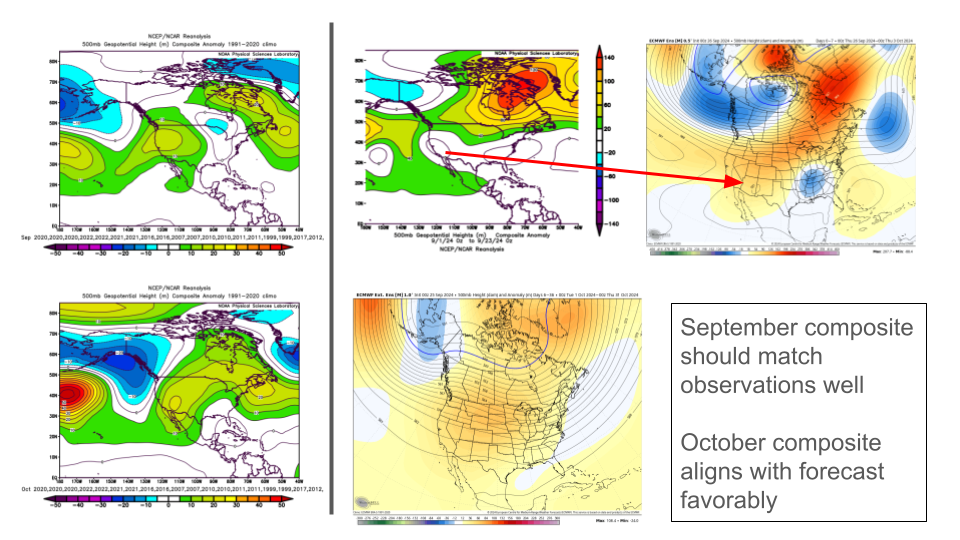
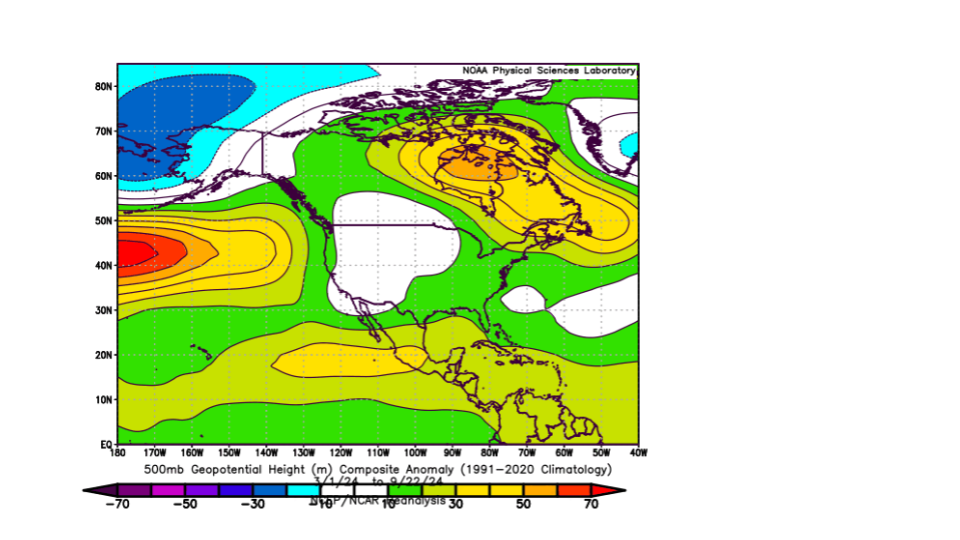
I don't have the expertise that you guys do, but for fun here was what I came up with for a preliminary guess at winter. I weighed ONI/MEI, PDO, recency, and pattern comparison. I didn't use solar as much since I don't know how much that actually matters. The composite of those years compared to this month and next looks reasonable: Usually there is some long term background signal with anomalies that rolls into winter, just shifted a bit. So what we have so far this year mostly lines up with the forecast, but might suggest a slightly weaker SE ridge than my composite had. It doesn't look good for the east, but maybe a little hope with that in mind. For me, I think the odds of an above average caliber winter blast are high, but snow will come down to the luck of the draw. However, most winters have been bad here for the last 9 years or so (7/9).
-
So what do we know about the "Atlantic Nina". Does that even matter for us in winter?
-
Good observations, and I've noticed the same things. I could live with that down here as we'd at least get some periodically interesting weather. The last two years have each had a high end cold wave in OK, but little to show for it in terms of snow.
-
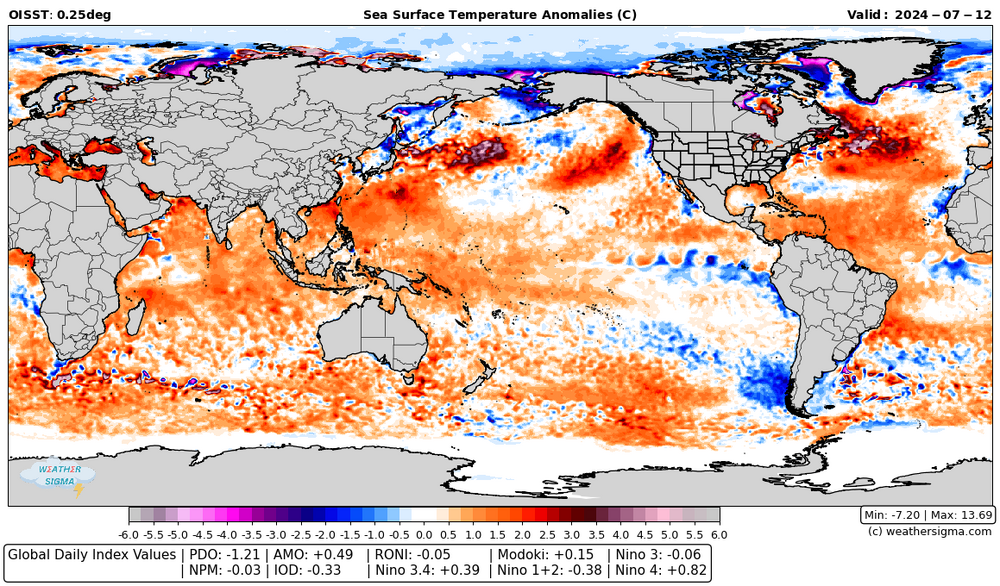
Sorry I've been away for a while. This feature shows up on other websites like wxbell that use that dataset. It seems to occur in places where climatologically there should be ice but there currently is not so its an artifact of the dataset. I can cover it up with a mask and it should be ok. But yes, I can also add the other areas you mentioned. It's no problem.
-
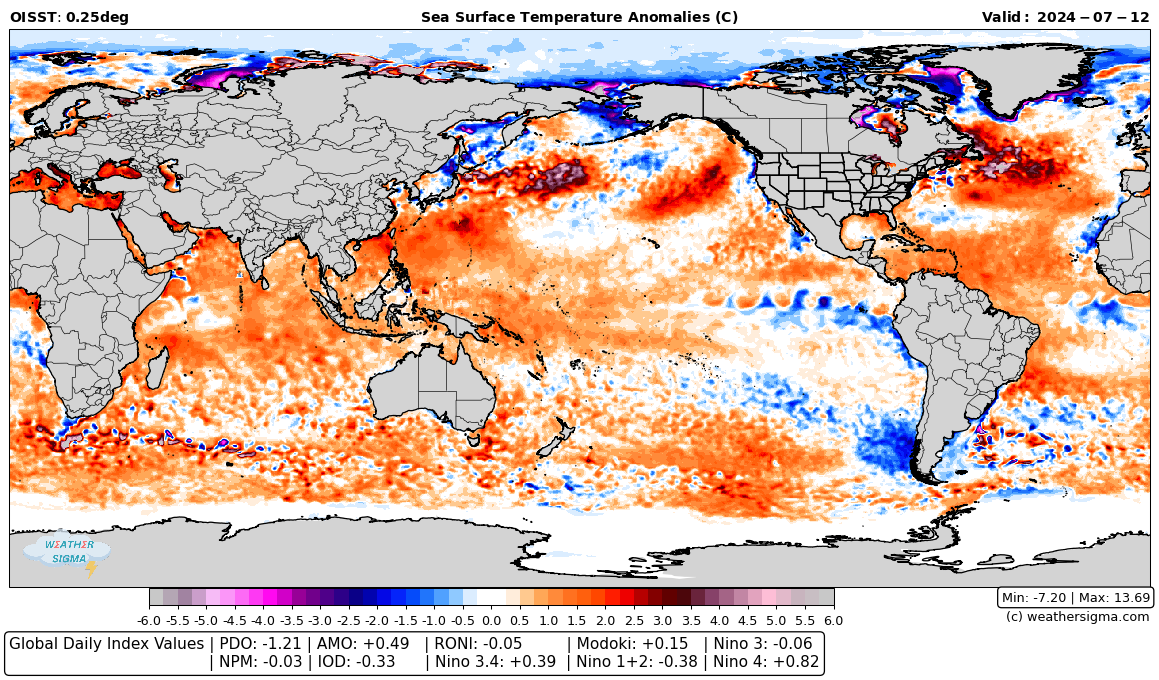
Here is what I have been working on for a sea surface temperature anomaly + (ssta based) index plot. It's possible some of the values are not correct yet and if you think so, let me know. But the idea will be that this is hosted and updates daily within a moth. I'll also do the atmospheric indices like I said.
-
This first part was just SST, but I am wanting to do atmospheric ones after I wrap up this up. I'll make sure to hit all of those!
-
Do you mean like a downloadable csv? So for I've got the pdo, amo, npm, nino regions, and roni worked out. I'll do IO next but beyond that I was hoping for input on what you all would find most helpful to have.
-
I'm working on a project to calculate a bunch of daily index values like the world climate service does for pdo, amo, etc. I'm curious what you all would find useful and any comments on how you'd like to see it presented.
-
What are you thinking favors that? Although I am slightly west of the Mississippi so maybe that's fine too
-
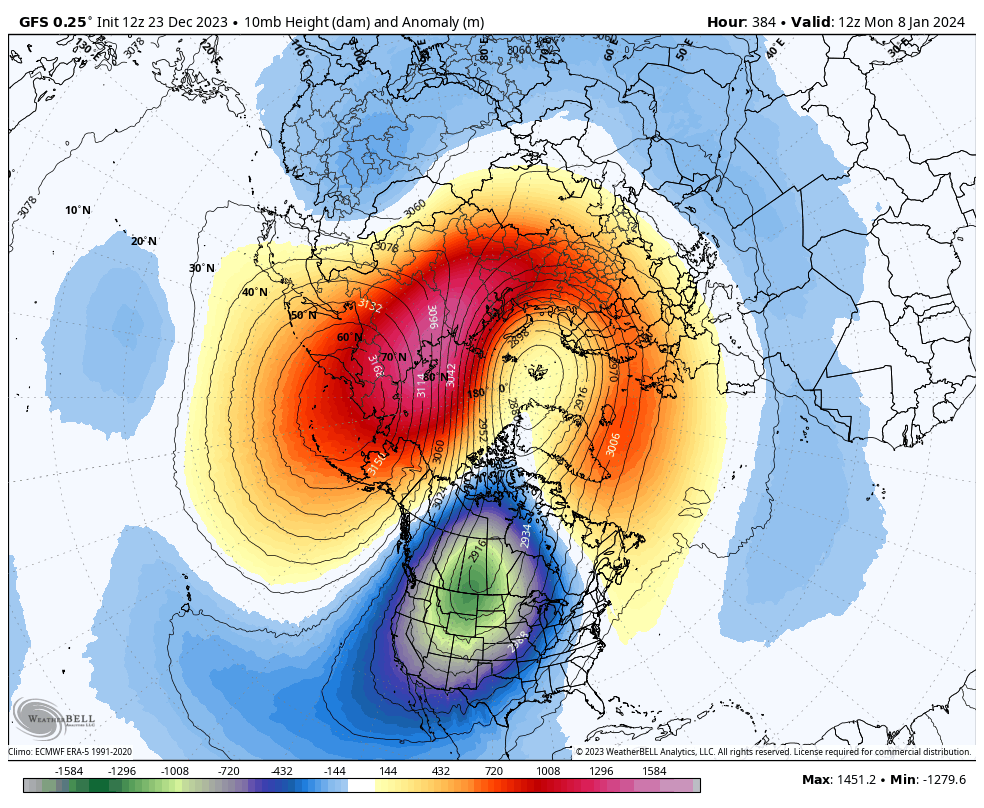
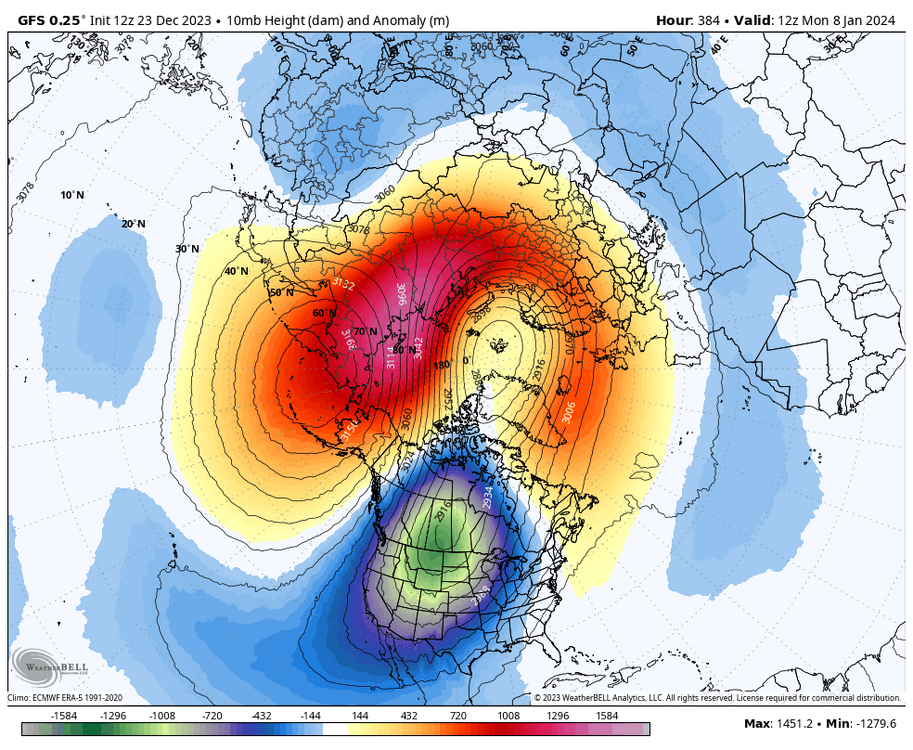
First time I've seen the a PV lobe modeled to sit over NA so far. This extends down to 50 hPa as well.
-
We lost a lot of the strong +u members though for the period in question. Definite consolidation run towards the mean.
-
Is there any work with respect to the location of the initial 10 hPa warming in a SSW and where the cold anomalies eventually settle? It seems as of now the warmest anomalies will focus over east Asia and North America with the remnant of the PV over Europe.
-
MEI will likely get a good bump from this pattern going forward, but hard to say how much over a two month average.
-
If you were issuing now, what would you change?
-
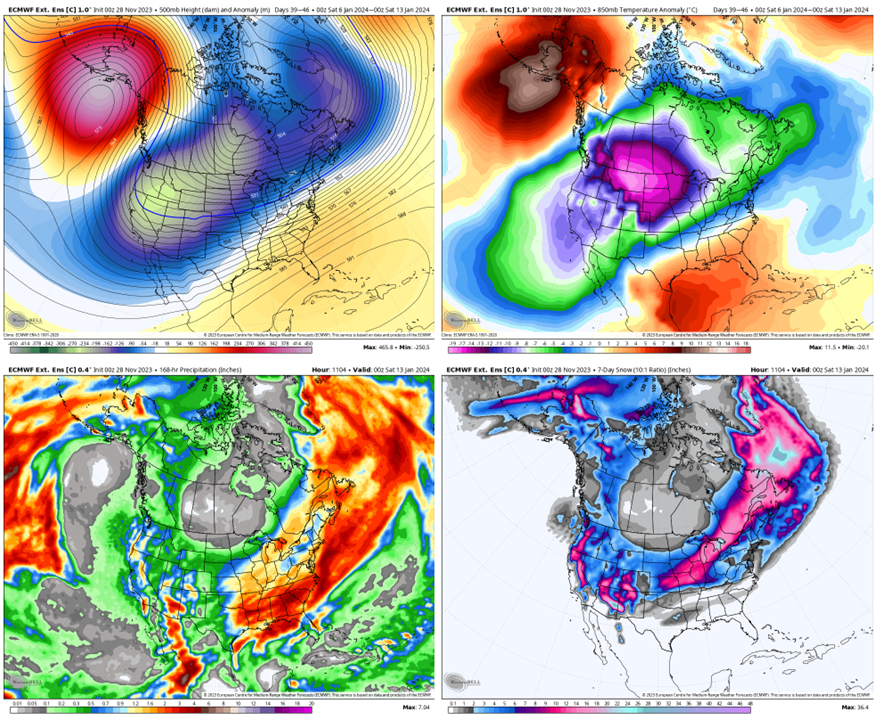
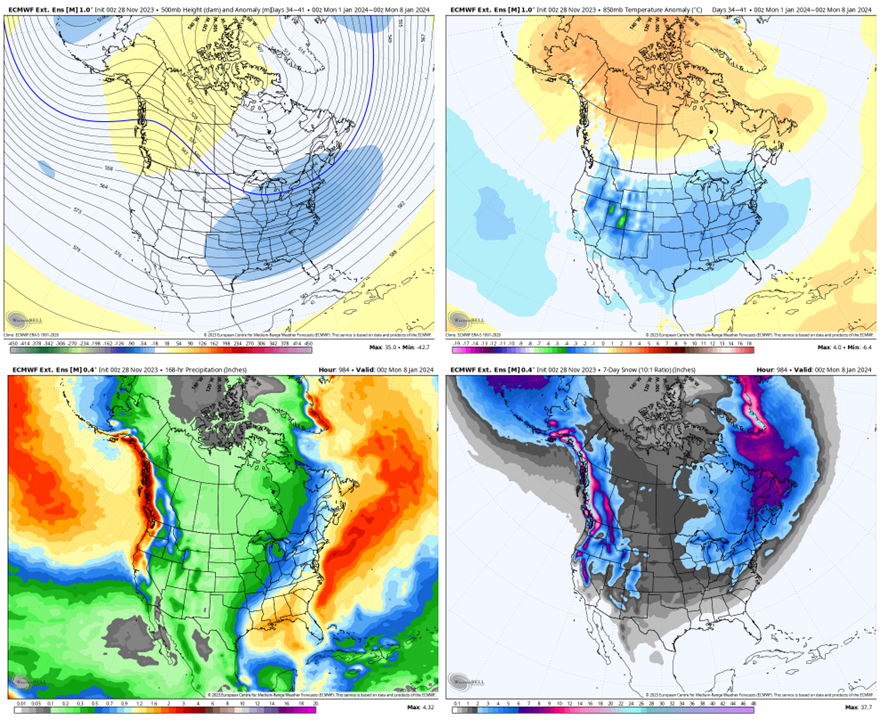
Certainly interesting on the ECMWF weekly run this morning. The control run would probably result in more snow or ice for me.
-
Actually now that you say that I can see it. If you move 2014 east just a bit it matches up relatively ok.
-
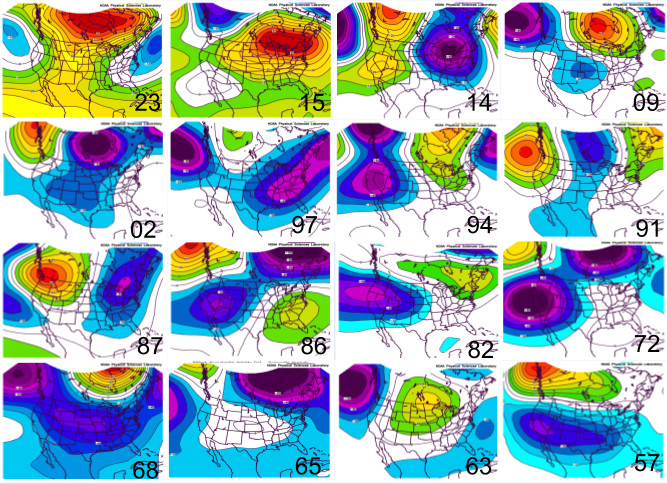
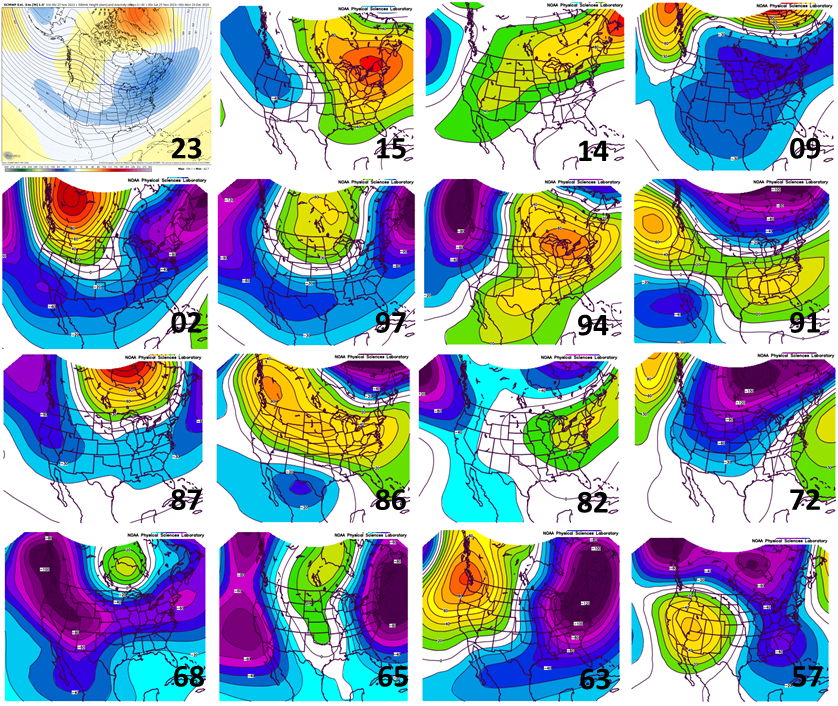
Here is a comparison of the height anomalies for the fall so far, obviously it won't change that much over the next couple days as we round out November. I forgot to normalize the scales as a full disclosure, but it wouldn't have made that much difference in the plotted colors. Anyway, pretty interesting how persistent and widespread ridging has been compared to other El Ninos. There has been a notable lack of a STJ for most of the fall as well as incredibly broad ridging extending from the Great Basin through much of Canada. No other year matches well, though if you skewed the anomalies more positive I suppose 1997 could sort of work. Below is the next month on the EPS weeklies versus the other El Nino years I included. Interesting to see that the +PNA/-NAO pattern showed up in only a few others cases. I thought the best matches were 2002 and 1963, with 2009 not being a bad match either. You could make an argument for a few other years, but they don't have the ridge axis in the right place which I view as essential. I suppose all this is to say, I like what I am seeing at this point.
-
This is a good set up for my area. Might see our first snow or ice in this pattern if it works out right.
-
I mean you aren't wrong, but I'd still maintain its a different problem. For the same reason that our struggle to predict the weather in 2 weeks is basically irrelevant to forecasting long term climate change. In one you are trying to nail down the exact state of the atmosphere and the other you are trying to forecast the average state of it and smooth out the noise.
-
I'd say that's not a fair comparison. Monthly averages factoring in peak ENSO forcing are more likely to verify than snapshot forecasts 2-3 weeks out in many cases. But as others noted, 18/19 was much weaker and therefore you would assume the predictability would be lower too.
-
Is there any historical dataset of NAO/AO (etc) that has a sub monthly resolution? If you know of one, please pass it along. Thanks.
-
Thanks, I will take a look! Also, excellent work on your outlook.
-
I've been reading all the back and forth for the last few months trying to improve my knowledge on seasonal forecasting matters. Thank you for all the great work everyone! I moved to the Tulsa area about a year ago. I'd been in the west before that my whole life. My question is, do any of you have any thoughts on how the ideal combination of indices for winter weather varies between here and the east coast? It seems obvious to me that there is a lot of overlap, but that my best snow patterns aren't going to be the same ones where the northeast scores big. Anyway, let me know if you have any thoughts. Thanks
-
Central/Western Medium-Long Range Discussion
BlizzardWx replied to andyhb's topic in Central/Western States
Pretty interesting GFS runs today with a moisture tap from the tropical system down there into Arizona and then again with the dying remnants of another system hitting the same area. Could be quite wet in some locations that traditionally get almost no rain in June.