
vortex95
-
Posts
2,210 -
Joined
Content Type
Profiles
Blogs
Forums
American Weather
Media Demo
Store
Gallery
Everything posted by vortex95
-
Augdewst 2026: Summer's Last Stand
vortex95 replied to Prismshine Productions's topic in New England
That's pretty good. Just thinking that in the summer, it not easy to snow in the tropics even at 14,000 ft, but even less likely when a TC is present b/c of its warm core nature, but PHTO sounding 16/00z showed it right at 0 C at this level. -
Thanks! Great to know and I will pass along. Turning off the NAM I have no issue w/, but when you roll out a new model, you should always keep its predecessor for a time for comparison. The NAM is severely outdated, but the HRRR is not and still does a solid job, so kept it UFN! They were supposed to stop the HWRF and HMON last year, as the HAFS has shown marked improvement overall (I was sold when it nailed MIlton's RI, then weakening, then another RI, and then its rapid weakening leading to landfall). The HMON?. recall when that was first rolled out in 2017 I think. It was showing crazy intense TCs, so much the model fields would "turn inside-out" b/c the intensity was nuts. But the HWRF and HMON continue. I prefer avoid the notion "more is better." Yes, second options and consensus have value, but only to a point. It can easily become TMI and hurt the fcst process. Also, you have those that always look for the one model that shows the worst case scenario, and they run w/ that for clicks/likes on social media, when it is well known X model is terrible or has bias for Y phenomena. It's like the GFS for spinning up bogus TCs beyond day 7 or the ICON in just how it handles TCs (much too intense forecasts for current TCs).
-
Here is the best line I have seen that tempers the idea that the models are so good, they are better all the time by default, and by extension, human input is not needed. "Models now can give very precise-looking forecasts/output that can be *precisely* wrong! And going one step further: "Precision does not mean accuracy!"
- 2,604 replies
-
- 1
-

-
- severe
- thunderstorms
- (and 7 more)
-
That's a solid sign. One thing that can misleading -- cool, dreary, and stable-looking can make ppl think, "how can this 'go away' so fast and big svr occur?" Well, it does and can be quite dramatic. Wichita Falls TX was socked in stable ahead of the warm front on 4/10/1979, and then an F4 cut directly through the city for the costliest tor up to this time. Same thing in Windsor CO on 5/22/2008. This was an odd one b/c it occurred the late morning, moved NNW, and the storm formed in a very narrow sweet spot of instability/shear ahead of a sfc low. See here: https://www.weather.gov/bou/TornadoMay22nd2008 Mean-looking! https://www.youtube.com/watch?v=GfYuT0oalXQ
- 2,604 replies
-
- 1
-

-
- severe
- thunderstorms
- (and 7 more)
-
It loves to make giant convective blobs on its composite reflectivity fcst. Once it goes operational, and ppl use it more, I bet that will be a sig complaint, and they will address it. A big issue w/ mesoscale models now is that the more hires they get and more directly simulate the atmosphere processes, the challenge to get everything in balance goes up in a non-linear fashion. In other words, any small tweak to fix one issue can have big impacts to another part of the model.
- 2,604 replies
-
- 1
-
-
- severe
- thunderstorms
- (and 7 more)
-
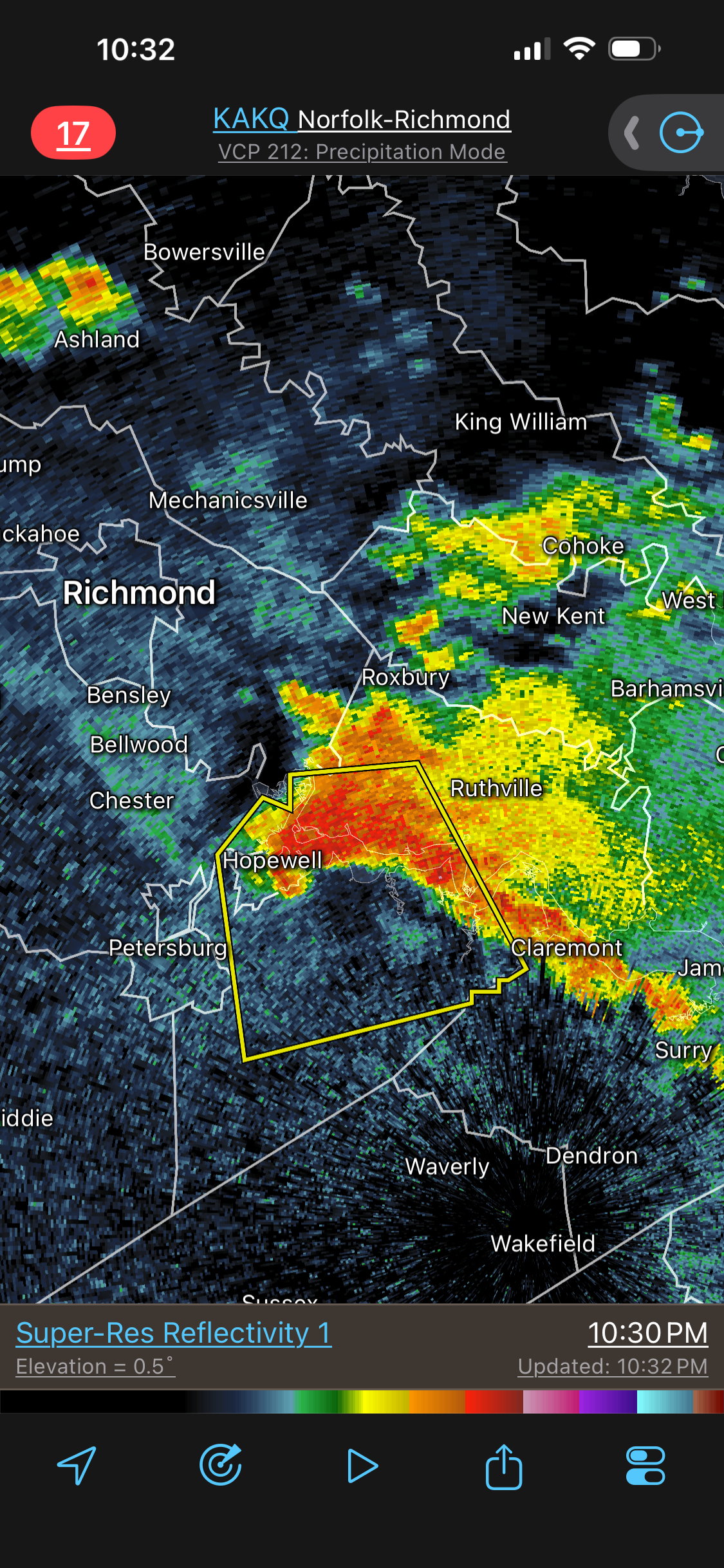
Yes, quite stable looking w/w a mid level deck (almost asperitas). However, there is instability above that, as evidenced by the sharp showery nature of the rain, Driving a short time ago, I'd literally hit a wall of rain, but the shafts are very narrow. Drove another 500 ft, and it would just stop! No vis reduction. And the rain was heavy not b/c of big drops, but the density was very high, so warm rain process and shows how tropical juiced things are! I did not like that the 12z HRRR showed almost nothing for the DC area this aftn, but the 13 and 14z runs bring it all back. Not quite as intense as say the 00 and 06z runs, but at this point, we'll just have to see how the mesoscale details work. Due to the rain and cloud cover, hard to tell if this is any real front across the region. Winds are all generally light S from the PA border and S. No real temp gradient either, all in the mid-upper 70s. No 80 until RIC and that just SE of there. Still early though. The AM convection is on schedule and modeled well.
- 2,604 replies
-
- 1
-
-
- severe
- thunderstorms
- (and 7 more)
-
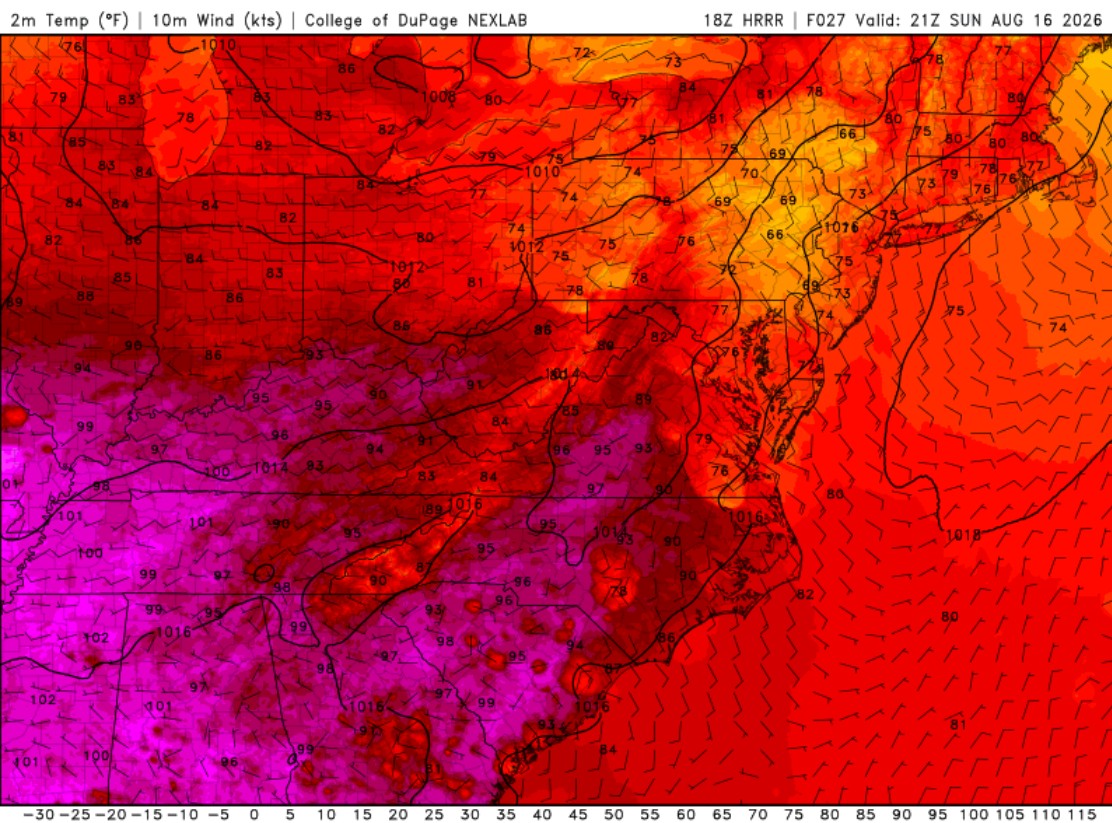
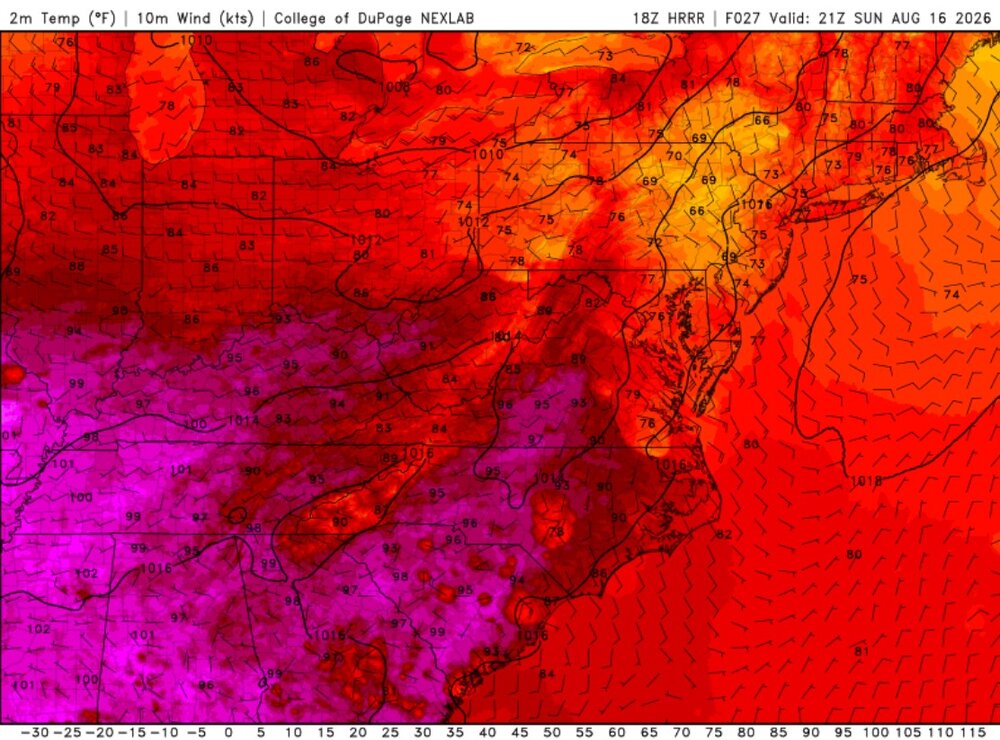
I am thinking the dew point advection will be enough in the aftn. They all show a finger of high CAPE (HRRR shows up to 4500, but that seems overdone, GFS and ECMWF have 2500 max) to n-cntrl VA, stopped just W of DC (really close, only about 20 mi W). So there is good CAPE available, just not widespread. It appears there will be a N-S warm or stationary front bisecting VA Sun aftn. Look at the HRRR fcst for 21z Sunday. That is quite a temp gradient, and such a boundary is ripe for tornadogenesis. Any storm crossing or latching on to such a boundary can go tornadic very quickly. Even on the cooler side, it can be favorable a short distance in b/c the cooler air is very shallow so a supercell is still effectively sfc-based.
- 2,604 replies
-
- 5
-
-

-
- severe
- thunderstorms
- (and 7 more)
-
And it shows solid destabilization despite lots of clouds. You can do a lot more for CAPE by adding to the dew point than temp per deg. GFS has DCA 69 dew point at 15z up to 74 by 00z. Also it backs the sfc winds to SSE. This is w/ WNW winds at 500 so that's over 90 deg veering sfc-500. That should mean robust supercells. Speed shear is common here but good directional shear is not so this may be a best tor risk of the year so far Sunday.
- 2,604 replies
-
- 3
-
-
- severe
- thunderstorms
- (and 7 more)
-
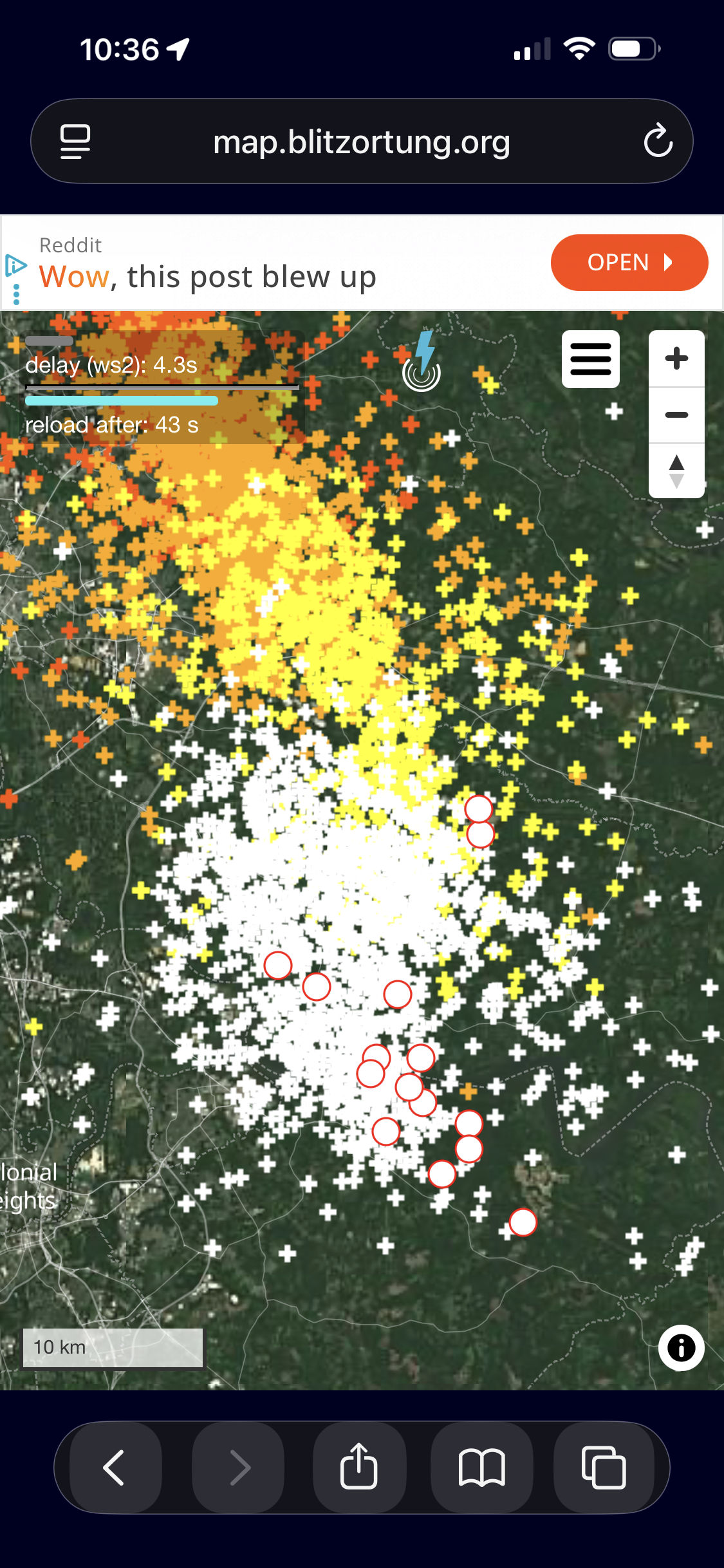
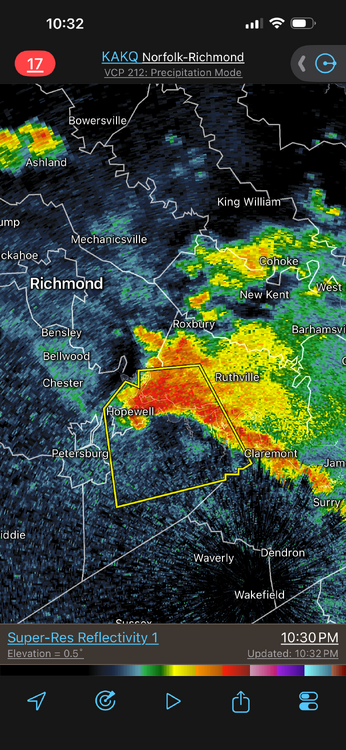
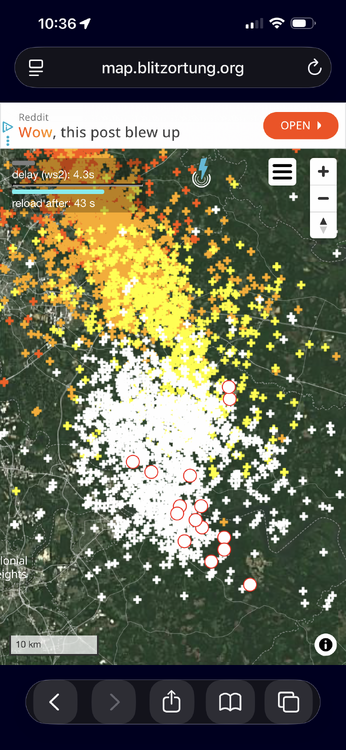
1030pm last night. Dang! Ton of CGs as well.
- 2,604 replies
-
- 1
-
-
- severe
- thunderstorms
- (and 7 more)
-
18z RRFS is the same. Both models show more than one wave of storms after the AM convection. I like the significant sfc dew point advection tomorrow aftn over the region
- 2,604 replies
-
- 2
-
-
- severe
- thunderstorms
- (and 7 more)
-
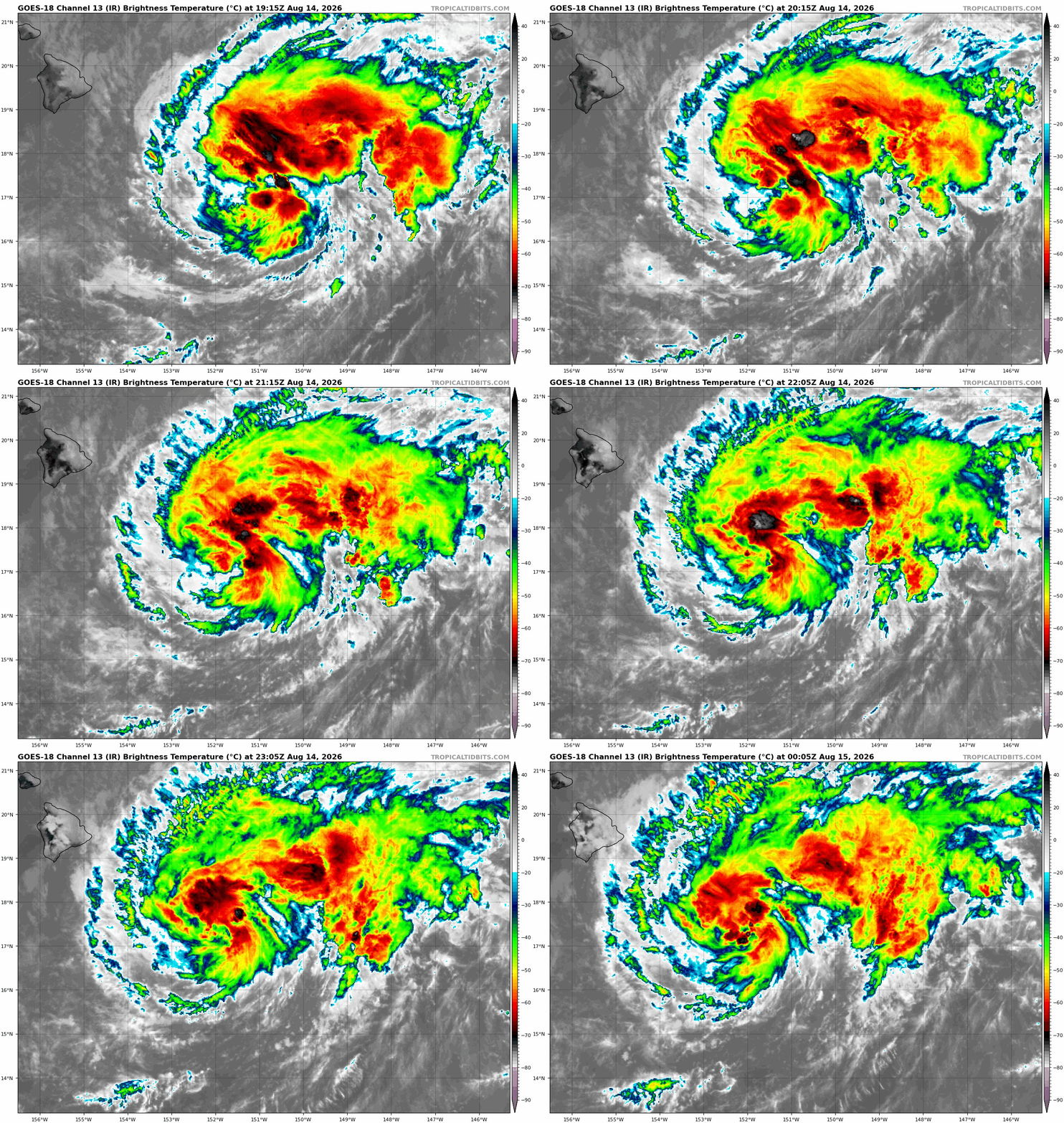
Yes, i agree. and yes, avoid social media w/ all its hype and gloom and doom rhetoric! Looking at radar, you'd think that Lala is easily a min hurricane, but it shows how things can be misleading. A less apparent mitigating factor is that Lala started out as a monsoonal system, so it already had a broad pressure field and center. Monsoonal TCs generally do not tighten up much, esp. for its inner core, so I think that why you have a clear eye feature on radar, but the winds are less than what you would expect. The eye is now apparent on IR, but it is very ragged and the convection is not smoothly banded around it. That indicates shear and dry air still present. Recon not since last night, so the one en route now will be interesting, but Doppler velocities suggest little change through 15z. The overall point I was conveying from the start is that Lala is not you typical TC, and had more against it than for from the start, so odds of RI were low and it intensity curve would not be like many TC evolution we see for one moving W in the deep tropics. These kind of details count. I see far too many "social-meteorologists" and hype-masters gloss over things and treat all TCs the same as if it is "one-size fits all." Nothing could be further from the truth! For example, I bet there are some out there that are saying, "radar shows a clear eye, and now there is an eye on satellite, why isn't it upgraded to a hurricane?!" And yes, I can see why. Say Lala was far at sea. In the absence of in situ recon data, going by satellite estimates alone, when an eye is present, even if ragged, that usually mean min hurricane strength (Dvorak Technique says this). But again, one needs to examine all data available and the details for a proper assessment. My hope contributing to this forum is point out the finer details of TCs and their nuances/idiosyncrasies b/c the variance from TC to TC can be very large.
-
Augdewst 2026: Summer's Last Stand
vortex95 replied to Prismshine Productions's topic in New England
Classic low-top, high-based "squished CAPE" cell wider than tall! Cold at 500 does wonders! And the cell just reeks "unstable" w/ its chaotic congestus appearance. Like the "chaotic sky" when ACCAS is present. This is an ACCAS on steroids you could say! -
I don't think the AM convection Sunday will be a detriment for later. There is solid support for the aftn-eve w/ a 700/500 trof moving in. PWATs increase in the aftn to as high 2.5" on the GFS/ECMWF/NAM, and there is very good directional shear w/ nicely looped hodographs and strong veering 925/850 to 700/500. Wind fields 925-500 ramp up in the aftn to 35-40 kt at all these levels. So supercells likely and the 2% tor risk is warranted. Could see upgraded to 5% given the strength of the 925 winds (30 kt+ is excellent and we have it fcst as high as 40 kt). Everything moves steadily W to E, unlike the previous events that were NW to SE and that pushed all the moisture and boundary focus S, so solid recovery for instability after the AM convection is a good bet. FF threat, as noted, is there are well. RRFS is quite aggressive for cntrl and nrn VA showing up to 7.5" of rain. This model tends to overdo things, but 4" in some locations high prob IMHO.
- 2,604 replies
-
- 5
-
-
-
- severe
- thunderstorms
- (and 7 more)
-
Augdewst 2026: Summer's Last Stand
vortex95 replied to Prismshine Productions's topic in New England
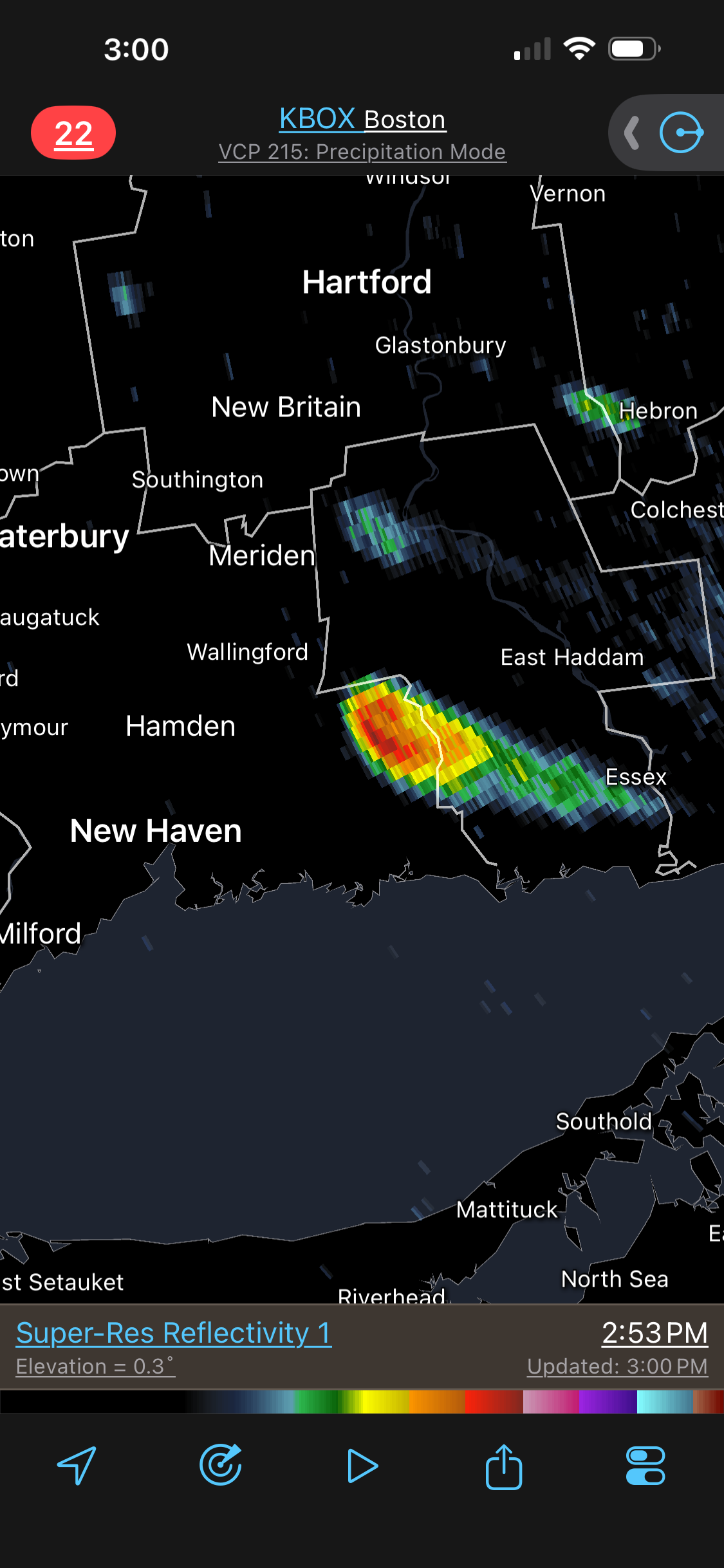
More for HVN area! -
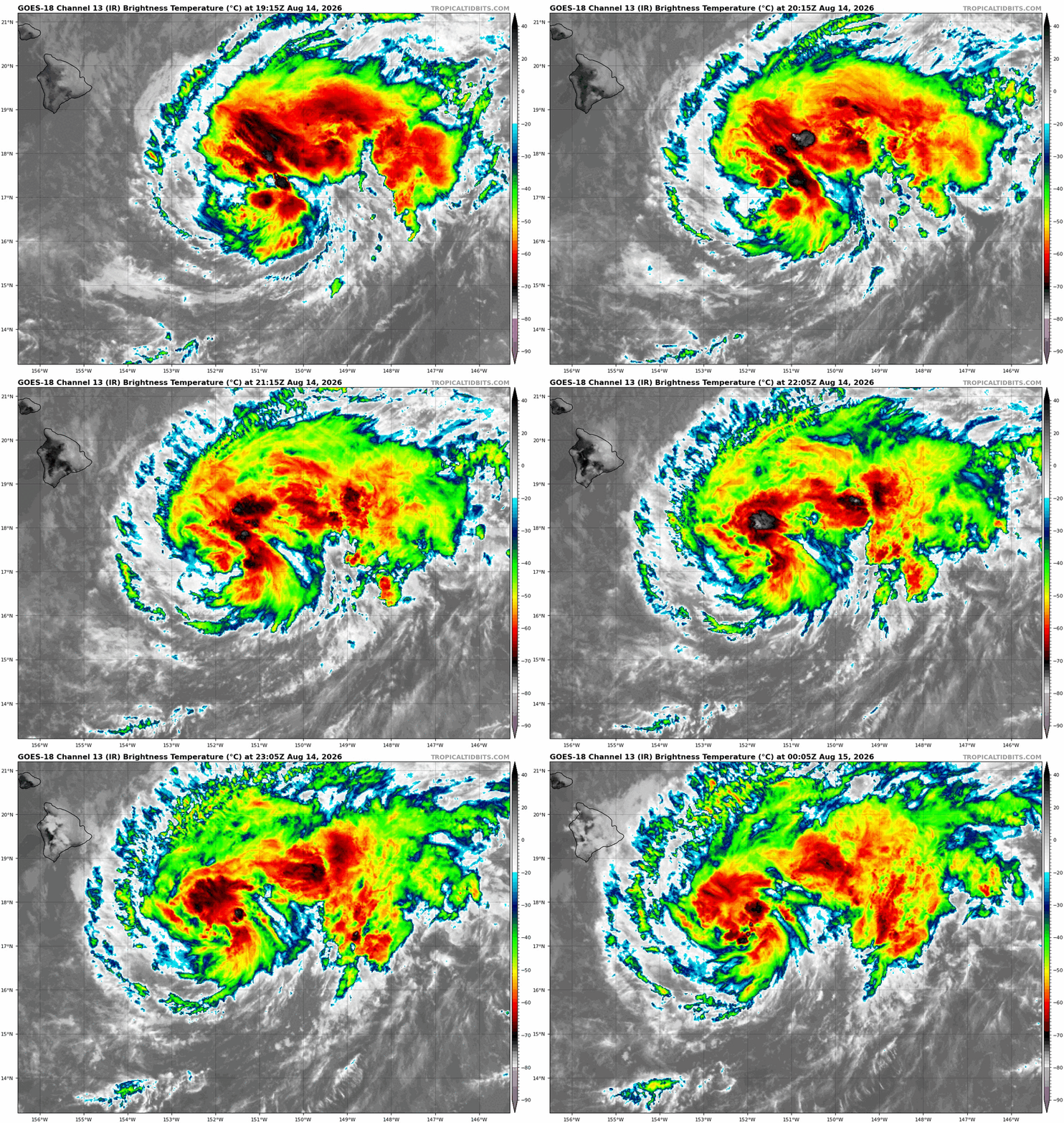
NHC gives Lala 55 kt at 00z. Yes, the pressure is down 2 to 995 mb, but peak 700 mb FL winds are only 53 kt w/ max SFMR surface winds of 48 kt. Standard reduction for 700 winds to the surface and the SFMR winds are matched well here, so 50 kt seems more appropriate. The 2330z Dvorak analysis gives T3.0 which equals 45 kt. So the satellite signature is not 55 kt, which would be a T3.5. Satellite signature does still matter even when recon is present b/c recon can only sample a small part of the storm. Satellite gives a complete view. Also, the above was a manually-done Dvorak fix. The Automated Dvorak Technique (ADT) gives a T2.6, so that is even weaker. All these things go into what to assign a TC for intensity. Looking at the EIR loop, there is no real change in organization, and the deep convection is pulsing and not banded well. Loop attached, We all see the same data, so not arm-chairing here, just giving an objective meteorological analysis, and talking about the different tools and products one can use to make their own assessment, which is a good thing to do!
-
Augdewst 2026: Summer's Last Stand
vortex95 replied to Prismshine Productions's topic in New England
Not sure which would do this first, but I know they would do it for different reasons! @CoastalWx would do it b/c he pines for snow, and @weatherwiz would b/c he is just happy getting hail! https://www.facebook.com/reel/1613750856948083 hailPHUN.mp4 -
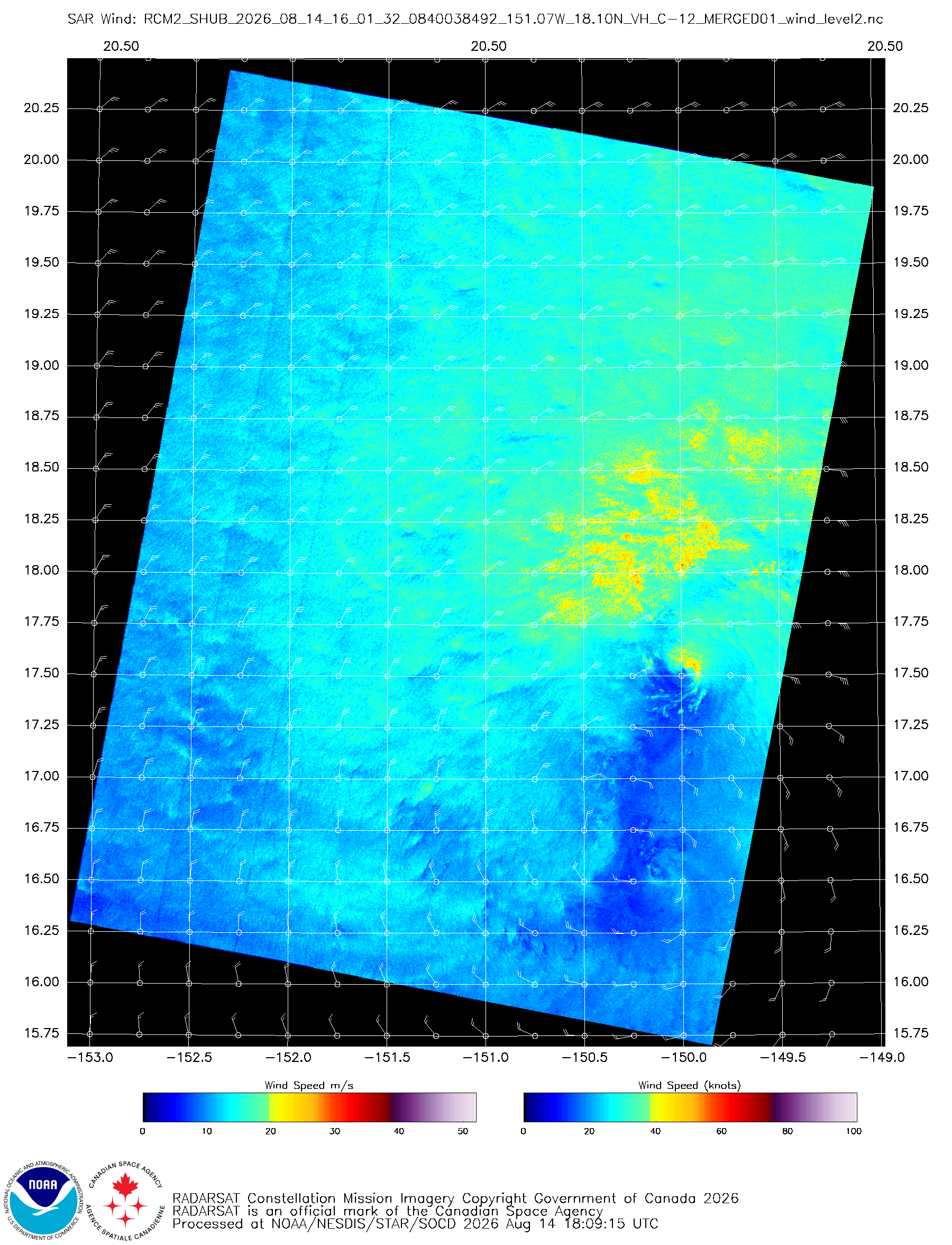
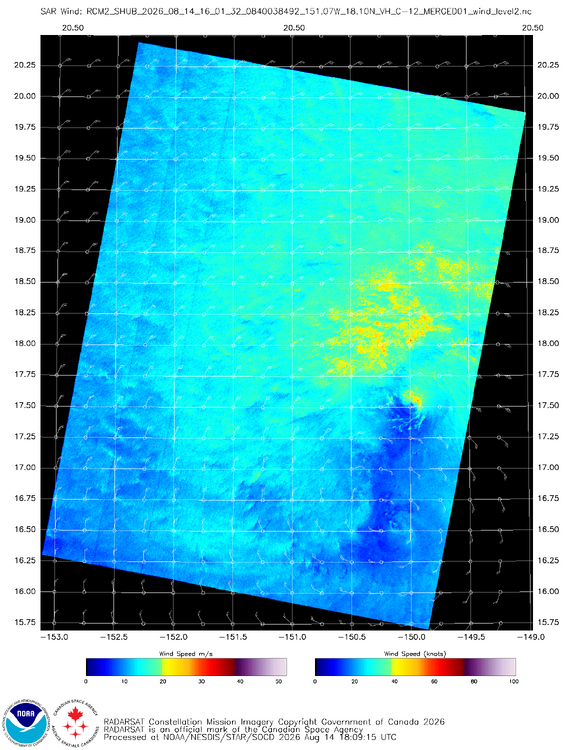
1601z SAR pass does not show a well-organized system (see attachment). Looks like there are two LLCCs and this large N-S gap of light winds and strong asymmetry. I don't know why NHC keeps saying, "conditions generally favorable." That is vague. Dry air and shear are an issue. CMISS 18z analysis showed 18 kt of westerly shear present. Lala was 50 kt/997mb at 03z and still is 50 kt/997mb at 21z. 2156z recon shows these values unchanged. Models still show an upper-level trough developing over the western Hawaiian Island as Lala gets close to the Big Island, so that is not "favorable" in an overall sense. NHC seems to be hedging higher and using persistence IMHO. One possible factor is that topographic convergence may tighten the wind field along the srn tip of the Big Island as gets close for 64 kt winds, but that's a local mesoscale factor not directly related to actual intensification of the TC synoptically. Topographic influences for winds are to be discarded for assigning actual TC intensity AFAIK. It is similar to discarding mesoscale higher winds from intense pulsing convection when shear is present for the TC (Bertha had this big time) or a transient mesovort in the eye. Still a significant impact on Hawaii, not downplaying that, just talking above about the finer details of meteorological analysis, which I hope some find informative.
-
Augdewst 2026: Summer's Last Stand
vortex95 replied to Prismshine Productions's topic in New England
And it was only a MRGL day! 8/12 and 8/13 were excellent examples of how "only" has gen tstm and MRGL out can be deceptive or promote the @CoastalWx MEH! MRGL say nothing about how intense any given tstm will be. And you can having honkin' supercells no problem. I recall in April 2024, MRGL for NC/SC and one storm produced 4" stones in SC! The HVN MB?, in a general tstm area, yet we get a high-end wind gust. And the PWM area ydy as noted. But the actual svr reports are isolated/sct as shown on the SPC plot from 8/12 and 8/13. https://www.spc.noaa.gov/climo/reports/260812_rpts.gif https://www.spc.noaa.gov/climo/reports/260813_rpts.gif And now for today, suddenly a narrow gen tstms area gets upgraded to MRGL at 1630z. Decent 500 s/w and temps drop to -17 C at 500 (that is quite good for August - and ydy they were -14 to -15 C). When it's good, it's good (NW flow and cold temps aloft RULZ!!!) I don't want to hear any IMBY "I didn't get anything!" whining either! -
Can you provide a link to the CSU MLP?
-
Augdewst 2026: Summer's Last Stand
vortex95 replied to Prismshine Productions's topic in New England
The HVN area just can't be left alone!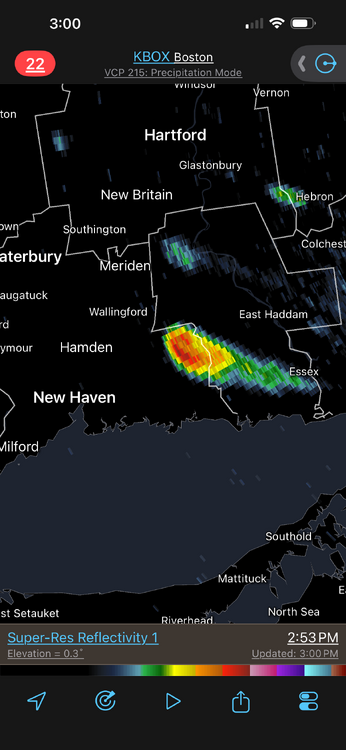
-
I am not sure how well it may perform here b/c since Deep Mind is trained on past events, and there are very few cases in this area of the Pacific compared to the ern Pacific and Atlantic. The HAFS-A and B, which are the best TC physics-based models, do not show the system attaining hurricane-strength. The HAFS-B was much stronger at showing a 965 mb hurricane at 06z, but 12z was weaker, and now 18z has backed down to below hurricane-strength. The both show the system quite asymmetric for convection for it closest pass to the Big Island, which we can already see on sat (all on the N side).
-
Augdewst 2026: Summer's Last Stand
vortex95 replied to Prismshine Productions's topic in New England
1.26" rain in just 24 min as well. -
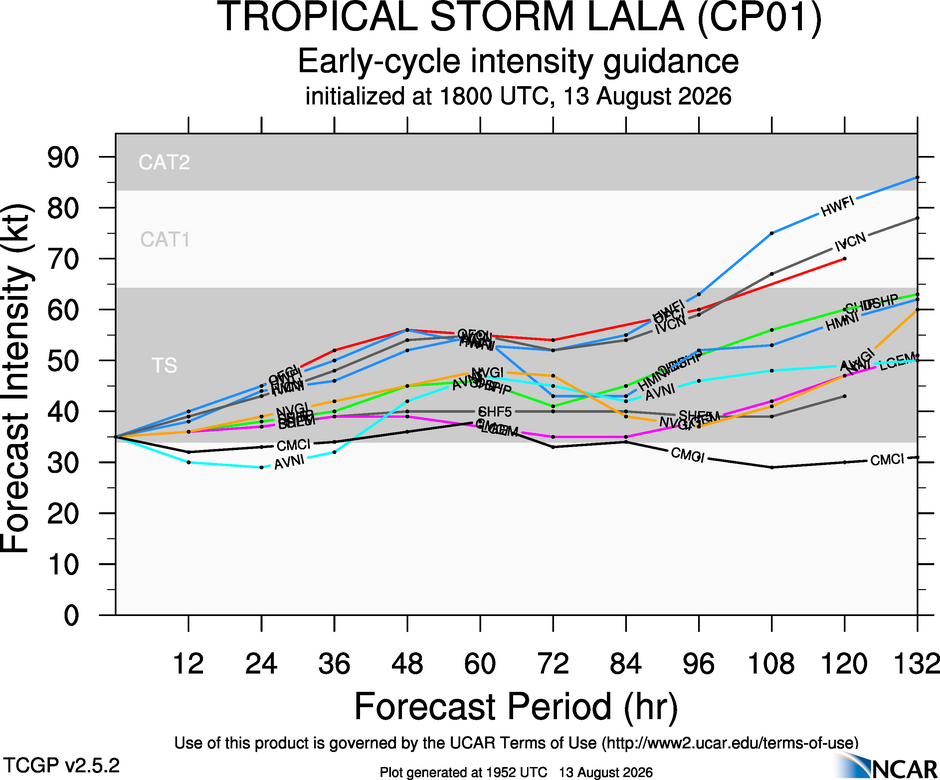
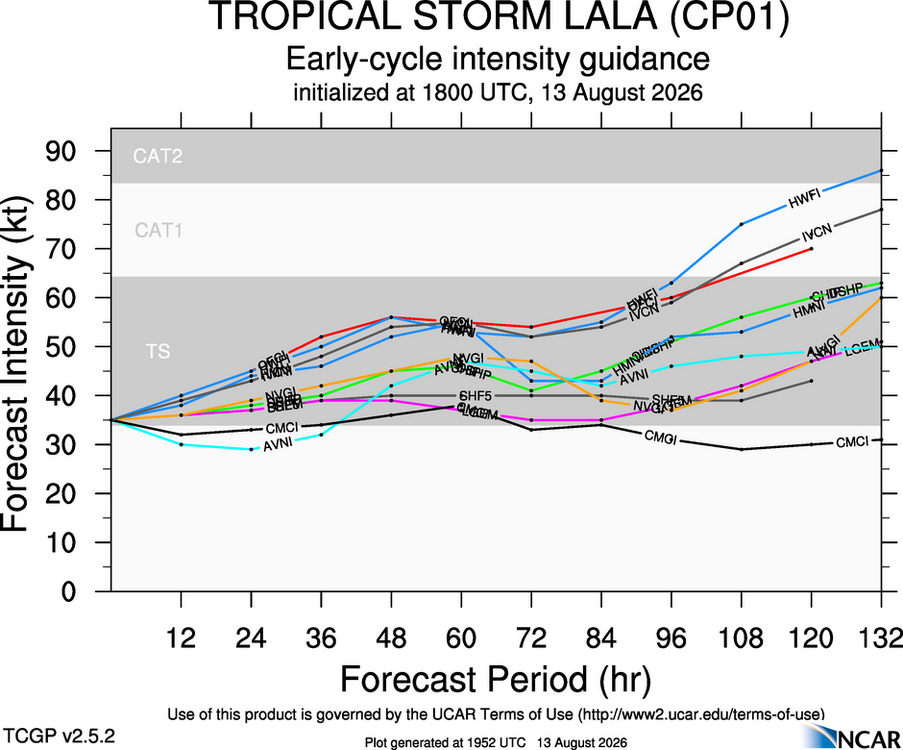
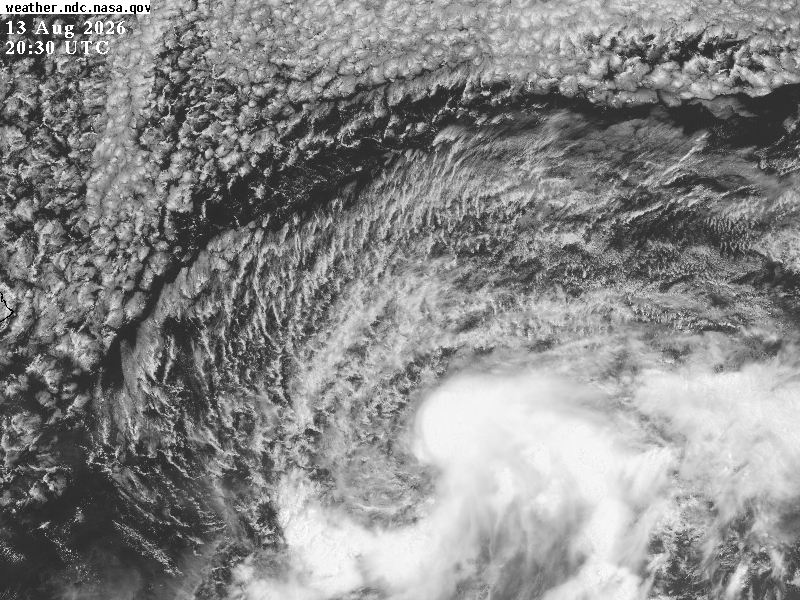
What model is this? Attached is main NHC model suite for intensity, and it looks reasonable given the environment. Regarding the environment, speculation for capping of intensity can be minimized b/c satellite tells the story. All the stratocu evident N and W of the TC indicates a stable atmosphere, which is not conducive for much strengthening beyond a minimal hurricane. See VIS image attached. 12z GFS gets it down to 996 mb near the Big Island before it weakens. ECMWF is the same. HAFS-A min is 998 mb and HAFS-B is 988 mb, but only b/c HAFS-B is farther S and doesn't get the circulation tangled w/ the mountains of the Big Island. That may happen b/c overall, there seems to be a S trendfor the track w/ the most recent model consensus.
-
Augdewst 2026: Summer's Last Stand
vortex95 replied to Prismshine Productions's topic in New England
@CoastalWx : "What?, I HAZ snowed in August???!!!" -
Augdewst 2026: Summer's Last Stand
vortex95 replied to Prismshine Productions's topic in New England
2026 - the year CT gets soaked and focused HVN-Hamden SVR! "Why can't that ever happen around Weymouth!?"