
raindancewx
-
Posts
3,990 -
Joined
-
Last visited
Content Type
Profiles
Blogs
Forums
American Weather
Media Demo
Store
Gallery
Everything posted by raindancewx
-
Have you guys seen this? A meter of snow in the Sahara. https://t.co/Kbh5hSeuwz The 1978-79 analog seems to be working...in the Sahara.
-
This was a pretty interesting read from Larry Cosgrove earlier, regarding February. He's been pretty consistent since November in thinking it could be a crazy month. https://groups.google.com/forum/#!topic/weatheramerica/lqwBkN3XVkM Here is what we do know. The hue and cry over La Nina has given way to the realization that ENSO is as neutral as can be. The Madden-Julian Oscillation continues to each ever slowly eastward, now resting in chaotic fashion over the Maritime Continent and western equatorial Pacific Ocean. As long as the MJO is percolating and feeding both the polar and subtropical jet streams, apparent weather in North America will be mostly cold, and quite often stormy. Snow cover is most dense through northern/central Eurasia but is at near normal levels in Canada and the U.S. The January Thaw influence in reducing the continental snowpack has so far been fairly limited, especially over the West Coast and Intermountain Region.Put these trends together, and the weather map for February 2017 looks similar to December, but with the cold dome set a bit more to the south and east. The colder transition occurring during the new week should last until the first day or so of the new month, so January mean temperature anomalies will not look as warm as is the case between January 1 - 20. Precipitation is again a tough call, if only because of the tendency for systems to avoid the West Coast and dig into Baja California before ejecting. In a -EPO scenario, the disturbances would eject through Texas, pass through the Deep South, and ride along the Atlantic shoreline. That more suppressed south and east trajectory will favor more snow at lower latitudes, probably affording the Eastern Seaboard cities their first chance at significant snowfall. The potential for such an event is sooner than you might think.If you accept the CFS series depiction of the 500MB flow, but avoid the warm bias of the 2m temperature anomaly forecast, then the skew of a warm/dry West vs. cold/stormy Central, East alignment is evident. Alaskan blocking signatures occurring in tandem with -EPO or +PNA styled ridging can help to deliver far-flung cold intrusions that can reach Mexico and Florida. A potential for a deep closed 500MB low in western Ontario also allows for an active storm track with the cold air. I can see the possibility for the Old South and Mid-Atlantic states falling under a mild/moist regime around February 4 - 7 with a brief resumption of a subtropical high across Cuba and the Bahamas. But another hammer of cold event should return soon after. The western states, much of the time under ridging, may finally take on a milder and drier pattern. This after a major assault of storminess and cold from disturbances digging south from Alaska.
-
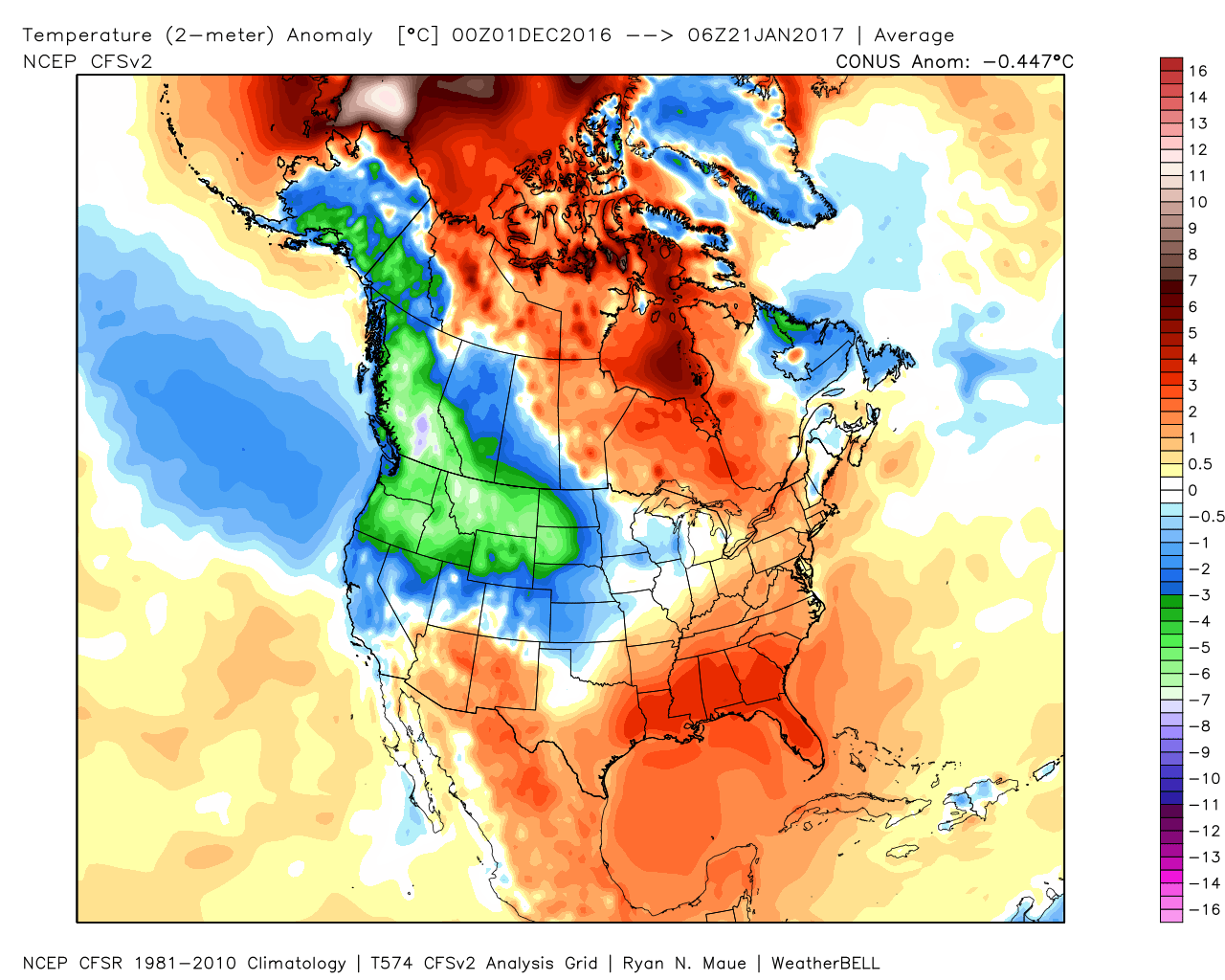
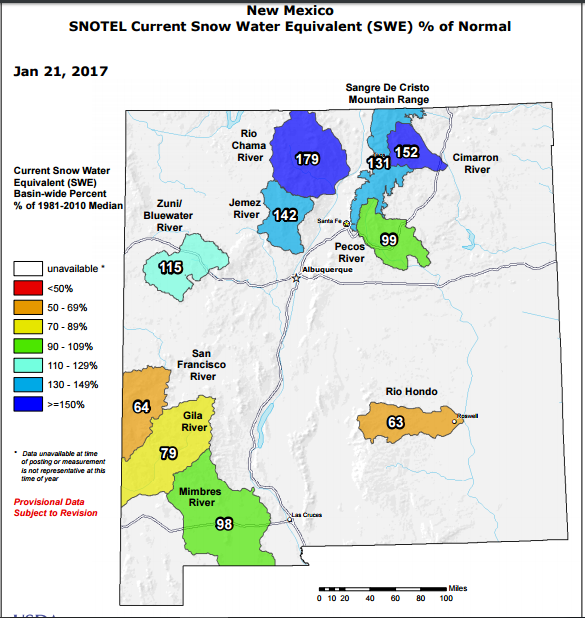
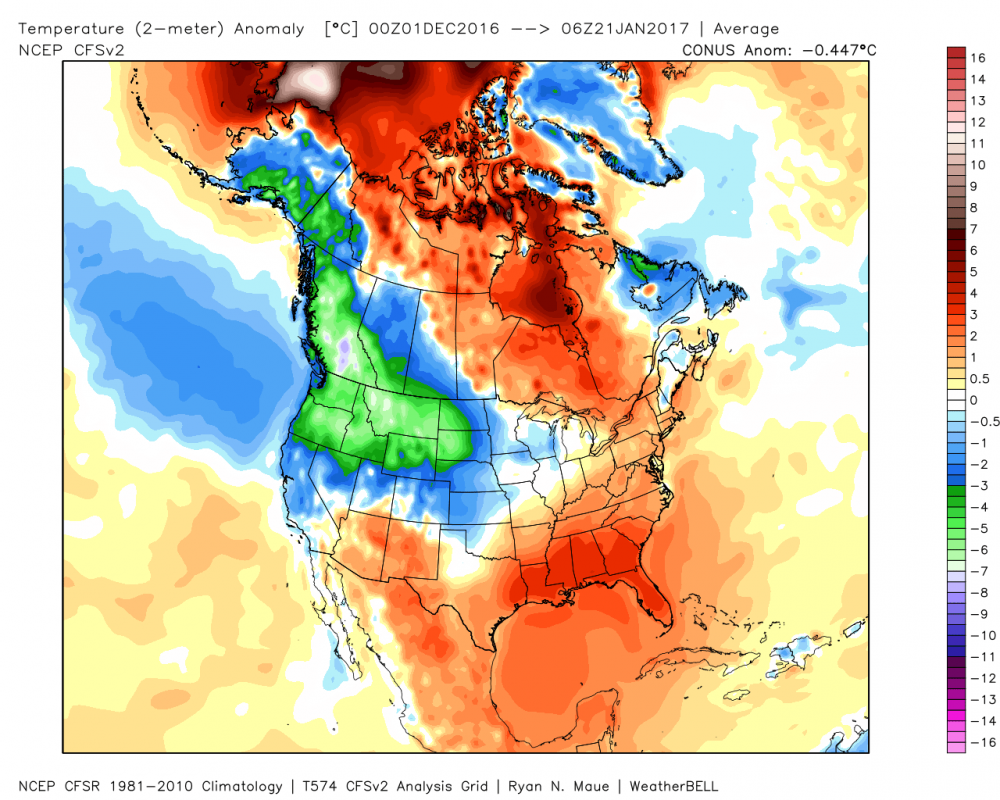
I'm pretty sure this the highest our snowpack has been in a long time - almost all the mountain ranges are near normal to above normal now, and February doesn't exactly look warm here either. A lot of my analogs had the intense cold centered on Montana - that looks pretty good so far. Florida is absolutely roasting this winter.
-
The dryness in the NW to me implies that the battle between the PDO+ (which favors dryness/heat up there) and La Nina (which favors wetness/cold up there) has been pretty even. The entirety of the West seems to be splitting the difference between the PDO+ effects and the La Nina effects. La Nina winters are warm here - and we have been. But they are dry too...and we haven't been dry at all. The PDO+ favors wet...but mild/cool. We've been wet but warm.
-
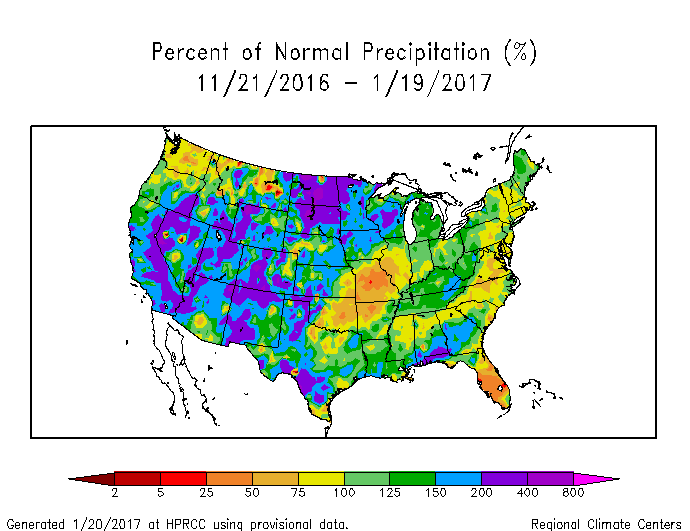
Been pretty wet these last two months. I had the East Coast dry this winter - not sure if it will work out, they seem like they will have a couple decent storms the next few weeks, but it has been decent the last 60 days. My fear for the Spring is the whole pattern shifts north 200-500 miles and we roast down here. Hopefully it won't happen until April/May though.
-
I was doing some research the other day using a Z-score calculator for a differences in proportions, and if you use an 11-year filter (sunspot/flux cycle), there are definitely clusters of notable weather events near certain parts of solar cycle here in Albuquerque. Used a p value of <=0.05 with the cluster in question compared to all others. In other words, was trying to see if "low probability events" become meaningfully more likely in a given solar year. I defined solar years as x+11, for each year from the 1930s to now, and then compared frequency in the cluster to all others. Most of the stuff I looked at didn't show a meaningful difference but some stuff did. Low sunspots - frequently cold Jan - Apr. My math suggests we are in "year nine" of the solar cycle. Years 11 to 2 - and the cycle is 1-11, with 1 following 11 - tend to be remarkably cold in Jan-Apr at least once. I set 1931-32 (July-June as year one) with 1941-42 (July-June as year eleven). My threshold for cold or warm is mean high 1931-2015 +/-2F - so you're essentially looking to see if something you'd expect to happen 20-30% of the time, given the hypothesis the sun has no impact, instead happens 80-100% of the time in the cluster, and it does in a few cases. Anyway, the sun controlling the NAO/blocking or whatever seems to have notable impact here Jan-Apr for making us cooler. For precipitation the pattern was really interesting here - odds of "meaningfully" different clusters of dry/wet years exist in all periods of what the sun does. The three years heading into the solar maximum, July-Sept are very wet - but it goes in order, July initially (further from the maximum) then August, then September right in the July-June maximum year (i.e. we had 3.97" precip here in Sept 2013, solar peak was Feb 2014). A similar but slower pattern happens in the cold season - November is wet near the solar peak, then January a couple years before the minimum (i.e. now - and sure it's been very wet!) - and then Feb/Mar are very wet at and just before the minimum. September & April tend to be very dry just after the maximum, I think 7 of the 8 Aprils had no precip at all. Also looked at odds of getting 3 inches of snow by month and cluster, to see if there were solar effects. January and April both came out as notably more likely (p<=0.05) to have >=3" snow in year nine here, which is this year. We've had a ton of rain this month, but not much snow yet - still possible though with three little systems coming in the next week. April has only had >=3" snow in six years, so it was cool to see 3/7 in pattern 9...given there are 11 patterns and given that is only snows here in April a quarter of the time! February, which is both cold/wet in pattern 11 (the year before the solar minimum) had a huge snowy cluster (5 of 7 years with 3-11 inches of snow...against 14 of 78 instances of >=3" snow all other years) in pattern 11 - so that should be fun in two years.
-
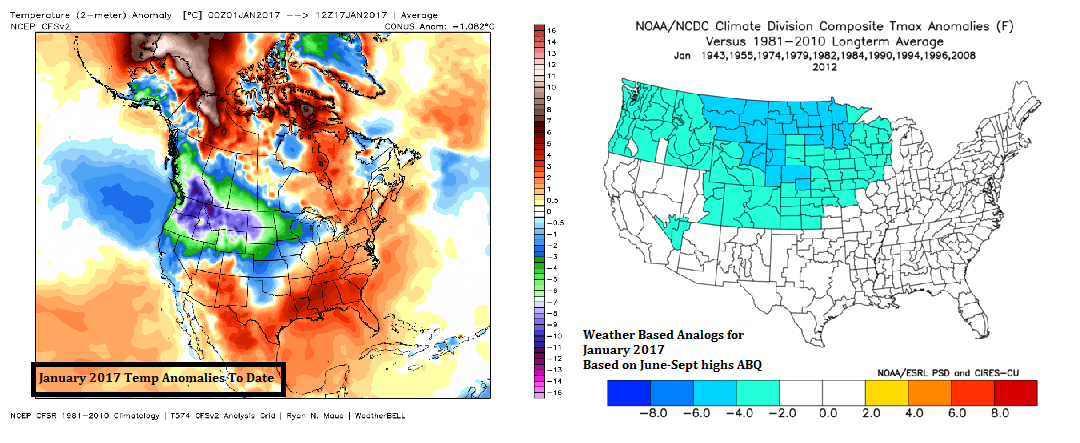
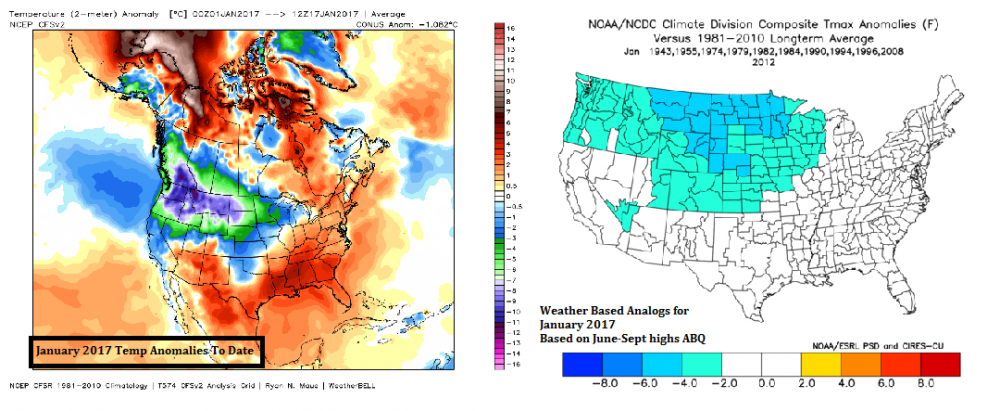
The Weatherbell guys updated their February forecast on the 17th - they have OK 1-3F below normal in February, with the areas of TX right next to OK around 1F below normal. Rest of TX, other than El Paso area -1F to 1F. They have an area centered around the OH/IN border 5F below normal. Immediate West Coast, Southern NM, Southern AZ all +1F. Probably 80% of the country -5F to 0F below normal. My idea for February was that the cold anomalies would look like August, maybe they center between the Continental Divide and the Mississippi River, but we'll have to see. Been pleased with how my "weather based summer analogs" have handled January so far.
-
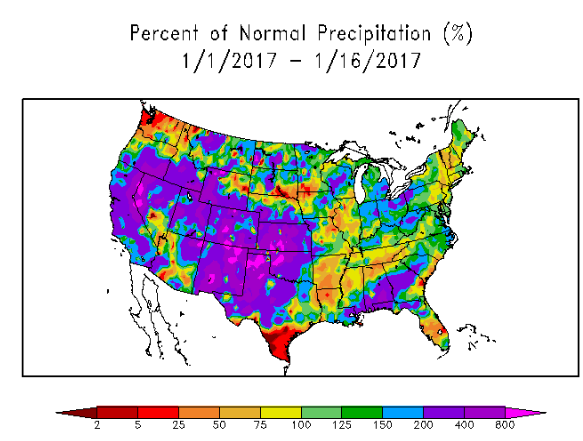
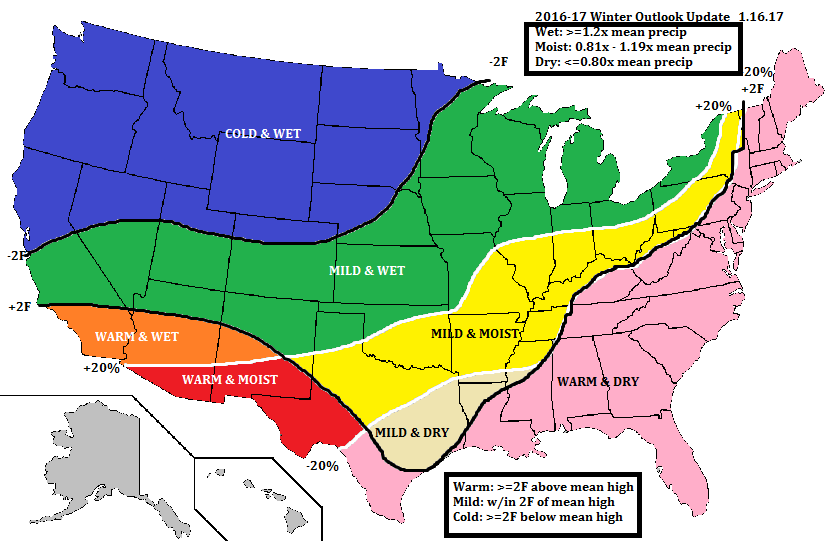
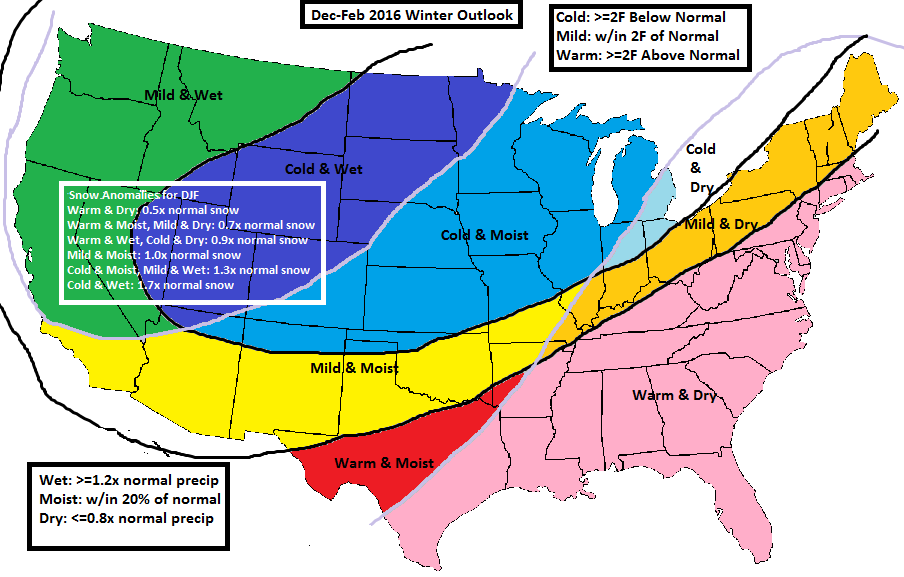
Given the realities of the temperature and precip anomalies so far this winter, I changed my winter outlook map to show a mild/wet winter in the Southwest. Also don't think the cold can be wiped out in Montana, it's been frigid again up there this month. Cold to me is mean highs >=2F below normal, Warm is mean highs >=2F above normal. I don't really look at lows, since most populated places have strong urban heat island effects and will just about always be "warm" against a long term mean. Mild is in between +/-2F Wet is >=1.2x long term mean precip, Dry is <=0.8x long term mean precip. Moist is 0.81-1.19x mean. Unless we get less than 33% of normal precip (<0.6" * 0.33 for ABQ) here in the SW Jan 17 through Feb 28, this is going to be a wet winter. Already too wet to be "dry". Can only be moist or wet at this point.
-
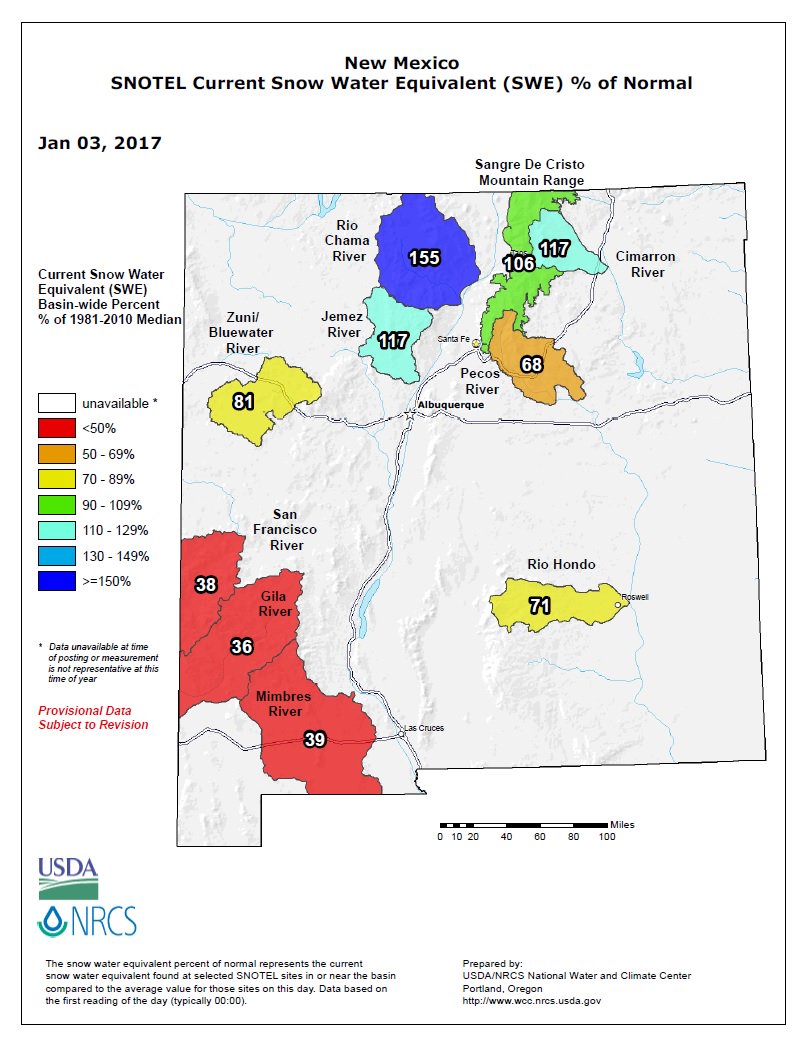
The 1931-32 to 2015-16 mean precipitation in Albuquerque is 0.80" from Dec 1 to Jan 15. We had 1.31" (+64%) this winter, close to a top ten amount...and yet hardly any snow. Been both warm and wet. Suspect it will get much colder in the coming days/weeks though relative to normal. We're actually already guaranteed at least a near average winter here for precip now - 1.31" is just about the Dec-Feb average already. Any rain/snow of any consequence will push us above to well above average for the winter. My view is the La Nina/warm AMO are firmly in charge for warmth here, and this is now fairly likely to be a +1F to +3F winter by mean highs against the 85 year mean, but the PDO+ is fighting the La Nina hard on the moisture side of it. Halfway through the winter we're already wetter than all but nine of the past 26 La Ninas. The 10-mountain basins in New Mexico are actually 3% above normal right now, which is amazing too. Even the Sandias got over a foot of snow with the last system. You can fly into Albuquerque and be at a fully functional resort within 40 minutes.
-
Today is about the nastiest day I've seen in Albuquerque: - No Sun - No Snow (trying...but not yet) - low of 34F high of 43F - 90-100% humidity all day - record rain for this day in January (0.62" as of 10 pm) Mountains are going to look beautiful if the sun clears tomorrow. The PDO+ is a strong precipitation here in all months from Nov-May, save for Dec, so it's interesting seeing it win against the La Nina so far - was wet in Nov, now wet in Jan. In Dec, when the PDO+ isn't a big deal, we were average.
-
He's posting the same images in each thread...but if you go back far enough he says he is weatherfeen and is upset with the Mods?
-
Have had nearly half of inch of rain - not freezing rain, not sleet, not snow - with this system so far. But the dew point is finally dropping into the 30s, night is coming, and a trowal is forming. May get some wet snow later on, although wouldn't really stick. Mountains got some snow out of this, but was a pretty warm system for mid-January with snow levels above 7,500 feet for most of the event. This winter (Dec-Feb) is now well above average for Dec 1 - Jan 15 here. We average 0.70 inches precip in that period. Currently at 1.05", with a bit more likely tonight. Been remarkable how little snow we've had with the moisture, but I never liked the first half of the winter for ABQ anyway, second half is where it's at or at least that was my forecast idea.
-
I'm not sure how skillful the Jamstec is really. JB likes it in El Ninos. When I look at it, it seems to show some skill for precip in the SW (AZ/NM/CO/UT) but less so for temps.
-
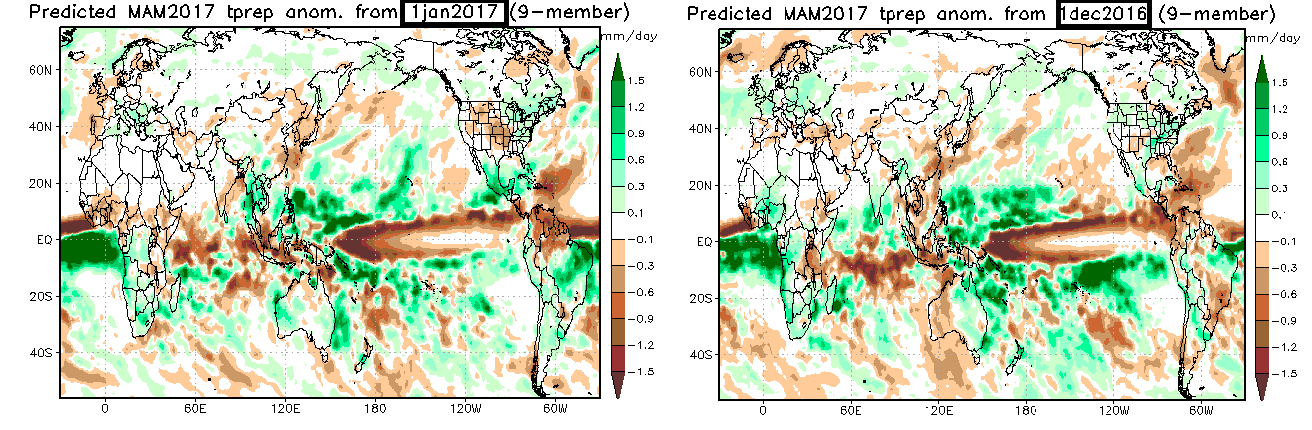
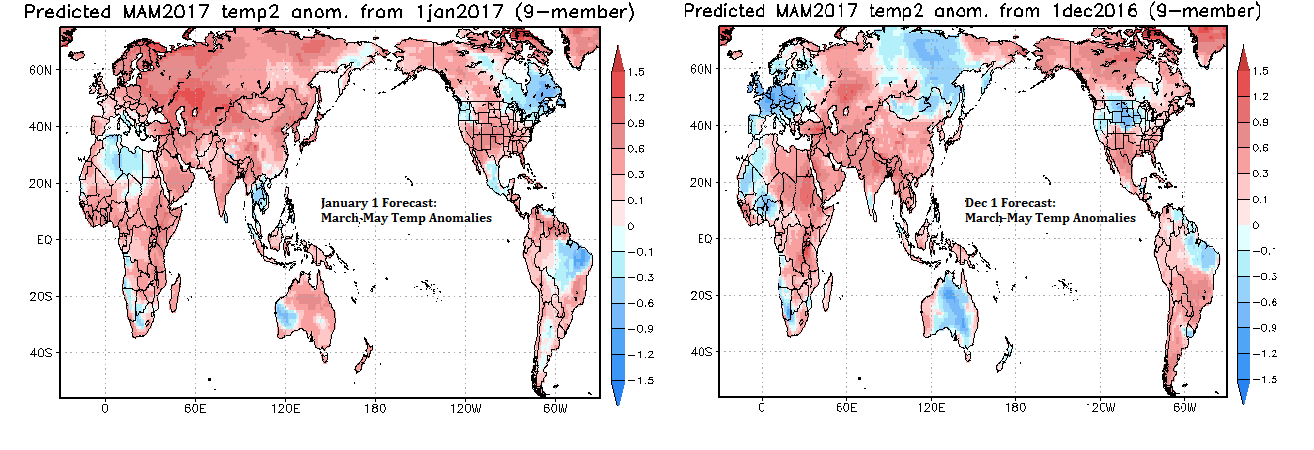
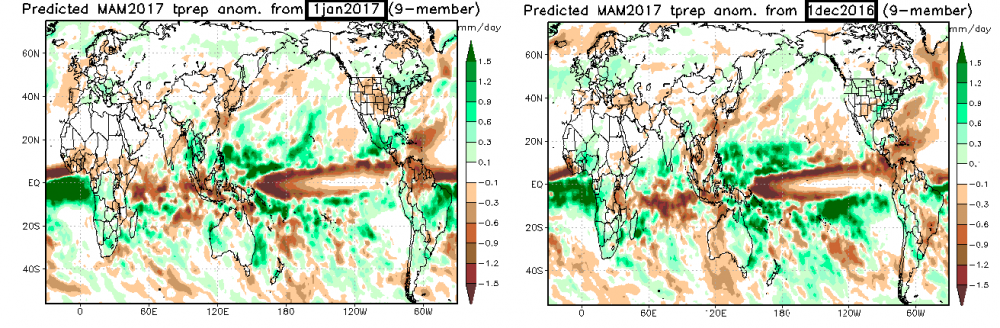
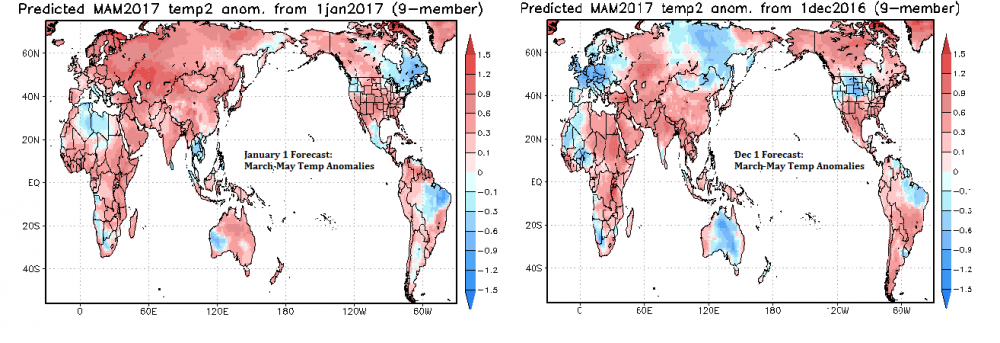
For anyone curious, the Jamstec did trend wetter for some areas in the Spring.
-
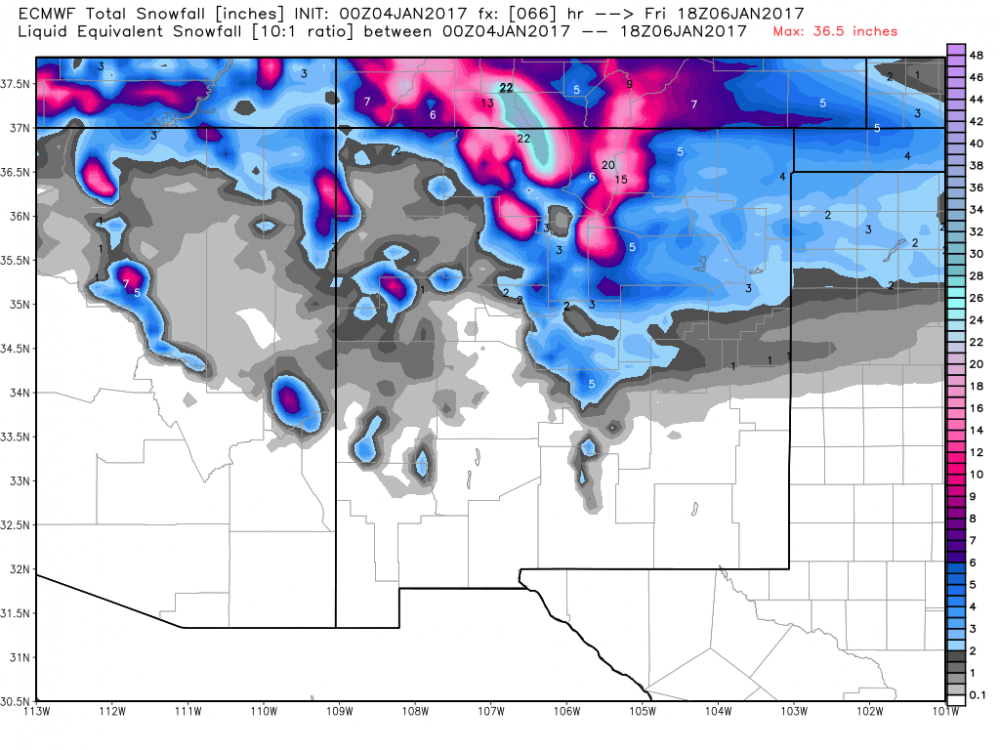
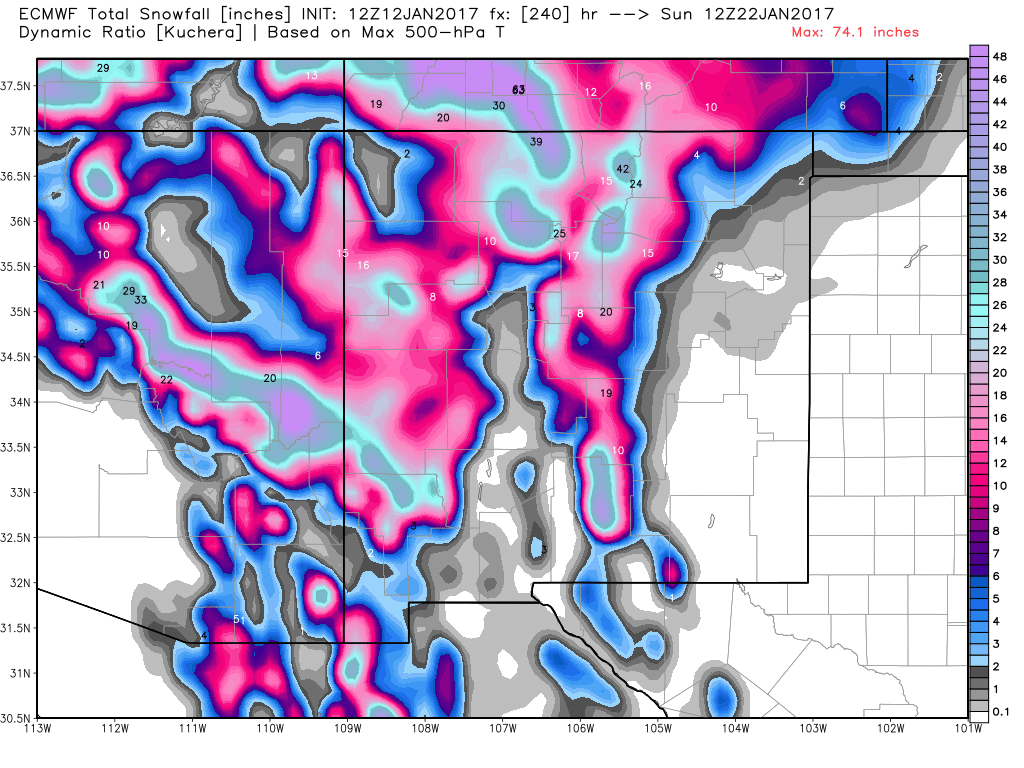
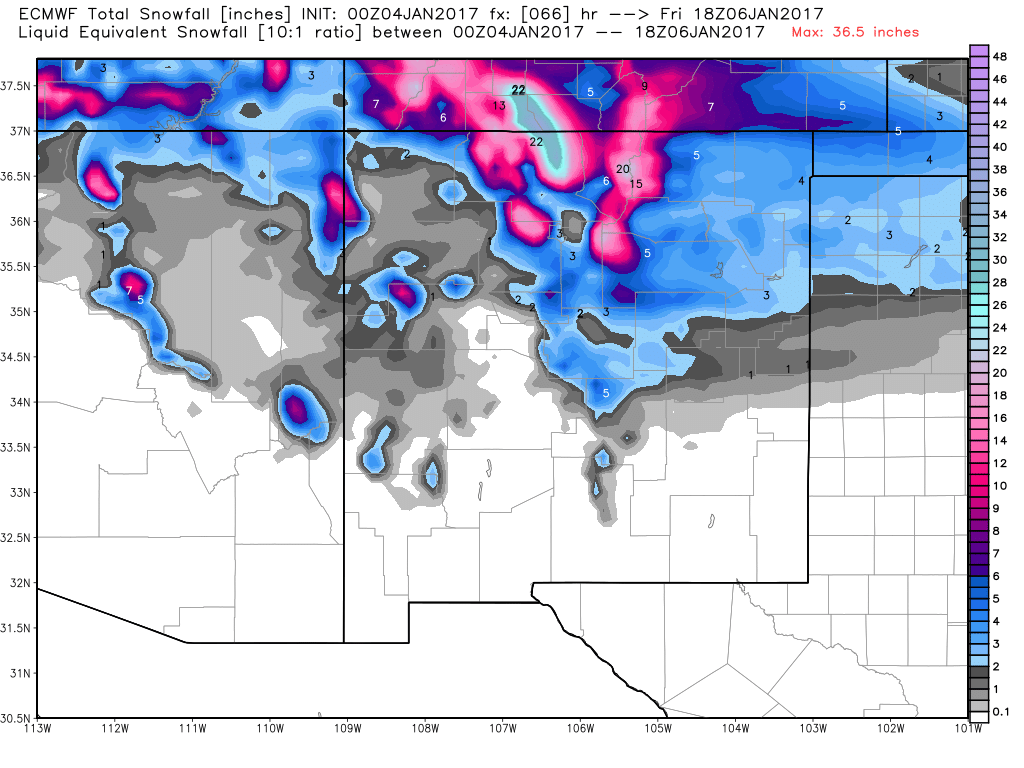
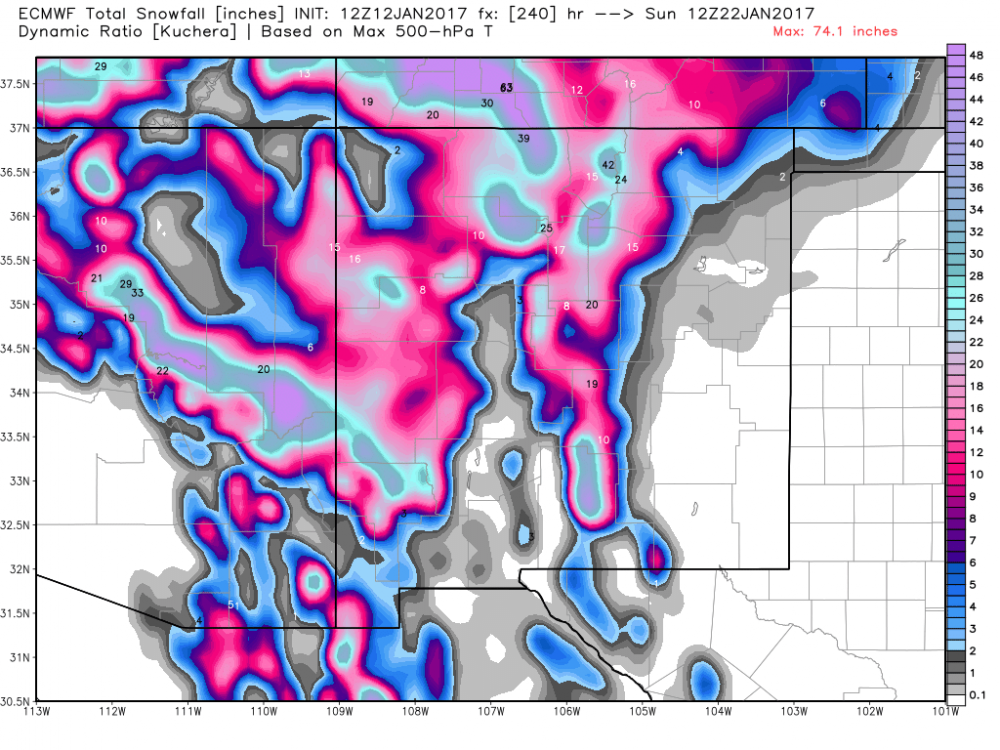
European model has New Mexico, especially the mountains, getting a lot of snow the next ten days. It's great to see it. My analogs had a concentration of snowstorms in New Mexico around 1.29 to 2.3, so I have that period targeted for something big as well. Much of the snow shown below is with the system Friday Night to Monday Morning.
-
PDO came in at 1.17 for December (JISAO) fell big time from November (1.88) http://research.jisao.washington.edu/pdo/PDO.latest
-
I think Bill Gray assumed the AMO would be negative (for 30 years or so) by 2020 - still time for him to be right. I've seen papers from him in the late 80s claiming it would positive by 1995. There are other people who think it happens later in the 2020s. But it's not far. I kind of like 1940/1997 as the same position in the "climate clock", with 2017 thus akin as something like 1960 +/-3 years given the fluctuations in ENSO/solar.
-
The Atlantic (AMO) was still warm in December, but cooled a bit from November relative to the long-term averages. December was pretty cooler than 1937 and 1952 and a couple years in the late 1800s.
-
Amazing what snow and clouds can do up here, was supposed to be near 50F today, never got about 36F. Lows have finally been in the teens in Albuquerque. Got down to -33F this morning in Angel Fire (8600 feet up) - pretty cold even up there.
-
https://www.ncdc.noaa.gov/teleconnections/enso/indicators/sst.php Looks like the La Nina did weaken in December by this measure btw. Niño Regions Sea Surface Temperatures Last 12 Months MONTH NIÑO 1+2 NIÑO 3 NIÑO 4 NIÑO 3.4 TEMP ANOM TEMP ANOM TEMP ANOM TEMP ANOM January 2016 25.93°C (78.67°F) 1.41°C (2.54°F) 28.21°C (82.78°F) 2.58°C (4.64°F) 29.65°C (85.37°F) 1.35°C (2.43°F) 29.17°C (84.51°F) 2.60°C (4.68°F) February 2016 26.81°C (80.26°F) 0.67°C (1.21°F) 28.36°C (83.05°F) 1.99°C (3.58°F) 29.55°C (85.19°F) 1.45°C (2.61°F) 29.12°C (84.42°F) 2.40°C (4.32°F) March 2016 27.57°C (81.63°F) 0.93°C (1.67°F) 28.70°C (83.66°F) 1.57°C (2.83°F) 29.53°C (85.15°F) 1.34°C (2.41°F) 28.90°C (84.02°F) 1.68°C (3.02°F) April 2016 25.83°C (78.49°F) 0.23°C (0.41°F) 28.34°C (83.01°F) 0.84°C (1.51°F) 29.39°C (84.90°F) 0.89°C (1.60°F) 28.87°C (83.97°F) 1.09°C (1.96°F) May 2016 24.55°C (76.19°F) 0.27°C (0.49°F) 27.11°C (80.80°F) 0.03°C (0.05°F) 29.39°C (84.90°F) 0.60°C (1.08°F) 28.15°C (82.67°F) 0.30°C (0.54°F) June 2016 23.17°C (73.71°F) 0.29°C (0.52°F) 26.31°C (79.36°F) -0.12°C (-0.22°F) 29.36°C (84.85°F) 0.52°C (0.94°F) 27.53°C (81.55°F) -0.12°C (-0.22°F) July 2016 21.79°C (71.22°F) 0.17°C (0.31°F) 25.14°C (77.25°F) -0.48°C (-0.86°F) 29.06°C (84.31°F) 0.26°C (0.47°F) 26.73°C (80.11°F) -0.49°C (-0.88°F) August 2016 21.03°C (69.85°F) 0.39°C (0.70°F) 24.53°C (76.15°F) -0.46°C (-0.83°F) 28.68°C (83.62°F) 0.00°C (0.00°F) 26.28°C (79.30°F) -0.54°C (-0.97°F) September 2016 20.87°C (69.57°F) 0.53°C (0.95°F) 24.67°C (76.41°F) -0.18°C (-0.32°F) 28.48°C (83.26°F) -0.21°C (-0.38°F) 26.11°C (79.00°F) -0.61°C (-1.10°F) October 2016 21.18°C (70.12°F) 0.39°C (0.70°F) 24.47°C (76.05°F) -0.45°C (-0.81°F) 28.26°C (82.87°F) -0.40°C (-0.72°F) 25.96°C (78.73°F) -0.73°C (-1.31°F) November 2016 21.68°C (71.02°F) 0.09°C (0.16°F) 24.58°C (76.24°F) -0.40°C (-0.72°F) 28.27°C (82.89°F) -0.37°C (-0.67°F) 26.10°C (78.98°F) -0.55°C (-0.99°F) December 2016 23.25°C (73.85°F) 0.43°C (0.77°F) 24.75°C (76.55°F) -0.39°C (-0.70°F) 28.35°C (83.03°F) -0.14°C (-0.25°F) 26.15°C (79.07°F) -0.42°C (-0.76°F) Dec - Nov Difference 1.57°C 0.34°C 0.17°C 0.01°C 0.08°C 0.23°C 0.05°C 0.13°C 2.83°F 0.61°F 0.31°F 0.02°F 0.14°F 0.41°F 0.09°F 0.23°F
-
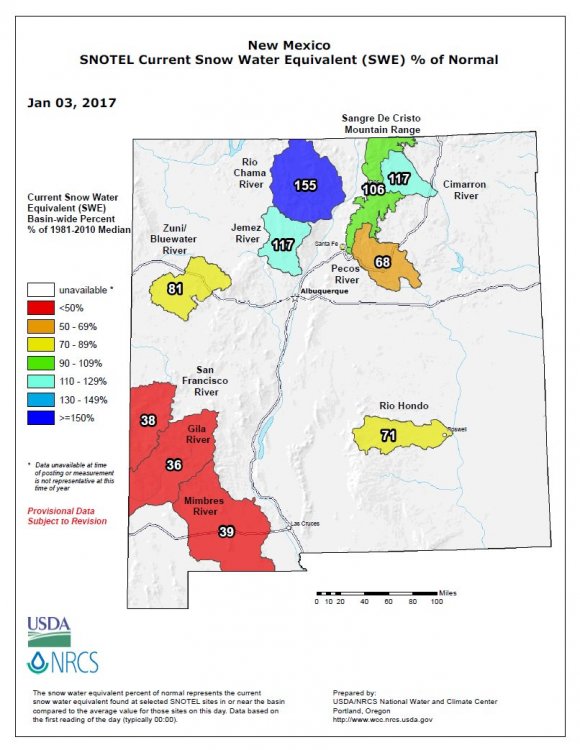
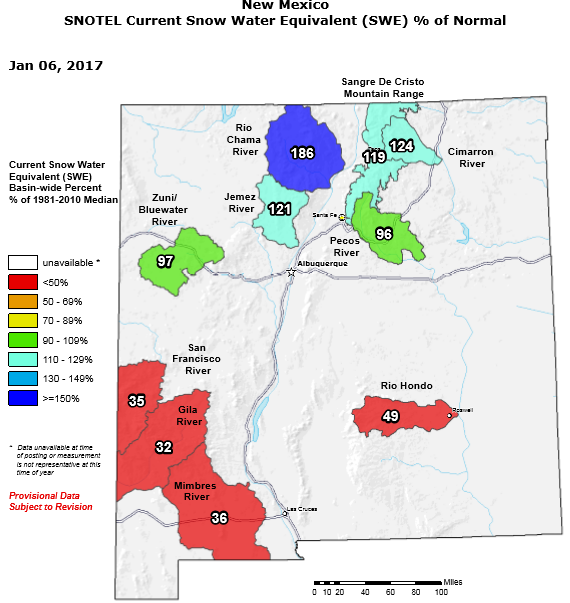
The kids here got a snow day because the dusting to 2 inches of snow came when it was 15-20F so it stuck to the roads. If any of you Texans want to ski, these are amazing numbers for a La Nina here - although the Gila Wilderness needs some help. Have a theory they may do well in Feb/Mar though.
-
I went for a walk once it started snowing here. It completely froze to my beard and I had little snow icicles coming down my face. New for me. We had borderline Blue Norther conditions - 45F at midnight to 16F at 4 am. 2-3 inches of snow on the ground, 1-2 on the road since it was 16-20F when most of it fell.
-
One of these damned years it is going to snow a lot in the mountains in March like it supposed to, but I don't think it is this year, so Jan 20 - Feb 20 is kind of my target for big snow here this year.
-
NWS ABQ call. I'm on board. WPC says my area of town (NE) has a non-zero (10-20%) shot at 4"+, but most likely we get 1-3" city wide or flurries to 2".
-
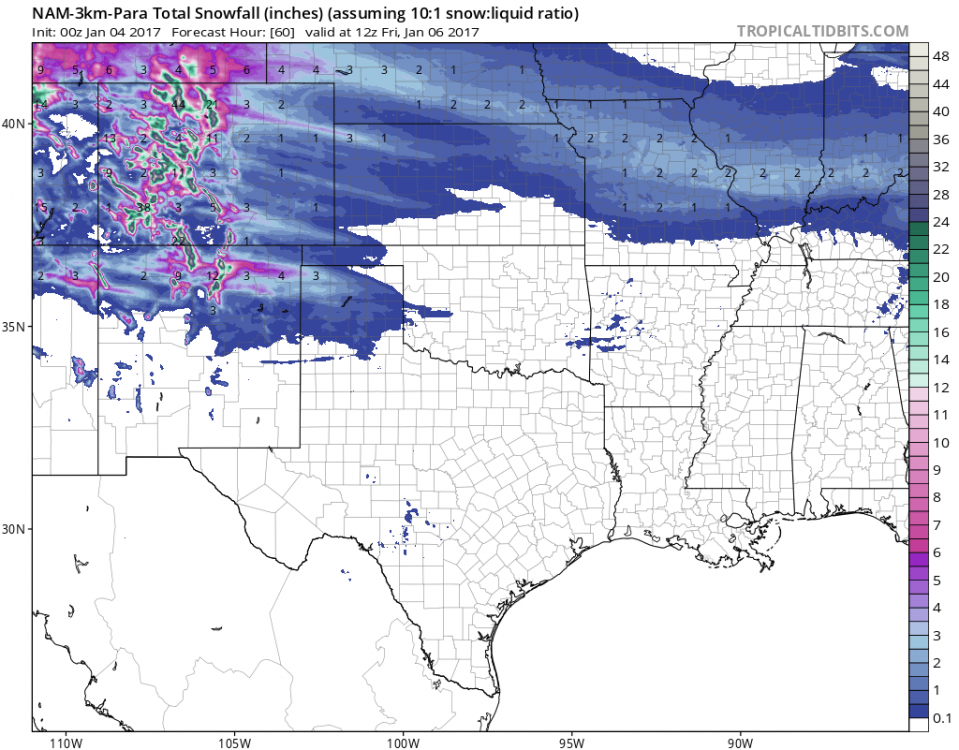
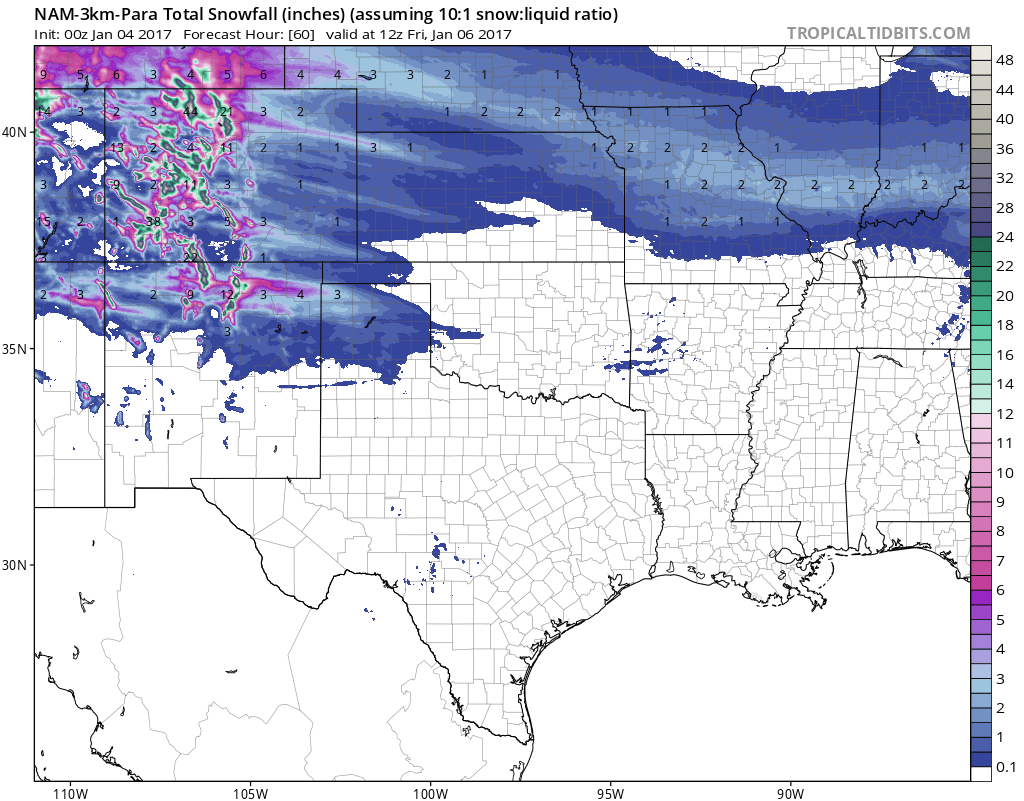
European thinks New Mexico does pretty well with the next storm. Would be 1-4" for Albuquerque. I start to trust the models for snow when they are within 72 hours, and this is essentially saying hours 60-66 are snowy for Albuquerque. NAM shows a boatload of snow too, but it only goes out to 60 hours. NAM actually tends to do pretty well with snow here. GFS isn't far off...just less snow in ABQ.